WHAT EVERY EDUCATED CITIZEN OF THE WORLD NEEDS TO KNOW IN THE 21ST CENTURY: INTRODUCTION TO THE IMMORTAL TANG DYNASTY POETS OF CHINA—-LI BAI (LI PO), DU FU (TU FU), WANG WEI AND BAI JUYI—–THE MEETING OF THE BUDDHIST, TAOIST AND CONFUCIAN WORLDS—–FROM THE WORLD LITERATURE FORUM RECOMMENDED CLASSICS AND MASTERPIECES SERIES VIA GOODREADS—-ROBERT SHEPPARD, EDITOR-IN-CHIEF

Li Po and Tu Fu: PoemsLi Po and Tu Fu: Poems by Li Po

My rating: 5 of 5 stars

WHAT EVERY EDUCATED CITIZEN OF THE WORLD NEEDS TO KNOW IN THE 21ST CENTURY: INTRODUCTION TO THE IMMORTAL TANG DYNASTY POETS OF CHINA—-LI BAI (LI PO), DU FU (TU FU), WANG WEI AND BAI JUYI—–THE MEETING OF THE BUDDHIST, TAOIST AND CONFUCIAN WORLDS—–FROM THE WORLD LITERATURE FORUM RECOMMENDED CLASSICS AND MASTERPIECES SERIES VIA GOODREADS—-ROBERT SHEPPARD, EDITOR-IN-CHIEF
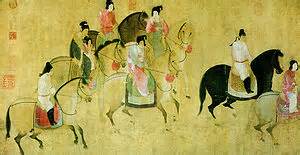
Tang Dynasty Painting

Tang Dynasty Painting

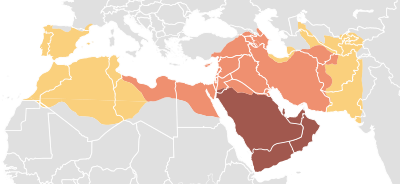
The Tang Dynasty (618-907 AD) is considered the “Golden Age” of Chinese poetry and a time of cultural ascendency when China was considered the pre-eminent civilization in the world. At its commencement Chang’an (modern Xian) its capital with over one million inhabitants was the largest city on the face of the Earth and a vibrant cosmopolitan cultural center at the Eastern end of the Eurasian “Silk Road” when Europe had declined into the fragmented “Dark Ages” of the post-Roman Empire feudal era and the “Islamic Golden Age” of the Abbasid Caliphate was just beginning to rise to rival it with the construction of its new and flourishing capital at Baghdad. China itself had suffered a similar fragmentation and decline with the fall of the Han Dynasty, equal in scope and splendor to the contemporaneous Roman Empire, but with the comparative difference that Tang China had acheived reunification while Europe remained disunited and had lost much of its Classical Greek and Roman heritage, only to be recovered with the Renaissance. Tang Dynasty China by contrast was in a condition of dynamic cultural growth and innovation, having both retained its Classical heritage of Confucianism and Taoism but also assimilated the new spiritual energy of the rise of Buddhism, at the same time the European world assimilated the spiritual influence of Christianity and the Muslim world that of Islam.

Into this context were born four men of poetic genius who in the Oriental world would come to occupy a place in World Literature comparable to the great names of Dante and Shakespeare: Li Bai (Li Po), Du Fu (Tu Fu), Wang Wei and Bai Juyi. All of these geniuses were influenced by the three great cultural heritages of China: Confucianism, Taoism and Buddhism, just as Western writers such as Dante and Shakespeare were influenced by the three dominant Western Heritages of Greek Socratic rationalism, Roman law and social duty and Christian spirituality and moral cultivation. It was during the Tang Dynasty that Chinese culture became fully Buddhist, especially with the translations of Buddhist Scripture brough back from India by Xuanzong, the famous monk-traveller celebrated in the “Journey to the West.” Each poet was influenced by all three heritages, but with perhaps one heritage on the ascendant in each man in accordance with his temperament and worldview, with Du Fu emphasizing the social conscience and duty of Confucianism in his poetry, Li Bai the free spirit and dynamic natural balances of Taoism, and Wang Wei and Bai Juyi emphasizing the Buddhist ethos of detachment from this world and overcoming desire in quest of spiritual enlightenment.

Eurasian Map Featuring the Tang Dynasty of China and the Abbasid Caliphate---Battle of Talas at Center

Eurasian Map Featuring the Tang Dynasty of China and the Abbasid Caliphate—Battle of Talas at Center

THE GLORIOUS TANG DYNASTY—HIGH POINT OF CHINESE CIVILIZATION

The Tang Dynasty, with its capital at Chang’an, then the most populous city in the world, is generally regarded as a high point in Chinese civilization—equal to, or surpassing that of, the earlier Han Dynasty—a Second Golden Age of cosmopolitan culture. Its territory, acquired through the military campaigns of its early rulers, rivaled that of the Han Dynasty. In censuses of the 7th and 8th centuries, the Tang records estimated the population at about 50 million people, rising by the 9th century to perhaps about 80 million people, though considerably reduced by the convulsions of the An Lu Shan Rebellion, making it the largest political entity in the world at the time, surpassing the earlier Han Dynasty’s probable 60 million and the contemporaneous Abbasid Caliphate’s probable 50 milliion and even rivaling the Roman Empire at its height, which at the time of Trajan in 117 AD was estimated at 88 million. Such massive populations, economic and cultural resources would not be matched until the rise of the nations and empires of the modern era.
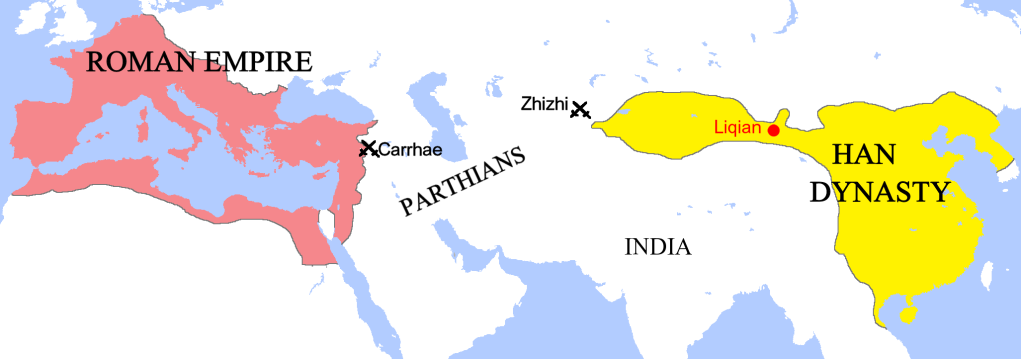
Roman and Han Chinese Empires Compared--200 AD

Roman and Han Chinese Empires Compared–200 AD

With its large population and economic base, the dynasty was able to support a large proportion of its population devoted to cultural accompishments as well as a government, Civil Service administration, scholarly schools and examinations, and raise professional and conscripted armies of hundreds of thousands of troops to contend with nomadic powers in dominating Inner Asia and the lucrative trade routes along the Silk Road. Various kingdoms and states paid tribute to the Tang court, and were indirectly controlled through a protectorate system. Besides political hegemony, the Tang also exerted a powerful cultural influence over neighboring states such Korea, Japan, and Vietnam, with much of Japanese culture, government, literature and religion finding its model and origin in Tang Dynasty China.

In this global Medieval Era we can say with fairness that while Europe went into fragmentation and decline until the Renaissance the two pre-eminent centers of world civilization were Chang’an of the Tang Empire and Baghdad of the Abbasid Caliphate and the Islamic Golden Age. Two incidents characterize the interaction of these two Medieval “Superpowers,” and also affected literary production of the age: The Battle of Talas and the An Lu Shan Rebellion. The Battle of Talas of 751 AD was the collision of the two expanding superpowers, the Tang and the Abbasid Muslims, which in the defeat of the Tang Empire’s armies resulted first in the halt of its expansion along the Silk Road towards the Middle-East, and secondly, in the important transfer of Chinese paper-making technology through captured artisans from China to the Arabs, an important factor fueling the Islamic Golden Age and its literature. The An Lu Shan Rebellion, arising out of the doomed love affair of the Tang Emperor Xuanzong and the Imperial Concubine Yang Gui Fei disrupted all of China, perhaps causing the deaths of 20-30 million people, and affecting the personal lives and writings of all the poets including Li Bai, Wang Wei and Du Fu. It also was the occasion of the Abbasid Caliph sending 4000 cavalry troops to help the Tang Emperor suppress the rebellion, a force that permanently settled in China and became a catalyst for growth of the Muslim population in China and Muslim-Tang cultural interpenetration along the Silk Road. It also became the subject of the Tang poet Bai Juyi’s immortal epic of the Emperor, the Rebellion and the tragic death of the beautiful Imperial Concubine, Yang Gui Fei in “The Song of Everlasting Sorrow.”

THE COALESCING OF THE CONFUCIAN, TAOIST AND BUDDHIST WORLDS: THE PARABLE OF THE THREE VINEGAR TASTERS

The Parable of the Three Vinegar Tasters---Confucius, Buddha and Lao Zi

The Parable of the Three Vinegar Tasters—Confucius, Buddha and Lao Zi

The Parable of “The Three Vinegar Tasters” is a traditional subject in Chinese religious painting. and poetry. The allegorical composition depicts the three founders of China’s major religious and philosophical traditions: Confucianism, Buddhism, and Taoism. The theme in the painting has been variously interpreted as affirming the harmony and unity of the three faiths and traditions of China or as favoring Taoism relative to the others.

The three sages of the tale are dipping their fingers in a vat of vinegar and tasting it; one man reacts with a sour expression, one reacts with a bitter expression, and one reacts with a sweet expression. The three men are Confucius, Buddha, and Lao Zi, respectively. Each man’s expression represents the predominant attitude of his religion and ethos: Confucianism saw life as sour, in need of rules, ritual and restraint to correct the degeneration of the people; Buddhism saw life as bitter, dominated by pain and suffering, slavery to desire and the false illusion of Maya; and Taoism saw life as fundamentally good in its natural state. Another interpretation of the painting is that, since the three men are gathered around one vat of vinegar, the “three teachings” are one.

CONFUCIANISM

Confucianism saw life as sour, in need of rules, social discipline and restraint to correct the degeneration of people; the present was out of step with a more “golden” past and that the government had no understanding of the way of the universe—the right response was to worship the ancestors, purify and support tradition, instil ethical understanding, and strengthen social and family bonds. Confucianism, being concerned with the outside world, thus viewed the “vinegar of life” as “adulterated wine” needing social cleansing.

BUDDHISM

Buddhism was founded by Siddhartha Gautama, who first pursued then rejected philosophy and asceticism before discovering enlightenment through meditation. He concluded that we are bound to the cycles of life and death because of tanha (desire, thirst, craving). During Buddha’s first sermon he preached, “neither the extreme of indulgence nor the extremes of asceticism was acceptable as a way of life and that one should avoid extremes and seek to live in the Middle Way”. “Thus the goal of basic Buddhist practice is not the immediate achievement of a state of “Nirvana” or bliss in some heaven but the extinguishing of tanha, or desire leading to fatal illusion. When tanha is extinguished, one is released from the cycle of life—birth, suffering, death, and rebirth—only then can one achieve Nirvana.

One interpretation is that Buddhism, being concerned with the self, viewed the vinegar as a polluter of the taster’s body due to its extreme flavor. Another interpretation for the image is that Buddhism reports the facts are as they are, that vinegar is vinegar and isn’t naturally sweet on the tongue. Trying to make it sweet is ignoring what it is, pretending it is sweet—living for illusion or Maya—is denying what it is, while the equally harmful opposite is being overly disturbed by the sourness. Detachment, reason and moderation are thus required.

TAOISM

Taoism saw life as fundamentally good in its natural state.
From the Taoist point of view, sourness and bitterness come from the interfering and unappreciative mind. Life itself, when understood and utilized for what it is, is sweet, despite its occasional sourness and bitterness. In “The Vinegar Tasters” Lao Zi’s (Lao Tzu) expression is sweet because of how the religious teachings of Taoism view the world. Every natural thing is intrinsically good as long as it remains true to its nature. This perspective allows Lao Zi to experience the taste of vinegar without judging it, knowing that nature will restore its own balance transcending any extreme, via Yin and Yang and “The Dao,” the underlying Supreme Creative Dialectic driving all things and human experiences.

LI BAI (LI PO), SUPREME TANG DYNASTY LYRICIST AND TAOIST ADEPT
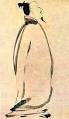
Portrait of Li Bai (Li Po) chanting his Poems--Tang Dynasty

Portrait of Li Bai (Li Po) chanting his Poems–Tang Dynasty

Li Bai (701-762) came from an obscure, possibly Turkish background and unlike other Tang poets did not attempt to take the Imperial Examination to become a scholar-official. He was infamous for his exuberant drunkenness, hard partying and “bad boy” romantic lifestyle. In his writing he chose freer forms closer to the folk songs and natural voice, though laced with playful fancy, as in the famous example of his lyric conversations with the moon. He frequented Taoist temples and echoed the Taoist embrace of the natural human emotions and feelings; that connection got him an appointment to the Imperial Court, but his misbehaviour soon ended in his dismissal. Nonetheless, he became famous and invited into the best circles to recite his works. He emphasized spontanaeity and freedom of expression in his works, yet created works of extraordinary depth of feeling:

Drinking Alone With the Moon

A pot of wine amoung the flowers.
I drink alone, no friend with me.
I raise my cup to invite the moon.
He and my shadow and I make three.

The moon does not know how to drink;
My shadow mimes my capering;
But I’ll make merry with them both—
And soon enough it will be Spring.

I sing–the moon moves to and fro.
I dance–my shadow leaps and sways.
Still sober, we exchange our joys.
Drunk–and we’ll go our separate ways.

Let’s pledge—beyond human ties—to be friends,
And meet where the Silver River ends.

Popular legend has it that Li Bai died in such a drunken fit, carousing alone on a boat on a lake, when he, drunk, leaned overboard to embrace the reflecion of the moon in the waters, and drowned.

DU FU—SUPREME POET OF SOCIAL CONSCIENCE AND ENLIGHTENED CONFUCIAN SPIRIT

Portrait of Du Fu (Tu Fu)---Tang Dynasty China

Portrait of Du Fu (Tu Fu)—Tang Dynasty China

Du Fu (712-770) was the grandson of a famous court poet, and took the Imperial Examination twice, but faied both times. His talent for poetry became known to the emperor, however, who arranged a special examination to allow his admittance as a court scholar-official. His outspoken social conscience, denunciation of injustice and insistence on following the pure ideals of Confucianism however, alienated higher officials and his career was confined to minor posts in remote provinces, and his travels and observations were often the occasion of his poetry. He acutely rendered human suffering, particularly of the common people, and his stylistic complexity and excellence made him the “poet’s poet” as well as the “people’s poet” for centures, as exemplified in his famous “Ballad of the Army Carts:”

Ballad of the Army Carts

Carts rattle and squeak,
Horses snort and neigh—
Bows and arrows at their waists, the conscripts march away.
Fathers, mothers, children, wives run to say good-bye.
The Xianyang Bridge in clouds of dust is hidden from the eye.
They tug at them and stamp their feet, weep, and obstruct their way.
The weeping rises to the sky.
Along the road a passer-by
Questions the conscripts. They reply:

They mobilize us constantly. Sent northwards at fifteen
To guard the River, we were forced once more to volunteer,
Though we are forty now, to man the western front this year.
The headman tied our headcloths for us when we first left here.
We came back white-haired—to be sent again to the frontier.
Those frontier posts could fill the sea with the blood of those who’ve died.
In county after county to the east, Sir, don’t you know,
In villiage after villiage only thorns and brambles grow.
Even if there’s a sturdy wife to wield the plough and hoe,
The borders of the fields have merged, you can’t tell east from west.
It’s worse still for the men from Qin, as fighters they’re the best–
And so, like chickens or like dogs they’re driven to and fro.

Though you are kind enough to ask,
Dare we complain about our task?
Take, Sir, this winter. In Guanxi
The troops have not yet been set free.
The district officers come to press
The land tax from us nonetheless.
But, Sir, how can we possibly pay?
Having a son’s a curse today.
Far better to have daughters, get them married—
A son will lie lost in the grass, unburied.
Why, Sir, on distant Qinghai shore
The bleached ungathered bones lie year on year.
New ghosts complain, and those who died before
Weep in the wet gray sky and haunt the ear.

WANG WEI–SCHOLAR-OFFICIAL, “RENAISSANCE MAN” AND BUDDHIST POET

Picture of Tang Dynasty Poet Wang Wei

Picture of Tang Dynasty Poet Wang Wei

Wang Wei was one of the most prominent poets of the Tang Dynasty, but also a famous painter, calligrapher and musician. He hailed from a distinguished scholar family, passed the highest Imperial Examination with honors and worked his way up the bureaucratic heirarchy, often assuming posts in far-away provinces. His poems displayed the high court poetic style–witty, urbane and impersonal, reinforced by the Buddhist detachment and equanimity of his religious beliefs. He became influential at the royal court until being captured in the An Lu Shan Rebellion, he was forced to work for the usurping Emperor, then punished by the reinstated Emperor. In accordance with Chan (Zen) Buddhism his work reflects the detached and melancholy view of transitory life seen as illusion. His official travels involving years of absence or threatened death far from home were often the occasion of many of of his poems:

Farewell to Yuan the Second on His Mission to Anxi

In Wei City morning rain dampens the light dust.
By the travelers’ lodge, green upon green—the willows color is new.
I urge you to drink up yet another glass of wine:
Going west from Yang Pass, there are no old friends.

BAI JUYI (BO JUYI), AUTHOR OF THE “SONG OF EVERLASTING SORROW,” TALE OF THE DOOMED LOVE OF THE EMPEROR XUANZONG AND THE BEAUTIFUL IMPERIAL CONCUBINE YANG GUI FEI

Bai Juyi (772-846) of a later generation from the other three poets, passed the Imperial Examination with honors and served in a variety of posts. He, like Du Fu, took seriously the Confucian mandate to employ poetry as vehicle for social and political protest against injustice. He also, like Bai Juyi, tried to simplify and make more natural and accessible his poetic voice, drawing closer to the people. His most immortal classic is the “Song of Everlasting Sorrow” which presents in verse the epic tragic tale of the great love affair between Emperor Xuanzong and his Imperial Concubine, Yang Gui Fei, reminiscent of the tragedy of Romeo an Juliet, which ended during the An Lu Shan Rebellion as the army accused her of distracting the Emperor from his duties and corruption and demanded her death. The poem relates how the Emperor sent a Taoist priest to find his dead lover in heaven and convey his devotion to her and her answer:

“Our souls belong together,” she said, “like this gold and this shell–
Somewhere, sometime, on earth or in heaven, we shall surely meet.”
And she sent him, by his messenger, a sentence reminding him
Of vows which had been known only to their two hearts:
“On the seventh day of the Seventh-month, in the Palace of Long Life,
We told each other secretly in the quiet midnight world
That we wished to fly in heaven, two birds with the wings of one,
And to grow together on the earth, two branches of one tree.”…
Earth endures, heaven endures; sometime both shall end,
While this unending sorrow goes on and on forever.

SPIRITUS MUNDI AND CHINESE LITERATURE

My own work, Spiritus Mundi, the contemporary epic of social idealism featuring the struggle of global idealists to establish a United Nations Parliamentary Assembly for global democracy and to head off a threatened WWIII in the Middle-East also reflects the theme of the Confucian ethic that literature should contribute to social justice and public morality. Like Du Fu it abhors the waste, suffering, social irresponsibility and stupidity of war. Like Li Bai it celebrates the life of nature and human emotions, including sexuality. About a quarter of the novel is set in China, and one of its principal themes is a renewal of spirituality across the globe.

World Literature Forum invites you to check out the great Chinese Tang Dynasty poetic masterpieces of World Literature, and also the contemporary epic novel Spiritus Mundi, by Robert Sheppard. For a fuller discussion of the concept of World Literature you are invited to look into the extended discussion in the new book Spiritus Mundi, by Robert Sheppard, one of the principal themes of which is the emergence and evolution of World Literature:

For Discussions on World Literature and n Literary Criticism in Spiritus Mundi: http://worldliteratureandliterarycrit…

Robert Sheppard

Editor-in-Chief
World Literature Forum
Author, Spiritus Mundi Novel
Author’s Blog: http://robertalexandersheppard.wordpr…
Spiritus Mundi on Goodreads:
http://www.goodreads.com/book/show/17…
Spiritus Mundi on Amazon, Book I: http://www.amazon.com/dp/B00CIGJFGO
Spiritus Mundi, Book II: The Romance http://www.amazon.com/dp/B00CGM8BZG

Copyright Robert Sheppard 2013 All Rights Reserved

View all my reviews

Posted in Uncategorized | Tagged , , , , , , , , , , , , , , , , , , , , , , , , , , , , , , , , , , , , , , , , , | Leave a comment

WHAT EVERY EDUCATED CITIZEN OF THE WORLD NEEDS TO KNOW IN THE 21ST CENTURY: THE GREAT CLASSICAL NOVELS OF CHINA—-“THE DREAM OF RED MANSIONS” BY CAO XUEQIN, “THE JOURNEY TO THE WEST” BY WU CHENGEN, “THE ROMANCE OF THE THREE KINGDOMS” by LUO GUANZHONG, “THE WATER MARGIN or ALL MEN ARE BROTHERS” by SHI NAI’AN, “THE SCHOLARS” BY WU JINGZI, AND THE EROTIC CLASSIC “THE JIN PING MEI” OR “GOLDEN LOTUS”—FROM THE WORLD LITERATURE FORUM RECOMMENDED CLASSICS AND MASTERPIECES SERIES VIA GOODREADS—-ROBERT SHEPPARD, EDITOR-IN-CHIEF

A Dream of Red Mansions (4-Volume Set)A Dream of Red Mansions by Cao Xueqin

My rating: 5 of 5 stars

WHAT EVERY EDUCATED CITIZEN OF THE WORLD NEEDS TO KNOW IN THE 21ST CENTURY: THE GREAT CLASSICAL NOVELS OF CHINA—-“THE DREAM OF RED MANSIONS” BY CAO XUEQIN, “THE JOURNEY TO THE WEST” BY WU CHENGEN, “THE ROMANCE OF THE THREE KINGDOMS” by LUO GUANZHONG, “THE WATER MARGIN or ALL MEN ARE BROTHERS” by SHI NAI’AN, “THE SCHOLARS” BY WU JINGZI, AND THE EROTIC CLASSIC “THE JIN PING MEI” OR “GOLDEN LOTUS”—FROM THE WORLD LITERATURE FORUM RECOMMENDED CLASSICS AND MASTERPIECES SERIES VIA GOODREADS—-ROBERT SHEPPARD, EDITOR-IN-CHIEF


Chinese culture is renown for its addiction to compiling “Lists of the Greats,” from the Four Great Inventions of China (Paper, the Comnpass, Printing and Gunpowder) to the Four Great Beautiful Women (Yang Guifei, Xi Shi, Yang Jiaojun and Diaochan) to the Three Great Tang Dynasty Poets (Li Bai (Li Po), Du Fu and Wang Wei) to the Four Great Novels of Chinese Literature. Thus every educated Chinese person was expected to have read, or at least to have thouroughly read about, The Four Great Novels: The Qing Dynasty Classic the Hong Lou Meng, or “The Dream of Red Mansions” by Cao Xueqin, the Xi You Ji, or “Journey to the West” by Wu Chengen featuring the fabulous Monkey-King Sun Wukong, the great historical epic “The Romance of the Three Kingdoms” by Luo Guanzhong, and the classic “Robin Hood” tale of gallant outlaws “Shui Hu Zhuan,” or “The Water Margin” by Shi Nai’an.

Chinese scholars generally added two additional novels as an “Apocrypha” to this “Canonic Prose Bible” of The Four Great Novels, which officially you shouldn’t have read (like the Marquis de Sade or Lady Chatterly’s Lover in the West), but which if you were a real intellectual you definitely should have: The erotic classic the Jin Ping Mei, or “The Golden Lotus” which was excluded from inclusion in the canon because of its sexual, immoral and pornographic content, despite its admitted literary excellence, and the “Ru Lin Wai Shi,” or “The Scholars,” by Wu Jingzi, also downgraded from classical status due to its bohemian counter-cultural satire on and rejection of traditional Confucian scholars and examination-passing officials as mindless conformists and intellectual ciphers.

In the not so remote past, education centered on learning the cultural tradition of one’s own nation was assumed to be an adequate foundation for functional adulthood and citizenship. Thus Chinese scholars concentrated on the Confucian heritage and with little effort given to understanding other civilizations and traditions, Christians were content with the Bible and their own national classics and Islamic nations were happy if one could recite the Koran by heart. In today’s cosmopolitan globalized world of transnational business and the Internet familiarity with one’s own national history, national culture and literature is no longer an adequate preparation for adult life in the globalized real world.

Thus each educated person in the modern world must have a basic familiarity with World Literature in addition to his own national or regional literature, accompanied of course with a basic knowledge of World History, World Religions, World Philosophy and universal science. With the increasing importance of a “Rising China” in world affairs and culture it is thus incumbent on every educated person in the world to have some basic familiarity with these six classics of Chinese Literature. Thus World Literature Forum in this “Recommended Classics and Masterpieces of World Literature Series” provides the following very basic introduction to these works, perhaps in a globalized version of E.D. Hirsch’s “What Every American Should Know” reformulated as: “What Every Citizen of the World Should Know in the 21st Century.”


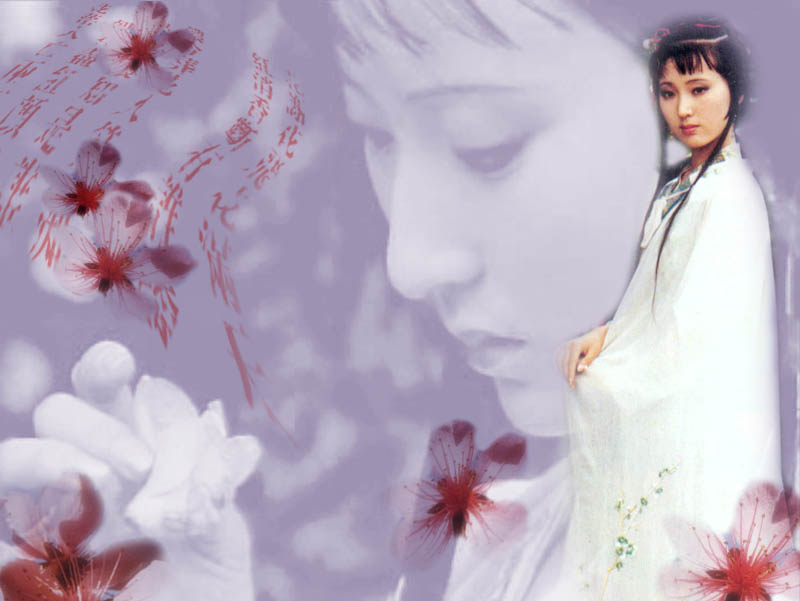
The Dream of the Red Chamber's Lin Daiyu

The Dream of the Red Chamber’s Lin Daiyu


THE IMMORTAL SAGA OF FAMILY DECLINE AND SPIRITUAL FATE, “HONG LOU MENG,” OR “A DREAM OF RED MANSIONS”


The theme and saga of family decline is a universal mofif in World Literature, embracing such classics as Thomas Mann’s “Buddenbrooks,” the English “Forsyth Saga” of Gallsworthy, “Brideshead Revisited” by Evelyn Waigh, and “One Hundred Years of Solitude” by Gabriel García Márquez. The Dream of Red Mansions is one of the great exemplars of this genre, movingly telling the tale of the decline of the Jia family, laced with Buddhist spiritual fore-fated melancholy, from success and influence in the Qing Dynasty Imperial Court, through demise, weakening of character, disaster and their fall into relative obscurity.

Scholars and popular readers have agreed that the “Dream of the Red Chamber” (also variously entitled A Dream of Red Chambers or The Story of the Stone) is the greatest Chinese novel, though differences of opinion have developed as to the exact nature of its greatness since its publication. Indeed, in China there is a whole virtual branch of knowledge or cottage industry which is known as “Red-ology” in the interpretation of the work, about which a similar amount of criticism has been written as comparable with that of Shakespeare criticism in England of Goethe criticism in Germany.

The Dream of the Red Mansion also serves as a veritable encyclopedia of imperial Chinese society and culture in the Qing Dynasty (1644-1911) introducing over four hundred characters hailing from all walks of life and social classes with intricate subplots and detailed descriptions of buildings, gardens, furniture, cuisine, medicines, clothing, poetry, etiquette, games performances and pastimes of the aristocracy and others. The novel has simi-autobiographical features as the author Cao Xueqin (1715-1763)also came from a declining family, successful in the early Qing Dynasty, but reduced in fortune and circumstances until the author died in relative poverty and obscurity whille completing his immortal epic in Beijing.

Reduced to its most central characters, the story focuses on a young man of the Jia family, Jia Baoyu, coming of age surrounded by female cousins and slightly effeminate and romantic in his temperament, who falls in love with but cannot marry Lin Daiyu, a “poor relation” cousin who has a spiritual beauty that accompanies her declining health. His “Golden Days” are spent cavorting with these cousins and friends in aristocratic pleasures and cultivated pastimes such as writing poetry couplets to each other, watching Chinese Opera performances, and frolicing in the Pleasure Garden of the family estate. As the years go by, Jia Baoyu, protected and spoiled by his doting grandmother, interminably procrastinates in pursuing the twin adult responsibilities urged on him by his parents: His stern Confucian father urges on him the duty of studying hard, passing the Imperial Examination, becoming a court bureaucrat and restoring the family’s declining material fortunes; His mother urges that he find an appropriate match as a wife from a successful aristocratic family that can extend and enhance the waning power and wealth of the extended family. Instead, Baoyu dallies in adolescent games and pleasures, sexual experimentation and petty intrigues, holding on to the “splendor in the grass” of the family Pleasure Garden, and feels that his love-bond with his poor cousin, the ailing Lin Daiyu is spiritually fated, which it proves to be to the unhealthy detriment of all.

The immense novel also operates powerfully on a symbolic spiritual level with the opening chapter, from which the alternative title “The Story of the Stone” derives, literally containing the entire novel condensed into symbolic form. Following ancient Chinese Taoist and Buddhist myth, a stone rejected by a goddess who was repairing the sky is picked up by a Buddhist monk and a Daoist priest and taken to the world of the mortals, to be found eons later by another Daoist with the story of its worldly forefated experience inscribed upon it. Unfit for the pure unadulterated life and condition of heaven, the stone is forefated to suffer birth and death in mortal life below, yet also tragically retains alloyed within itself the divine substance of heaven. Before the stone enters upon mortal life and destiny, however, it, like the “Little Prince” of Exuperay, tenderly waters with sweet dew a lovely flower not of this world, who in turn incurs a karmic debt towards the stone, which must be repaid in the mortal world of human life. The story of the stone is thus the inscribed fate of the stone written on itself, suspended somehow ever-insecurely, as of all human endeavor, somewhere between heaven and earth, but also becomeing in reiteration or reincarnation the story and destiny of Jia Baoyu as an individual human mortal, who like the Biblical “sheep gone astray” of Isiah’s Suffering Servant passage, or the miscast ploughman’s seed, finds another more existential and singular destiny, fatedly unhappy in this world’s material context. Thus we learn in the novel that Jai Baoyu was born with a jade stone in his mouth, trailing as it were Wordsworthian “clouds of glory” in his birth, and from thence relives the story of the stone in his ill-fated mortal life, while his beloved Lin Daiyu, a reincarnation of the beautiful other-worldly flower loved and watered by the stone in heaven, pays her karmic debt to the stone in her undying yet ill-fated love and devotion for Jia Baoyu in this world. Meanwhile, as each of the characters works out their spiritual destinies, the Jia family declines further and further in its worldly fortunes.


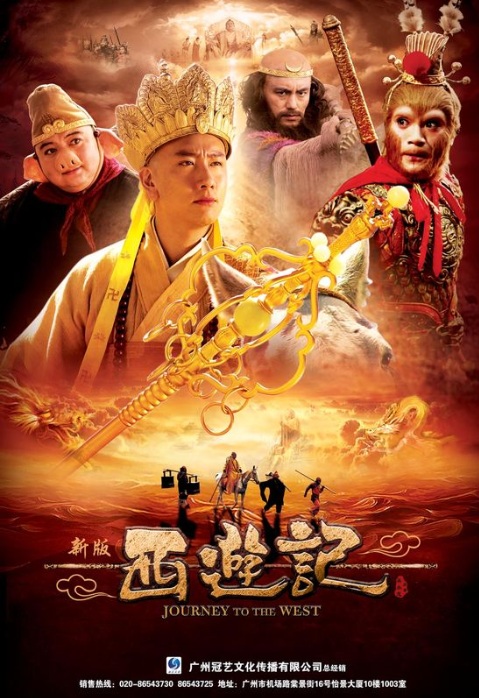
The Four Heroes of The Journey to the West: Pigsy or Zhu Bajie, the Tang Monk or Xuanzong, Sandy or Sha Hesheng, and The Monkey King Sun Wu Kong

The Four Heroes of The Journey to the West: Pigsy or Zhu Bajie, the Tang Monk or Xuanzong, Sandy or Sha Hesheng, and The Monkey King Sun Wu Kong


THE “JOURNEY TO THE WEST,” OR “XI YOU JI” AND THE MONKEY-KING


Perhaps the most beloved novel by all Chinese people, from children to adults, is the immortal “Journey to the West” of Wu Chengen, which tells the story of the pilgrimage of the Buddhist Monk Xuanzong to India to obtain and translate Holy Buddhist Scriptures, aided by the magical Monkey-King, Sun Wu Kong, a lovable “Pigsy” or Zhu Bajie character endowed with gargantuan physical strength and appetites, and a down-to-earth and practical monk “Sandy” or Sha Hesheng. In the long narrative of their adventures they repeatedly are assaulted en route by demons and evil forces plotting to defeat the Tang Monk’s spiritual mission, but which are always defeated by the combination of talents and forces of the pilgrim brotherhood, led by the rebellious and precocious genius and magical powers of the Monkey King, a figure derived from the earlier character Hanuman in the Indian Ramayana. As both the Journey to the West and the Romance of the Three Kingdoms have already been treated in greater depth in other blog entries in this series I will not go into great depth in their description.


The Monkey King Sun Wukong from the Journey to the West

The Monkey King Sun Wukong from the Journey to the West


THE “ROMANCE OF THE THREE KINGDOMS” OF LUO GUANZHONG


The Romance of the Three Kingdoms tells the historically true story of the wars and struggles between the three kingdoms, Wei, Shu and Wu, which arose between 169 AD and 280 AD when the Han Dynasty Empire, comparable in scope and population to the contemporaneous Roman Empire, broke apart before again acheiving reunification. As a novel loosly based on real history but treated with artistic license, like Duma’s “Three Musketeers” saga it tells the story of the “Iron Brotherhood” of devoted friends and heroes Liu Bei, Guan Yu and Zhang Fei, who swear their “one for all and all for one” oath of allegiance to restore the Han Dynasty in the famous Oath of the Peach Garden, also vowing to protect the oppressed. They are opposed by the arch-Machiavellian dictator Cao Cao, whom they must defeat, but are aided by the genius general Zhuge Liang. The story of their struggle, ultimately successful but not before their deaths, has become as familiar to all Chinese, Japanese and Korean persons as the stories of Julius Caesar, Mark Anthony and Cleopatra are in the West.


“THE WATER MARGIN” OR “ALL MEN ARE BROTHERS” CLASSIC OF OUTLAW GALLANTRY AND ADVENTURE—-SONG JIANG THE “CHINESE ROBIN HOOD”


The 14th Century classic “The Water Margin” (Shui Hu Zhuan), also known as “Outlaws of the Marsh” as translated by American epatriate Sydney Shapiro, and “All Men Are Brothers” as translated by the first female American Nobel Prize Winner Pearl Buck, is written in vernacular Chinese and attributed to the writer Shi Nai’an. The “Robin Hood-esque” story, set in the Song Dynasty, tells of how a group of 108 outlaws gathers at Mount Liang (or Liangshan Marsh) to form a sizable army of adventurous outlaws before they are eventually granted amnesty by the government and sent on campaigns to resist foreign invaders and suppress other rebel forces. As such it depicts many of the contradictions in feudal Chinese society, based on repression and exploitation of the mass peasantry by a corrupt and oppressive landed aristocracy and imperial bureaucracy, which generated, repressed and often co-opted its opponents. The novel focuses on the exploits of the outlaw Song Jiang and his thirty-six sworn brothers and their heroic adventures, reminiscent of the tales of “Robin Hood” of Sherwood Forest in the West.


Golden Lotus from the Jin Ping Mei

Golden Lotus from the Jin Ping Mei


THE CHINESE EROTIC CLASSIC “JIN PING MEI” OR “THE GOLDEN LOTUS”


The “Jin Ping Mei” or “The Golden Lotus,” is a Chinese naturalistic novel composed in vernacular Chinese during the late Ming Dynasty by an unknown anonymous author taking the pseudonym “Lanling Xiaoxiao Sheng,” or “The Scoffing Scholar of Lanling.” circulated first in surreptitious handwritten copies then printed for the first time in 1610.

Its graphically explicit depiction of sexuality has garnered the novel a level of notoriety in the Chinese world akin to “Fanny Hill,” “Lady Chatterley’s Lover” or the Marquis de Sade in Western literature, but critics nonetheless generally find a firm moral structure which exacts moralistic retribution for the sexual libertinism of the central characters.

The Jin Ping Mei takes its name from the three central female characters — Pan Jinlian (Golden Lotus), Li Ping’er (Little Vase), a concubine of Ximen Qing, and Pang Chunmei (Spring plum), a young maid who rises to power within the family of the decadent libertine Ximen Qing. Princeton University Press in describing the Roy translation calls the novel “a landmark in the development of the narrative art form—-not only from a specifically Chinese perspective but in a world-historical context……noted for its surprisingly modern technique” and “with the possible exception of The Tale of Genji (1010) and Don Quixote (1605, 1615), there is no earlier work of prose fiction of equal sophistication in world literature.”

The Jin Ping Mei is framed as a spin off from the classical novel “The Water Margin.” The beginning chapter is based on an episode in which “Tiger Slayer” Wu Song avenges the murder of his older brother by brutally killing his brother’s former wife and murderer, Pan Jinlian. The story, ostensibly set during the years 1111–27 during the Northern Song Dynasty, centers on Ximen Qing, a corrupt social climber, libertine and lustful merchant who is wealthy enough to marry a consort of six wives and concubines. After secretly murdering Pan Jinlian’s husband, Ximen Qing takes her as one of his wives. The story follows the domestic sexual struggles of the women within his household as they clamor for prestige and influence amidst the gradual decline of the Ximen clan. In the Jin Ping Mei, anti-hero Ximen Qing in the end dies from an overdose of aphrodisiacs administered by Jinlian to which he has become addicted and dependent in order to keep up his sexual potency. In the course of the novel, Ximen has 19 sexual partners, including his 6 wives and mistresses, with 72 intimately described sexual episodes, a level of erotic repetition reminiscent of the works of the Marquis de Sade and Henry Miller, in “Nexus,” “Sexus” and “Plexus.” Needless to say, the Jin Ping Mei through most of history was severely repressed by the puritanical Confucian authorities as criminal pornography, though its libertine anti-hero Ximen Qing receives full poetical justice and punishment for his crimes. Even today mention of its name, like de Sade in the West, will bring a blush of enbarassed shame to most Chinese cheeks, young and old.


THE SCHOLARS, OR “RU LIN WAI SHI” BY WU JINGZI


“The Scholars” written in 1750 by Wu Jingzi during the Qing Dynasty describes and often satirizes Chinese scholars in a vernacular Chinese idiom. The first and last chapters portray intellectual recluses, but most of the loosely-connected stories that form the bulk of the novel are didactic and satiric stories, on the one hand admiring idealistic Confucian behavior, but on the other ridiculing over-ambitious scholars and criticizing the civil service examination system, describing the officials and orthodox scholars who succeed in the system as mindless conformists and intellectual ciphers whose knowledge rarely exceeds the “Cliff Notes” and cram course exam fakery of the times, exemplified by the rote mechanical guidebooks to the “Eight-Legged Essay” for the Imperial Examination.

Instead, the novel honors the somewhat bohemian and counter-cultural intellectual circles on the fringe of official society frequented by actors, poets, artists, bibliophiles and the true scholars of the heart who despise the official poseurs and consequently lead insecure lives and suffer financial decline. Promoting naturalistic attitudes over belief in the supernatural, the author rejects the popular belief in retribution: his bad characters suffer no punishment. The characters in these stories are intellectuals, perhaps based on the author’s friends and contemporaries. Wu also portrays women sympathetically: the chief character Du treats his wife as a companion and soulmate instead of as an inferior. Although it is a satiric and counter-cultural novel, a major incident in the novel is Du’s attempt to renovate his family’s ancestral temple, suggesting the author shared with Du a belief in the importance of a true and authentic Confucianism as opposed to the poseur Confucianism of the ruling bureaucratic class.


SPIRITUS MUNDI AND THE CHINESE NOVEL


My own work, Spiritus Mundi, the contemporary epic of social idealists struggling to save the world and avert WWIII with a revolutionary new United Nations Parliamentary Assembly, also draws on Chinese tradition. Over a third of the novel takes place in China and the novel was written entirely in Beijing. One of the main characters of the mythic portion of the novel is the Monkey King, Sun Wukong, who along with Goethe guides the protagonists on a Quest to the center of the earth and to the black hole at the center of the Milky Way Galaxy to save the world from a conspiracy to bring about WWIII. In China I knew Sydney Shapiro, the translator of “The Outlaws of the Marsh” and also worked with the daughter of Gladys Yang, the translator of the “Dream of the Red Mansion.”

World Literature Forum invites you to check out the great Chinese novelists of World Literature, and also the contemporary epic novel Spiritus Mundi, by Robert Sheppard. For a fuller discussion of the concept of World Literature you are invited to look into the extended discussion in the new book Spiritus Mundi, by Robert Sheppard, one of the principal themes of which is the emergence and evolution of World Literature:

For Discussions on World Literature and n Literary Criticism in Spiritus Mundi: http://worldliteratureandliterarycrit…

Robert Sheppard

Editor-in-Chief
World Literature Forum
Author, Spiritus Mundi Novel
Author’s Blog: http://robertalexandersheppard.wordpr…
Spiritus Mundi on Goodreads:
http://www.goodreads.com/book/show/17…
Spiritus Mundi on Amazon, Book I: http://www.amazon.com/dp/B00CIGJFGO
Spiritus Mundi, Book II: The Romance http://www.amazon.com/dp/B00CGM8BZG

Copyright Robert Sheppard 2013 All Rights Reserved
View all my reviews

Posted in Uncategorized | Tagged , , , , , , , , , , , , , , , , , , , , , , , , , , , , , , , , , , , , , , , , , , , , , | 1 Comment

WORLD LITERATURE CLASSICS FROM MUGHAL DYNASTY INDIA—GHALIB–MASTER OF THE LOVE GHAZAL, SAUDA–MASTER SATIRIST, KABIR–POET SAINT OF RELIGIOUS TOLERANCE, MIR TAQI MIR, BANARASIDAS, BABUR, JAHANGIR AND AKBAR THE GREAT—FROM THE WORLD LITERATURE FORUM RECOMMENDED CLASSICS AND MASTERPIECES SERIES VIA GOODREADS—-ROBERT SHEPPARD, EDITOR-IN-CHIEF

Love Sonnets of GhalibLove Sonnets of Ghalib by Sarfaraz Niazi

My rating: 4 of 5 stars

WORLD LITERATURE CLASSICS FROM MUGHAL DYNASTY INDIA—GHALIB–MASTER OF THE LOVE GHAZAL, SAUDA–MASTER SATIRIST, KABIR–POET SAINT OF RELIGIOUS TOLERANCE, MIR TAQI MIR, BANARASIDAS, BABUR, JAHANGIR AND AKBAR THE GREAT—FROM THE WORLD LITERATURE FORUM RECOMMENDED CLASSICS AND MASTERPIECES SERIES VIA GOODREADS—-ROBERT SHEPPARD, EDITOR-IN-CHIEF


Mughal Empire


THE MUGHAL EMPIRE IN INDIA (1526-1857)


In the 1500’s the Mughals under their leader Babur made their way into India, expanding under Akbar the Great, and built one of the most remarkable empires in history before being suceeded by the rule of the British Empire. They extended their sway over the greater part of South Asia bringing an era of peace and stability that allowed the economy and society to flourish. The Mughal Empire ruled over 150 million people at a time when Britain had fewer than 10 million, France less than 20 and even the comparable Ottoman Empire less than 30 million. They stimulated a wide range of cultural interactions and transformations that were to enrich the Indian world in remarkable ways,, from miniature painting, to calligraphy and the growth of the Urdu language and script to the splendor of the Taj Mahal, one of the wonders of world architecture. Equally important if less well appreciated in the West is the magnificent literature the Mughals produced and patronized, first in the imperial language of the court, Persian, and from the early eighteenth century, in Urdu, a north Indian language closely related to Hindi but using the Mughal Persian script and adding a large vocabulary of loan-words and cultural allusions, genres and aesthetics from Persian and Muslim Arabic. Writers of global significance from this period include such renown figues as Ghalib, master of the ghazal love poem, Sauda the great prose satirist, the Jain writer Banarasidas, Mir Taqi Mir, the great poet of religious tolerance Kabir, and even the journals and lagacies of the Mughal Emperors themselves, such as Babur, Jahangir and Akbar the Great.


The Taj  Mahal


Though geographically the sub-continent of India is somewhat isolated from its Eurasian surroundings by the barrier of the Himalayas, it has nonetheless remained a significant “crossroads of the world” in which movements of peoples and cultures have brought great cross-fertilization from the time of the arrival of the Vedic Aryans onward to include the movements of Greeks and Persians, Kushans and Scythians, Buddhist monks from China and Japan, Mongols and Timurids, Muslims, the Portugese, French and the global British Empire. As such it has also been renown as a cradle of spirituality, the origin of Hindu, Buddhist, Jain, Sikh and other religions, as well as bearing the influence of other religious traditions such as Christianity and Islam.

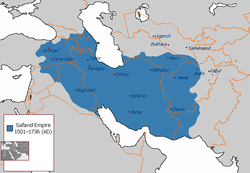
The Moghal Empire was one of the three Muslim empires which arose following the Mongol destruction of the Abbasid Caliphate in the 13th century, which were often referred to as the “Gunpowder Empires” as part of their power and consolidation arose from the use of firearms and cannon, as exemplified in the Ottoman Janissary Corps. Thus the Ottoman Empire (1300-1922), the Safavid Persian Empire (1501-1736)which institutionalized the Shi’a religion in Iran, and the Mughal Empire (1526-1857) bridged the era from the fall of the Caliphate to the Mongols to the rise of global Western Imperialism. At the early stages they dwarfed the European states and their relative demise was anything but a foregone conclusion, the Ottomans almost taking Vienna; if America had not been discovered global history might have turned out quite otherwise.


Ottoman Empire


As the West ascended to supremacy reinforced by the Renaissance, Reformation, Scientific Revolution and Industrial Revolution their empires gradually dismembered and absorbed their relatively stagnant Islamic rivals, particularly the modernizing Russian Empire (1547-1917) to the north and the economically, scientifically and culturally dynamic British Empire (1497-1970), which was destined to supplant all three as the largest and most powerful empire in all of world history, ruling over more than one-fourth of all global land area and human population. Nonetheless, for centuries the three Islamic empires constructively competed and also learned from each other cultually, sharing the Arabic language, Islamic religion and sharia law in the religious domain, as well as the Persian language for administration, diplomacy and culture in the royal courts, forming an impressive era of Islamic civilization.


Safavid_Empire_1501_1722_AD


The mission of the World Literature Forum is to introduce to readers coming from their own national literary traditions such as the West, to the great writers of all the world’s literary traditions whose contribution and influence beyond their own borders have had an influence on the formation of our emerging World Literature in our age of globalization, unprecedented travel and interaction of cultures including the instantaneous global communications of the Age of the Internet and the cross-border e-Book. The contributions of India and the Muslim world including those of the Mughal Dynasty in India form a rich part of this common heritage of mankind.


KABIR, RENOWN POET OF RELIGIOUS TOLERANCE AND SPIRITUALITY


An early figure in the mixing of the Vedic and Muslim traditions was that of the poet Kabir (1440-1518) born as an illegitimate child of a Brahmin mother in Varanasi who was raised by a Muslim family, then became a desciple of the Vaisnava Saint Ramananda. As such he turned away from the intolerance of sectarian religion on all sides and strove for the unification of all spiritual traditions in an ecumenical mysticism, Muslim, Sufi, Hindu, Sikh and Buddhist, seeking after a simple “oneness” with God in all manifestations. He was also a staunch champion of the poor and oppressed and a devoted opponent of social injustice in all forms. Persecuted at times by all sides in the collision of faiths, Kabir’s legend describes his victory in trials by a Sultan, a Brahmin, a Qazi, a merchant and god, and he became the subject of folk legends that still inspire tolerance in sectarian strife between Muslims and Hindus down to the present.

His greatest work is the “Bijak” (the “Seedling”), an idea of the fundamental oneness of man, and the oneness of man and God. He often advocated leaving aside the Qur’an and Vedas and simply following the Sahaja path, or the Simple/Natural Way to Oneness in God. He believed in the Vedantic concept of atman, but unlike earlier orthodox Vedantins, he spurned the Hindu societal caste system and murti-pujan (idol worship), showing clear belief in both bhakti and Sufi ideas. The major part of Kabir’s work was collected as a bhagat by the fifth Sikh guru, Guru Arjan Dev, and incorporated into the Sikh scripture, “Guru Granth Sahib.” An example of his poetry showing openess and tolerance is “Saints, I See the World is Mad:”


Saints, I See the World Is Mad

Saints, I see the world is mad.
If I tell the truth they rush to beat me,
If I lie they trust me.
I’ve seen the pious Hindus, rule-followers,
early morning bath-takers—
killing souls, they worship rocks.
They know nothing.
I’ve seen plenty of Muslim teachers, holy men
reading their holy books
and teaching their pupils techniques.
They know just as much.
And posturing yogis, hypocrites,
hearts crammed with pride,
praying to brass, to stones, reeling
with pride in their pilgrimage,
fixing their caps and their prayer-beads,
painting their brow-marks and arm-marks,
braying their hymns and their couplets,
reeling. The never heard of soul.
The Hindu says Ram is the Beloved,
The Turk says Rahim.
Then they kill each other.
No one knows the secret.
They buzz their mantras from house to house,
puffed with pride.
The pupils drown along with their gurus.
In the end they’re sorry.
Kabir says, listen saints:
They’re all deluded!
Whatever I say, nobody gets it.
It’s too simple.


THE MUGHAL EMPERORS AS AUTHORS—BABUR, AKBAR THE GREAT AND JAHANGIR


BABUR

The first Moghul Emperor, Babur (1483-1530) laid the foundations of the later empire by leading his army from the steppes and highlands of Samarkand and Afghanistan down into the plains of India. In addition to being a conqueror he was also a keen writer, and his autobiography, the “Baburnama” or “Memoirs of Babur” has been compared to the “Meditations” of Marcus Aurelius and the “Confessions” of Augustine and Rousseau, for its uncommon candor in the presentation of self. It is sometimes regarded as the first autobiography in the entire Muslim world, establishing the genre. His personality emerges from such small details as his correcting the spelling errors in the letters of his son and successor as Emperor, Humayun, and his catalogue of his likes and dislikes. He liked gardens with flowing water; he disliked India. Having conquered it, he writes of India: “It is a strange country. Compared to ours, it is another world, this unpleasant and inharmonious India.” He did not stay long after the conquest but returned to the highlands; but his sons and successors did, making the Mughal Dynasty.


AKBAR THE GREAT—EMPEROR OF RELIGIOUS TOLERANCE AND REASON

Akbar the Great (1542-16050 was great in more ways than one, being not only a conquering general who extended the Mughal Empire southwards to take in nearly all of India, but also like Kabir a seeker after tolerance, peaceful coexistence and unity within the Empire across the divide of Hindu-Muslim sectarianism. He abolished the Muslim tax on other religious communities and encouraged intermarriage between Muslim and Hindu princes and princesses and royal courts. He was fond of literature, and created a library of over 24,000 volumes written in Sanskrit, Hindustani, Persian, Greek, Latin, Arabic and Kashmiri, staffed by many scholars, translators, artists, calligraphers, scribes, bookbinders and readers. Holy men of many faiths, poets, architects and artisans adorned his court from all over the world for study and discussion. He encouraged open and free debate and intercourse at the royal court between all the religions, even including atheists, first shifting his personal belief from orthodox Islam to the mystic Muslim interpretations of the Sufis, then reacting against the too prominent bigotry within his own Muslim faith to found a short-lived unsuccessful rationalist-syncretistic religion to unite all religions within India, termed Din-i-Ilahi, or Universal Peace. Needless to say, such efforts at religious tolerance and rationalism outraged fundamentalists within his own Muslim and other faiths, and ultimately his efforts, like those of Akhnaton in Egypt to found a more rationalist monotheism, were defeated by the reactionary clerics who after his death termed his policies heresy and returned to the traditions of orthodoxy and intolerance.


JAHANGIR

Jahangir, son of Akbar the Great and a Rajasthani Princess, was fluent in Hindi, though he composed his “Autobiography” in the court Persian of the royal family. While not so penetrating as that of Babur, it is strikingly modern in revealing his personality in modern dilemmas such as his struggle with substance abuse—addiction to wine and opium, his search for spirituality from both Hindu and Muslim sources, and his almost childlike fascination with the natural world, including a passion for exotic things such as American Turkeys, pineapples, and African zebras.


SAUDA—-THE GREAT MUGHAL SATIRIST

Sauda is the penname of Mirza Muhammad Rafi (1713-1781) one of the greates prose writers, poets and satirists of the Urdu language. Urdu and Hindi, those peculiar twin languages of the Indian subcontinent are essentially the same language, yet divided into two by the usage of two different scripts for writing, Persian and Devangari, and the differing religions and cultures of their respective communities, being largely though not exclusively, Muslim and Hindu respectively. Urdu is also distinguished by the heavy influence of court Persian and of Arabic from the mosque. While Urdu literary culture was generally conservative, Sauda was anything but tradition-bound. With fierce independence of mind and an acid tongue, little around him escaped his wit and caustic laceration, including the Mughal Emperor himself. The Emperor fancied himself a good poet and often summoned literary men to hear him recite his works. Being thus called into the presence of the emperor, he remarked that his Royal Highness had composed a great many poems, asking him:

“How many poems do you compose a day?”

“Three or four couplets a day, if I am inspired……” answered the Emperor, then adding a boast, “……..I can even compose four whole poems sitting in the bathroom!”

“They smell like it,” replied Sauda.


Escerpt from Sauda’s Satires—“How to Earn a Living in Hindustan”

“Better to keep silent than try to answer such a question, for even the tongues of angels cannot do justice to the answer. There are many professions which you could adopt, but let us see what difficulties will beset you in each of them these days. You could buy a horse and offer yourself in service in some noble’s army. But never in this world will you see your pay, and you will rarely have both a sword and a shield by you, for you must pawn one or the other each day to buy fodder for your horse; and unless the moneylender is kind to you, you or your wife must go hungry, for you will not get enough to feed you both. You could minister to the needs of the faithful in a mosque, but you would find asses tethered there and men young and old sitting there idle and unwilling to be disturbed. Let the muezzin give the call to prayer and they will stop his mouth, for no one cares for Islam these days…..You could become a courtier of some great man, but your life would not be worth living. If he does not feel like sleeping at night, you too must wake with him, though you are ready to drop, and until he feels inclined to dine, you may not, though you are faint with hunger and your belly is rumbling. Or you could become his physician; but if you did, your life would be passed in constant apprehension, for should the Nabob sneeze, he will glare at you as though you ought to have given him a sword and buckler to keep off the cold wind. You will live through torture as you watch him feed. He will stuff himself with sweet melon and cream and then fish, and then cow’s tongue, and with it all fancy breads of all kinds; and if at any stage he feels the slightest pain in his stomach, then you, ignorant fool are to blame, though you were Bu Ali Sina himself……Here there is nothing but the struggle to live; there, nothing but the tumult of the Judgment Day.”


BANARASIDAS—-JAIN MASTER OF AUTOBIOGRAPHY


Banarasidas was a merchant member of the Jain religious community in the mid-1600’s who left behind in his “Half a Tale” one of the remarkable autobiographies of World Literature. It tells of his sorrow as a young man at the death of Emperor Akbar the Great in 1605, and the main occupations of his life, the quest for merchant success and the greater quest for spiritual fulfillment. It is not a mere succession of years, as the autobiography of Babur tends to be, but an inner dialogue of spiritual questioning and search. In Banarasidas, the writer conveys a more vivid sense of himself as self in his world than in the case of Jahangir. As a merchant, the archetypal “self made man,” he explores the unique consciousness of such a process of “self-making.” If the transition to Modernity turns on new forms of self-awareness, then Banarasidas begins this process in South Asia even as writers such as Montaigne began it in Europe.


MIR TAQI MIR & GHALIB, MASTERS OF THE URDU GHAZAL AND LOVE POETRY


The Ghazal love poem, or “Conversation with the Beloved” is one of the great traditions in Urdu and Indian tradition, being sung at weddings and celebrations as a living tradition. Mir Muhammad Taqi Mir (1723-1810) along with Ghalib (1797-1869) were two of the grandmasters of the genre, living in the days of the final decline and dismemberment of the Mughal Empire and the rise of the British Raj. Mir’s love poems became classics of the genre, enjoyed by both Hindus and Muslims for their supple grace and lyrical expressiveness. He also left behind an autobiography, written in Persian, which relates his obsessions, his private life with his father, an eccentric Sufi mystic, and the misery of public life in Dehli where the Emperor was reduced to an impotent figurehead hardly even in command of one city, his own capital. Ghalib was one of the greatest poets in two languages, Urdu and Persian, and was, like Byron, an aristocratic rebel, religious sceptic and outsider who was difficult for either his friends or enemies to understand or deal with. Also like Byron, Ghalib made himself a leading figure in his poems, assuming the stature of a kind of “Byronic Hero.” Ghazals usually ended with some personal reference to the poet, but Ghalib built this tradition up to Byronic proportions, fashioning his persona into a witty, sophisticated and melancholy commentator on his own life and the crumbling and corrupt world of society and the Mughal court around him. Though he wrote for the Emperor and the court, Ghalib was never a sychophant, and like Sauda, did not hesitate to express his dislike for the Emperor’s own poetry and the claims of Muslim orthodoxy. Interrogated by the British during the 1857 Mutiny, he was asked by the British commander: “Are you a Muslim?” He curtly replied: “Half a Muslim: I drink wine but I don’t eat pork.” Ghalib is now considered as the greatest poet of the Urdu ghazal of any period.


SPIRITUS MUNDI AND ISLAMIC LITERATURE


My own work, Spiritus Mundi the contemporary and futurist epic, is also influenced by Islamic and Sufi literary traditions. It features one major character, Mohammad ala Rushdie who is a Sufi novice in the Mevlevi order who is also a modern social activists in the Campaign for a United Nations Parliamentary Assembly for global democracy. He in the course of the novel is taken hostage by terrorists and meets the Supreme Leader of Iran, urging him to “Open the Gates of Ijtihad,” or reinvigorate Islamic tradition with creative reasoning and openness rather than binding it to blind precedent and unthinking tradition–much in the tradition of Kabir and Akbar the Great. Another historical chapter, “Neptune’s Fury” features the sojourn of Admiral Sir George Rose Sartorius in the Maldive Islands where he encounters the “Sultan of the Sea of Stories” and during which he must, like the Schehereqade of the One Thousand and One Nights, tell a story each day to avoid execution by the Sultan.

World Literature Forum invites you to check out the great writers of World Literature from the Mughal Age in India, and also the contemporary epic novel Spiritus Mundi, by Robert Sheppard. For a fuller discussion of the concept of World Literature you are invited to look into the extended discussion in the new book Spiritus Mundi, by Robert Sheppard, one of the principal themes of which is the emergence and evolution of World Literature:

For Discussions on World Literature and n Literary Criticism in Spiritus Mundi: http://worldliteratureandliterarycrit…

Robert Sheppard

Editor-in-Chief
World Literature Forum
Author, Spiritus Mundi Novel
Author’s Blog: http://robertalexandersheppard.wordpr…
Spiritus Mundi on Goodreads:
http://www.goodreads.com/book/show/17…
Spiritus Mundi on Amazon, Book I: http://www.amazon.com/dp/B00CIGJFGO
Spiritus Mundi, Book II: The Romance http://www.amazon.com/dp/B00CGM8BZG

Copyright Robert Sheppard 2013 All Rights Reserved
View all my reviews

Posted in Uncategorized | Tagged , , , , , , , , , , , , , , , , , , , , , , , , , , , , , , , , , , , , , , , , , , , , , , , , , , , , , , | Leave a comment

WORLD LITERATURE CLASSICS FROM OTTOMAN EMPIRE AND TURKISH LITERATURE—NOBEL PRIZE LAUREATE ORHAN PAMUK’S “ISTANBUL” AND THE CONCEPT OF “HUZUN,” EVLIYA CELEBI–THE TURKISH MARCO POLO’S “BOOK OF TRAVELS,” MIHRI KHATUN & MIMAR SINAN–THE TURKISH MICHELANGELO OF ISLAMIC ARCHITECTURE, LADY MARY WORTLEY MONTAGU’S “THE TURKISH EMBASSY LETTERS,” FUZULI, & NEDIM———-FROM THE WORLD LITERATURE FORUM RECOMMENDED CLASSICS AND MASTERPIECES SERIES VIA GOODREADS—-ROBERT SHEPPARD, EDITOR-IN-CHIEF

Istanbul: Memories and the CityIstanbul: Memories and the City by Orhan Pamuk

My rating: 5 of 5 stars

WORLD LITERATURE CLASSICS FROM OTTOMAN EMPIRE AND TURKISH LITERATURE—NOBEL PRIZE LAUREATE ORHAN PAMUK’S “ISTANBUL” AND THE CONCEPT OF “HUZUN,” EVLIYA CELEBI–THE TURKISH MARCO POLO’S “BOOK OF TRAVELS,” MIHRI KHATUN & MIMAR SINAN–THE TURKISH MICHELANGELO OF ISLAMIC ARCHITECTURE, LADY MARY WORTLEY MONTAGU’S “THE TURKISH EMBASSY LETTERS,” FUZULI, & NEDIM———-FROM THE WORLD LITERATURE FORUM RECOMMENDED CLASSICS AND MASTERPIECES SERIES VIA GOODREADS—-ROBERT SHEPPARD, EDITOR-IN-CHIEF

TURKISH NOBEL LAUREATE ORHAN PAMUK’S “ISTANBUL” AND THE CONCEPT OF “HUZUN”

The Nobel-Prize winning Turkish author in his remarkable recapturing of the inner life of his native city “Istanbul” describes the concept of “huzun” as the peculiar shared malancholy for an irretrievably lost greatness that lives in the hearts of the citizens of his native city, the past capital and seat of glory of the Ottoman Empire. The “saudade” of Lisbon, the “tristeza” of Burgos, the “mufa” of Buenos Aires, the “mestizia” of Turin, the “Traurigkeit” of Vienna, the ennui of Alexandria, the ghostliness of Prague, the glumness of Glasgow, the dispiritedness of Boston share only on their surface some common sense of Istanbul’s melancholy which is rooted even more deeply in the Sufi mystic’s sense of spiritual loss on looking back on the fleeting moment of epiphantic bliss, unsustainable in this world, the ever-yearned “close encounter” with God’s presence, which if momentarily aproximated, is forever thereafter lost this side of death. Pamuk’s “huzun,” a Turkish word whose Arabic root (it appears five times in the Koran) thus denotes a feeling of deep spiritual loss coupled with historical loss, but also for the living, a hopeful way of looking at life, “a state of mind” as he puts it, “that is ultimately as life-affirming as it is negating.”

The Christian equivilant might be the emotional complex associated with Saint John of the Cross, whereby the seeker’s anguish causes the sufferer to plummet so far down in his soul that he will, with innate bouyancy and the operation of the equal and opposite spiritual laws of counteraction, soar to its divine desire. Huzun is therefore,like other bi-polar narcotic addictives, a sought-after state, and it is the absence, not the presence, of huzun that causes the sufferer distress in withdrawal. “It is the failure to experience huzun,” Pamuk says of the craving, “that leads him to feel it.” According to Pamuk, moreover, huzun is not a mere personal preoccupation but a communal emotion, not the mere melancholy of an individual but the black mood of millions shared, as they share their common history, which if past, is yet ever present.

Born in Istanbul, Pamuk, the first Turkish citizen to be awarded the Nobel Prize for Literature in 2006, is now Robert Yik-Fong Tam Professor in the Humanities at Columbia University, where he teaches Comparative Literature and Writing. His novels include “The White Castle,” “The Black Book,” “The New Life,” and “My Name Is Red” and “Snow.”

THE OTTOMAN EMPIRE (1300-1922)


Ottoman Empire


The Ottoman Empire rose from obscure beginnings around 1300 in the wake of the Arab Abbasid Caliphate’s devastation by the Mongol invasion and in the presence of the slow deterioration and lingering dismemberment and death of the neighboring Byzantine Empire, whose capital of one thousand years, Constantinople, was one and the same city with Pamuk’s Istanbul. The first leader Osman, from whose name the word Ottoman derives, and his successors began to dominate and unite the various Turkic tribes of Anatolia, the land of modern-day Turkey and consolidate them under a centralized Turkic and Islamic state. After a brief setback from their defeat by Timur, a new young Sultan, Mehmet the Conqueror thrust the Ottomans onto the world stage by successfully conquering Constantinople, ending the Byzantine Empire. Afterwards, under Selim and Suleiman the Magnificant the Empire was extended to include Egypt and North Africa, the European Balkans up to the approaches to Vienna, and finally Baghdad and Iraq, resulting in the transfer of the Caliphate, nominal dominion of all Muslims, to Constantinople the new Ottoman capital.

By 1600 the Ottoman Empire had become a superpower, far larger than any existing European state in both territory and population, which approached 20-30 millions, compared to only 5 million in England and 10 million in France. However, by the Law of Unintended Consequences the Ottomans sewed also the first seeds of their own demise, as their monopoly of the Far East trade with China and India resulting from their capture of Constantinople impelled Columbus on his voyage to China which led to the discovery of the Americas, the installation of Spain as the first global Empire and then to the growth of the rival global empires of France and Britain and Russia, the allies who would in their victory over the Ottomans and their German allies in World War I dismantle the Ottoman Empire forever.

In the meantime, however, several centuries of Ottoman reign would afford ample opportunity for the development of a rich literature, part of the common heritage of the world.

MIHRI KHATUN, SUFI WOMAN POET IN AN ARISTOCRATIC PATERNALISTIC AGE &
MIMAR SINAN, THE TURKISH MICHELANGELO OF ISLAMIC ARCHITECTURE


Mosque


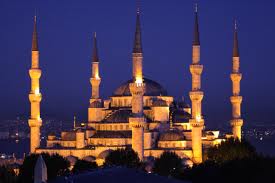
Mihri Khatun (1445-1512) was the most distinguished Turkish woman poet of the early Ottoman Empire. She came from a glorious Sufi family, a descendant of Pir Ilyas, the Sheikh of Amasya. Her intellectual family provided her with illustrious private tutors and access to the copious family library. She proved to have an inborn talent for poetry, and came to excel in the ghazal genre of love poetry. In addition, like the later grande dames of the Paris “salons” she occupied at striking figure in intellectual, governmental and artistic circles. Her ghazals were an expression of her amatory experience and a capacity for Platonic spiritualized love in the Sufi tradition. Many of her love poems were inspired by and dedicated to Iskender Celbi, the son of the world-renown Ottoman architect Mimar Sinan Pasha. Sinan was celebrated as the “Turkish Michelangelo” as he built or designed the great mosques that made such a striking contribution ot the world architectural heritage, such as the Suleiman and Sultan Ahmet Grand Mosques which still dominate the skylines of Istanbul and many other Muslim cities. Our first impression of Islamic architecture, a domed mosque flanked by four towering and pointed minarets, was a form created by Sinan. It can be said that he worked in the same spirit of the Rennaisance as did Michangelo and Da Vinci in that he borrowed the domed design of the Byzantine Christian Hagia Sophia from the past and reworked it in an Islamic format, creating the Islamic grand style of architecture we still celebrate in the grand mosques and such structures as the Taj Mahal in India. In fact he was a close contemporary of Michelangelo and Da Vinci, actually competing with Da Vinci in both submitting designs for a bridge across the Golden Horn in an international competition sponsored by the Sultan. Both Sinan and Michelangelo changed the face of architecture for centuries in their respective domains of influence and thus the term “The Turkish Michelangelo” is no exaggeration. Be that as it may, Sinan’s son also inspired Mihri Khatun to leave an additional legacy to the world in her poetry, such as her renown “I Opened My Eyes From Sleep:”

I opened my eyes from sleep, and suddenly raised my head
There I saw the moon-face of the love-theif, shining

My star of good luck had risen—I was thus exalted
When in my chamber I saw this Jupiter rise to the evening sky

He appeared to be a Muslim, but by his dress an infidel
And divine light poured from lthe beauty of his face

I opened, then closed my eyes, but he had vanished from my sight
All I know of him—he was an angel or a faery

Now she knows the water of life,
Mihri will not die until the Judgement Day
For she has seen that visible Alexander
in the eternal dark of night

Thus notably Mihri Khatun includes in her poetry both Muslim and Classical Greek references along with a spirit of Sufi longing after the beloved, divine or sexual, reminding us that the Muslim world was also an equal heir to Aristotle, Plato, Alexander and the Classical Greek and Roman heritage, along with the inheritors of the Western Renaissance such as Petrarch and Shakespeare. Both the Western masters of the Renaissance and the Muslim masters of the earlier Islamic Golden Age which preserved so much of the Greek and Roman heritage, saw and acheived so much each in their times, because, as Newton stated, “they stood on the shoulders of giants,” i.e., both Muslim and Western geniuses standing on the same Greek and Roman shoulders as the common heritage of both civilizations.

EVLIYA CELEBI—THE TURKISH MARCO POLO

Evliya Celebi (1611-1684) is often referred to by the nickname of “The Turkish Marco Polo” not only because of his extensive travels but also for his voluminous writings giving his impressions, social conditions, geography and in-depth cultural cultural insights regarding the lands and peoples he visited. He was the son of the chief jeweler of the Ottoman royal court and his family’s immense wealth gave him the time and resources to devote himself to his chief and obsessive passion: travel. He traveled to every corner of the Ottoman Empire, from the Balkan domains neighboring Vienna to modern Saudi Arabia, into North Africa and through Egypt southwards into Africa, and then beyond the Empire into Russia and beyond. While not as extensive as the travels of Ibn Battuta or Marco Polo, his travels were extraordinary and his writing of them masterful.

LADY MARY WORTLEY MONTAGU’S “TURKISH EMBASSY LETTERS”

By any standards, Lady Mary Wortley Montagu (1689-1762) was an extraordinary worman who lived an extraordinary life at a time when few women had such opportunities. A countess and cousin to the great novelist Henry Fielding, she took advantage of her wealth and social position to educate herself to become a notable classical scholar, translator and poet, following in the footsteps of other aristocratic women of the French salons such as Madame de Sevigne. As a girl she was mentored by many illustrious tutors such as Mary Astell, who published and attempted a plan to found a Protestant women’s convent dedicated to the intellect of women, and Bishop Montagu. Her later mentor, Edward Wortley Montagu’s intellectual guidance became amatory, and her father refusing permission for them to marry, she finally eloped with him.

Like the “precieuses” or intellectual court ladies of the French salons she wrote and circulated poetry to closer friends and aristocratic acquaintances, in her social class it being considered ungenteel and unladylike to publish for the masses, and her writings became generally known only after her death. She proved herself, however, unlike the “ladies of sentiment” of the Continent, to be more interested in satire, wit and sex. Like Aphra Behn before her she was the object of scandal and admiration and dabbled in journalism, producing an edition of “The Spectator” for her friends Addison and Steele. She was a personal friend of Alexander Pope with whom she exchanged letters and poetry until they became enemies after he satirized her in his famous poem “Epistle II: To a Lady.”

Lady Mary Wortley Montagu’s life became inextricably connected with the Ottoman Empire when her husband Wortley Montagu was named ambassador to the Sublime Porte and she accompanied him to reside in Constantinople. In the collection of letters later published after her death as the “Turkish Embassy Letters” and written during her residence in Constantinople she provides an intimate account of women’s lives in both worlds, illuminated by her observations, thoughts, comparisons and contrasts. While Western men and writers such as Flaubert and Montesquieu fantasized about life in a Turkish harem as in the latter’s “Persian Letters,” her sex allowed her to intimately visit and observe the reality. Ironically, she was able to enjoy greater freedom walking the streets of Constantinople in Muslim women’s dress using the veil as a mask, than she could enjoy as an aristocratic lady in London, allowing her to make close observation of various classes of society of the Turkish capital.

Upon her return ot England she helped to popularize the Turkish practice of inoculation against smallpox, which was more accepted there than in Europe, publically inoculating her own two children to help overcome public fears of the vaccination process.

In 1739, at the age of fifty, she broke off her friendship with Alexander Pope and ran off to Italy with a bisexual writer, Francesco Algarotti, less than half her age and continued relations with him for the next twenty years until his death, though using her wealth to live in expatriate exile independently of both her lover and her husband. From Italy she wrote about her alienation as a foreigner and as a woman from all the worlds she had tried to inhabit. Returning to England only in the final year of her life at seventy-three her final words were: “It has all been most interesting.”

FUZULI—POET LAUREATE TO SULTAN SULEYMAN THE MAGNIFICENT AND AUTHOR OF LAYLA AND MAJNUN, THE TURKISH ROMEO AND JULIET

Fuzuli was the pen name used by Mehmed Ibn Sulayman (1480-1556) who is renown in Turkish letters as the court laureate in the reign of Suleyman the Magnificant, a writer of mystic and personal love poems, and, being a Shi’ite Muslim, on the tragic events of Karbala’s history attached to the martyrdom of Hussein, successor of Ali. Like most Islamic poets, he wrote in several languages, his native Turkish, Arabic and the Persian language used in royal and scholarly circles, and wrote extensive prose works on philosophy, religious issues and literary criticism in addition to his poetry. His themes focus on the human emotions, mystic love, wisdom, Sufi mysticism and also court pangyrics celebrating the Sultan and the Grand Vizir. Though Turkish he spent almost all of his life in Iraq as it became a part of the Ottoman Empire.

His most famous work was his “Layla and Majnun” (Layla wa Majnum)a story of “star-crossed lovers” akin to Shakespeare’s Romeo and Juliet, also rendered by many other writers across the Islamic world such as the Persian Poet Nizami. It tells the story of Quys, or Majnun (The Madman)who fell insanely in love with his soulmate Layla. Prevented from marrying by her father who objectet to his poverty and scandalously lunatic behavious towards his beloved, he in desperation took up the life of a wanderer writing poems about her and observing her from afar. She marries another of her father’s choice, but out of her love for Majnun refuses to consummate the marriage and dies of a broken heart. Majnun also dies of grief on her grave after inscribing lyrics of undying love on the neighboring rocks. Buried together, two trees grow on their graves whose trunks and branches are inseperably fused.

His own life followed a similar path of love, when as a young scholar he fell in love with the daughter of his mentor, Rahmat Allah. Illustrative of his love theme is his poem, “Oh God, Don’t Let Anyone Be Like Me!”

Oh God, don’t let anyone be like me,
crying and disheveled
Oh God, don’t let anyone be an addict of love’s
pain and separation’s blow

Always I have been oppressed by those merciless
idols, those beloveds
Oh God, don’t let a Muslim be a slave
to those infidels

I see the moon-faced one, thinking of killing me
with her love
I’m unafraid, oh God, just don’t let her change
her mind

When they want to draw from my body the arrowhead
of the cypress-bodied one
Oh God, let it be my wounded heart they take
but not her arrow

I’m accustomed to misery and cruelty–how would
life be without them?
Oh God, don’t let my suffering be limited
nor her tyranny end

Don’t say that she shows no justice, that she is
so unfair
Oh God, let no one but her be sultan
on the throne of my heart

In the corner of this tavern Fuzuli found a treasure
of delight
Oh God, this is a holy place, may it never
be brougt to ruin

NEDIM & THE COMING OF AGE OF TURKISH POETRY

Nedim (1681-1730), is the penname and a nickname meaning “drinking companion” used by Ahmed Mehmed Nadim, Poet Laureate of the Ottoman Empire and a close friend and drinking companion of Sultan Ahmed III and his Grand Vizir, Damad Ibrahim Pasha. Under Nedim’s influence Turkish poetry came of age, acquiring a pure Turkish style and new themes, distinguishing itself from the classical Arabic and Persian poetry on which was modeled for many centuries. Nedim was also associated with Sultan Ahmed III’s controversial Westernizing policies, comparable to those undertaken by Tsar Peter the Great in Russia around the same period, which in Turkey however resulted in a reactionary movement which deposed the modernizing Sultan rather than Peter’s successful undertaking. His poem “At the Gathering of Desire” is addressed to “Saki,” meaning a court cup-bearer or beloved, a name later used by Edwardian British short story master H.H. Munro:

At the gathering of desire you made me a wine-cup
with your sugar smile
Oh Saki, give me only half a cup of wine
you’ve made me drunk enough

You crushed me under the hoof of a wild horse
that runs like fire
In those places flames rise up from my ashes
like cypress trees

Ah, east wind, you came to me with the scent
of my lover’s hair
You made me love-bewildered like the huacinth’s curl

With your beauteous grace my hair has been standing
like a jinn
With love you’ve made me mirror-colored from head
to foot

Don’t make your crying Nedim drunk and devastated
like that
Saki, give me only half a cup of wine, you’ve made
me drunk enough

SPIRITUS MUNDI AND ISLAMIC LITERATURE

My own work, particularly Spiritus Mundi, the contemporary and futurist epic is also influenced by Islamic literary traditions. It features one major character, Mohammad ala Rushdie who is a Sufi novice in the Mevlevi order who is also a modern social activists in the Campaign for a United Nations Parliamentary Assembly for global democracy. He in the course of the novel is taken hostage by terrorists and meets the Supreme Leader of Iran, urging him to “Open the Gates of Ijtihad” or reinvigorate Islamic tradition with creative reasoning and openness rather than binding it to blind precedent and unthinking tradition. Another historical chapter, “Neptune’s Fury” features the sojourn of Admiral Sir George Rose Sartorius in Istanbul as his ship is repaired after the battle of Alexandria against Napoleon’s fleet in which the Turks and British were allies, experiencing “huzun” for the Byzantine past.

For a fuller discussion of the concept of World Literature you are invited to look into the extended discussion in the new book Spiritus Mundi, by Robert Sheppard, one of the principal themes of which is the emergence and evolution of World Literature:

For Discussions on World Literature and n Literary Criticism in Spiritus Mundi: http://worldliteratureandliterarycrit…

Robert Sheppard

Editor-in-Chief
World Literature Forum
Author, Spiritus Mundi Novel
Author’s Blog: http://robertalexandersheppard.wordpr…
Spiritus Mundi on Goodreads:
http://www.goodreads.com/book/show/17…
Spiritus Mundi on Amazon, Book I: http://www.amazon.com/dp/B00CIGJFGO
Spiritus Mundi, Book II: The Romance http://www.amazon.com/dp/B00CGM8BZG

Copyright Robert Sheppard 2013 All Rights Reserved

View all my reviews

Posted in Uncategorized | Tagged , , , , , , , , , , , , , , , , , , , , , , , , , , , , , , , , , , , , , , , , , , , , | Leave a comment

CLASSICAL ARABIC AND ISLAMIC MASTERPIECES OF WORLD LITERATURE FROM THE ISLAMIC GOLDEN AGE—–“THE KORAN,” AL-KHANSA, HAFIZ, ABU-NAWAS, RUMI, AL-JAHIZ, “ONE THOUSAND AND ONE NIGHTS,” IBN SINA (AVICENNA), IBN RUSHD (AVERROES),IBN ARABI, IBN-TUFAIL (ABUBACER) & AL-HALLAJ—FROM THE WORLD LITERATURE FORUM RECOMMENDED CLASSICS AND MASTERPIECES SERIES VIA GOODREADS—-ROBERT SHEPPARD, EDITOR-IN-CHIEF

The KoranThe Koran by Anonymous
My rating: 5 of 5 stars

CLASSICAL ARABIC AND ISLAMIC MASTERPIECES OF WORLD LITERATURE FROM THE ISLAMIC GOLDEN AGE—–“THE KORAN,” AL-KHANSA, HAFIZ, ABU-NAWAS, RUMI, AL-JAHIZ, “ONE THOUSAND AND ONE NIGHTS,” IBN SINA (AVICENNA), IBN RUSHD (AVERROES),IBN ARABI, IBN-TUFAIL (ABUBACER) & AL-HALLAJ—FROM THE WORLD LITERATURE FORUM RECOMMENDED CLASSICS AND MASTERPIECES SERIES VIA GOODREADS—-ROBERT SHEPPARD, EDITOR-IN-CHI

Islamic Golden Age

“THE INK OF THE SCHOLAR”—THE ISLAMIC GOLDEN AGE

The “Islamic Golden Age” was an historical period beginning in the mid-8th century lasting until the Mongol conquest of Baghdad in 1258, generally associated with the rise of the Abbasid Caliphate around 750 AD, and the moving of the capital from Damascus to Baghdad, but also including contributions from remnant Ummayad kindgoms in Iberia (modern Spain and Portugul) and North-West Africa. The Abbasids were influenced by the Qur’anic injunctions and Hadith such as “the ink of a scholar is more holy than the blood of a martyr” that stressed the value of knowledge and reason, and were also more cosmopolitan than the Umayyads, being allied with the Persian Barmacids and less ethnocentrically focused on the narrower tribal culture of the Kureysh, the original tribe of Muhammad.

The rise of Islam was instrumental in uniting the warring Arab tribes into a powerful empire. The Abbasids claimed authority as belonging to the same family and tribe to which the Prophet Muhammad belonged, and were for that reason considered holy. During this period the Arab world became an intellectual center for science, philosophy, medicine and education; the Abbasids championed the cause of knowledge and established the House of Wisdom (Bait-ul-Hikmat) at Baghdad, where both Muslim and non-Muslim scholars sought to translate and gather all the world’s knowledge into Arabic, and also the second court language Persian.

The Arabs displayed a remarkable capacity of assimilating the scientific knowledge of the civilizations they had overrun. Many classic works of antiquity that might otherwise have been lost were translated into Arabic and Persian and later in turn re-translated into Turkish, Hebrew and Latin. St. Thomas Aquinas, for example, gained crucial familiarity with the works of Aristotle through translations into Arabic and then into Latin accompanied by the commentary of the great Muslim Aristotelian scholar Ibn Sina (Avicenna).

During this period the Arab world was a collection of cultures which put together, synthesized and significantly advanced the knowledge gained from the ancient Roman, Chinese, Indian, Persian, Egyptian, Greek, Byzantine and Phoenician civilizations. The decimal system and “zero” travelled from India into Arabic culture during this time and in 9th century it was popularized in the Islamic regions by the Persian mathematician al-Khwarizmi. Later in 12th century the renown Western monk Abelard introduced what Westerners call “Arabic Numerals” to Europe, but which the Arabs themselves termed “Hindsi” or “Indian Numerals,” indicating their true origin. They also began the use of Algebra and advanced logarithims in order to solve complex mathematical problems.

There is little agreement on the precise causes of the decline in Arabic creativity and intellectual leadership ending the Islamic Golden Age, but in addition to the devastating invasion by the Mongols and crusaders with the destruction of libraries and madrasahs, it has also been suggested that political mismanagement and the stifling of “Ijtihad” (independent reasoning) in the 12th century in favor of institutionalised “Taqleed” (imitation and uncritical following of precedent) played a part.

THE KORAN (QURAN) IN WORLD LITERATURE

Any understanding of the literatures of Islamic nations must begin with a familiarity with the Koran, just as any understanding of of Western Literature must include a basic familiarity with the Bible. Muslims believe the Quran to be verbally revealed through Angel Gabriel (Jibril) from God to Muhammad gradually over a period of approximately 23 years beginning from 609 AD, when Muhammad was 40, to 632 AD, the year of his death.

Muslims regard the Quran as the main miracle of Muhammad, the proof of his prophethood and the culmination of a series of divine messages to humanity that started with the messages revealed to Adam, regarded in Islam as the first prophet, and continued with the Scrolls of Abraham (Suhuf Ibrahim), the Tawrat (Torah) of Moses, the Zabur (Tehillim or Psalms) of David, and the Injil (Gospels) of Jesus. The Quran assumes familiarity with major narratives recounted in Jewish and Christian scriptures, summarizing some, dwelling at length on others and in some cases presenting alternative accounts and interpretations of events. The Quran describes itself as a book of guidance, sometimes offering detailed accounts of specific historical events, and often emphasizing the moral significance of an event.

Regardless of whether one believes or disbelieves in the Koran, equally as in the case of whether one believes or disbelieves in the Christian or Jewish Bible, it is an inescapable necessity for every educated person to read and be familiar with these works as literature if one has any hope of understanding World Literature, Western Literature, Islamic and Arabic Literature, English, French, German, Russian or any national literature of any culture affected by their influence. No one can understand English or American Literature without familiarity with the King James and other versions of the Bible, the words, phrases, style and stories and themes of which permeate and recur in Shakespeare, Donne, Milton, and a thousand believing and unbelieving authors and works. Similarly, any understanding of German Literature is impossible without knowledge of the Bible of Luther. The Koran thus takes its place in World Literature by virtue of its shaping influence on the mindset and consciousness of over one billion Muslims across dozens of nations, cultures and literatures as well as the cultural foundation of dozens of Muslim authors and works of worldwide importance such as Rumi, Attar, Hafiz, the Thousand and One Nights, Mafouz Naguib, Ghalib and others. Thus it is required reading, at least in part, for any Citizen of the Republic of Letters or of the modern world, alongside the Bible, the Buddhist Sutras such as the Fire Sermon, the Bhagavad Gita and the Dao De Ching, as part of the common heritage of mankind.

Compared to the Bible, the Koran is a much shorter work, lacking the extended historical accounts and chronicles of the Old Testament and the multiple repetitive Gospels of Matthew, Mark, Luke and John of the New Testament, and can be read in a relatively short time in translation by most people for basic familiarity.

The basic theme of the Koran is that of monotheism, an invocation to belief and adherence to the single God, Allah, of Muhammad, who is also conceived as the same God of the Christian and Jewish Abrahamic tradition, albeit with differences of understanding with the other religions. A good deal of the Koran is concerned with laying down rules of behaviour in common life, religious practice and society, as the Suras were broadly used for instruction of the Ummah, or new congregation of Islam in Mecca and Medina during Muhammad’s life as he recited them. The Koran also contains repetitions of many famous Bible stories such as Adam and Eve, the Flood, Genesis, Exodus and life of Moses, the conception of Jesus by Mary and others. In the Koran Moses and Jesus are considered fellow prophets of Allah, though Jesus is not considered as the son of God as in the Bible. A large part of the Koran contains exhortations to belief in its one God Allah and adherence to its rules of behaviour, with the bliss of paradise as promised reward and certain damnation in Hell as the consequence of failure to do so. Similar to the Bible, a significant part of the Koran focuses on the coming Apocalypse, or end of time and the consequent Last Judgment of all souls.

PRE-ISLAMIC ARABIC POETRY—AL-KHANSA, CELEBRATED WOMAN POET

Even before Muhammad and the rise of Islam Arabic literature had developed a strong poetic tradition. At that time Arabic culture was largely based on oral tradition, with poetry at its center. For a nomadic people such as the Bedoin Arabs, poetry was the main reservoir of the people’s knowledge and expression of their very existence. Poets were highly honored, attaining even what today we might term “superstar” status. The poetry was the poetry of the tribe or clan, articulating its legends, heroes, geneology, iteration of its strong “tribal code” of norms and exploits. Celebrated poets included traditionalists such as Imru ‘al-Qays, the “Brigand Poets” or poets who individualistically broke with the control of their tribes and lived outside the tribal system, and the celebrated Pre-Islamic woman poetess Al-Khansa.

Al-Khansa (575-646) put women in a central place in her poetry. A traditionalist in one sense, she wrote poems of lament for brave fallen heroes of her tribe, such as her fallen brothers, yet celebrated the women who remained alive and powerful in keeping life going and honoring and transmitting the proud warrior values to their children, despite the vicissitudes of battle, defeat and victory. She made women’s role in the symbolic order potent and visible, even in a patriarchal tribal society.

HAFIZ—FATHER OF THE GHAZAL GENRE OF LOVE POETRY

Hafiz is the pen name of the Persian poet Shams al-Din Muhammad Shirazi who is celebrated as the originating master of the “ghazal,” a form of poetic artistic unity which is neither thematic nor dramatic in the Western sense, but consists in the creation of a poetic unity by weaving imagery and allusions round one or more central concepts, of which both divine and sexual love are the most common. Hafiz was a master of interweaving the erotic and the mystic through superb linguistic craftsmanship and intuitive insight. Some stanzas from his “The House of Hope” give some feel for his themes, often sensual and melancholy:

The house of hope is built on sand,
And life’s foundations rest on air;
Then come, give wine into my hand,
That we may make an end of care.

Look not to find fidelity
Within a world so weakly stayed;
This ancient crone, ere flouting thee,
A thousand bridegrooms had betrayed.

Take not for sign of true intent
Nor think the rose’s smile sincere;
Sweet, loving nightingale, lament:
There is much cause for weeping here.

What envying of Hafiz’s ease,
Poor poetaster, dost thou moan?
To make sweet music, and to please,
That is a gift of God alone.

ABU-NAWAS—EROTIC COURT POET OF THE CALIPH HAROUN AL-RASHID OF THE THOUSAND AND ONE NIGHTS

Abu-Nawas (755-815) is perhaps the most beloved of Arab poets of any period. He appears repeatedly as a character in the classic “One Thousand and One Nights,” or “Arabian Nights” along with the renown Abbasid Caliph Haroun al-Rashid and his Barmacid Vizir Jafar. He is the archetypal sensual, erotic and profligate poet and Baghdad court favorite of the Caliph. He wrote pangyric poetry as well as heterosexual and homosexual ghazals, and handled Bacchic poems of “wine, women and song” with incomparable skill. He wrote with an existential edge to his Epicurean ethos that embraced every kind of pleasure and satisfaction. His death is a subject of legend, some saying he died in prison for writing blasphemous verse, others that he died in a whorehouse, some saying he was murdered in reprisal for lampooning a powerful court personage, and still others that he died peacefully in his sleep in the home of a learned Shi’ite scholar.

RUMI—-SUFI MYSTIC POET OF THE ECSTASY OF LOVE

Jalal al-Din Rumi (1207-1273) was renown as both the foremost Sufi mystic poet and the founder of the Mavlevi sect of Sufi dancing dervishes. Originally an academic scholar and professor, he was persuaded by a wandering Sufi mystic, Shams al-Din Tabrizi, to take up the Sufi life and put the love of God at the center of his existence. Striving after divine illumination in diverse ways, from devout meditation to the ecstatic pleasures of wine, sexuality and the Dervish entrancement of dance, he emphasized a devotion to a spiritualized love that disregards rites and convention and concentrates on inner feeling and approach to the ecstatic infinite. His odes have been chanted by Hadjj pilgrims on the road to Mecca for centuries and are sung with the greatest reverence even today.

AL-JAHIZ—THE GREATEST PROSE WRITER OF CLASSICAL ARAB CULTURE

Abu Uthman ‘Amr ibn Bahr (776-868) of Basra, Iraq was known as “Al-Jahiz” or “the goggle eyed” due to a malformation of his eyes and was one the dynamic personalities in the Mu’tazilite circles, which met regularly in Basra reminiscent of the famous “salons” of Paris. Basra was also the location of the annual Al-Mirbad literary festival of Arab and Islamic culture that took place yearly featuring competitions and debates on philosophical issues, and at which he was renown for his wit, cutting humor, endless anecdotes and depth of knowledge. His book “Spiritual Leadership” was praised at the court in Baghdad by the Caliph al-Mamun, who appointed him as court scribe, personal secretary and speech writer. His monumental work the “Book of Animals” is the first encyclopedia on animals and zoology. His most famous work is the “Book of Misers” which is a unique portrait gallery of human characters rich in their contradictions and ironies. It features an acute analysis of the passion of avarice, satirical and comic narratives, and cutting insight into human psychology. If the Eighteenth Century is sometimes called the Age of Voltaire, the Ninth Century in the Abbasid Caliphate could be called the “Age of Al-Jahiz”
through his dominance of prose writing in Arabic.

THE GREAT PHILOSOPHERS OF THE ARAB GOLDEN AGE

If Classical Greece had the great triumvirate of Aristotle, Plato and Socrates in the realm of philosophy, the Islamic Golden Age featured Ibn Sina (Avicenna), Ibn Rushd (Averroes) and Ibn Arabi. Ibn Rushd and Ibn Sina played a major role in saving the works of Aristotle, whose ideas came to dominate the non-religious thought of both the Christian and Muslim worlds. They would also absorb ideas from China and India, adding to them tremendous knowledge from their own studies. Ibn Sina and other speculative thinkers such as al-Kindi and al-Farabi combined Aristotelianism and Neoplatonism with other ideas introduced through Islam. Avicenna argued his famous “Floating Man” thought experiment, concerning self-awareness, where a man prevented of sense experience by being blindfolded and free falling would still be aware of his existence, perhaps a forerunner of Descartes “cogito ergo sum”—-“I think therefore I am.”

Ibn Arabi was the foremost advocate of metaphysical Sufism, as expressed in his magnum opus “Bezels of Wisdom” which transformed Islam’s personal God into a principle of absolute being, where all is God and God is all, in which humanity in his Sufist interpretation, occupies a central role as revealed divine being, perhaps reminiscent of Bishop Berkeley’s pan-idealism.

The Arab philosophers of the Islamic Golden Age also stimulated other non-Muslim philosophers such as Jewish philosopher Moses Maimonides.

IBN TUFAIL AND IBN AL-NAFIZ—FATHERS OF THE ARABIC PHILOSOPHIC AND SCIENCE FICTION NOVELS

Ibn Tufail (Abubacer) and Ibn al-Nafis were pioneers of the philosophical novel. Ibn Tufail wrote the first fictional Arabic novel “Hayy ibn Yaqdhan” (“Philosophus Autodidactus”) as a response to al-Ghazali’s “The Incoherence of the Philosophers,” and then Ibn al-Nafis also wrote a fictional novel “Theologus Autodidactus” as a response to Ibn Tufail’s “Philosophus Autodidactus.” Both of these narratives had protagonists (Hayy in Philosophus Autodidactus and Kamil in Theologus Autodidactus) who were autodidactic feral children living in seclusion on a desert island, both being the earliest examples of a desert island story, a forerunner of Defoe’s “Robinson Crusoe.” However, while Hayy lives alone with animals on the desert island for the rest of the story, like Mowgli in Kipling’s “Jungle Book” in “Philosophus Autodidactus,” the story of Kamil extends beyond the desert island setting in “Theologus Autodidactus,” developing into a story of his re-entry into civilization, the earliest known coming of age plot and eventually becoming the first example of a science fiction novel.

AL HALLAJ—SUFI MARTYR

Al-Hallaj (857-922) was a great Sufi mystic, poet and theologian whose life and spiritual mission was reminiscent of the fate of Jesus Christ. A great spiritual searcher, he attended debates and salons in Basra and Baghdad, then embarked on thirty years of wandering, perpetual fasting, meditation, contemplation and silence in search of Sufi enlightenment. His pilgrimage to Mecca led to further enlightenment and he began to attract large numbers of followers, breaking the normal Sufi practice of esoteric secrecy by public preaching, including reform of corrupt clerics. His movement was perceived as a threat by the highly corrupt religious establishment, and he suffered a fate similar to Jesus and the Apostles. Corrupt clerics accused him of blasphemy and he was imprisoned in Baghdad eight years, tortured, half-killed and exhibited on a scaffold. The Caliph, failing to force him to recant his beliefs, finally had him decapitated, burnt and his ashes scattered into the Tigris River.

SPIRITUS MUNDI AND THE ISLAMIC GOLDEN AGE

The Islamic Golden Age is also reflected in my own work, the contemporary and futurist epic Spiritus Mundi. One of its characters Mohammad ala Rushdie is a novice Sufi of the Mevlevi Order, writer and also an activist for the creation of a United Nations Parliamentary Assembly. He is taken hostage by terrorists and meets the Supreme Leader of Iran, later reciting to him a short story he has written “The Supreme Leader and the Three Messiahs,” reminiscent of Dostoyevski’s “The Grand Inquisitor” set in an Islamic setting. Part of the plot of the novel involves a geopolitical conspiracy of an allied China-Russia-Iran to execute a Pearl Harbor-like sneak attack invasion of the Middle-East oil reserves to sever the “oil jugular” of the West, leading to a threatened WWIII. It is foiled by a cosmic quest of the protagonists intoa mythic dimension and a change of heart in the Iranian Supreme Leader following a visit of the Angel Jibreel (Gabriel) who commands him to “Open the Gates of Ijtihad” or creative reasoning against the tradition of blind precedent and conformity to the past as a means giving rebirth to the spirit of the lost Islamic Golden Age and preventing Armageddon and World War III.

For a fuller discussion of the concept of World Literature you are invited to look into the extended discussion in the new book Spiritus Mundi, by Robert Sheppard, one of the principal themes of which is the emergence and evolution of World Literature:

For Discussions on World Literature and n Literary Criticism in Spiritus Mundi: http://worldliteratureandliterarycrit…

Robert Sheppard

Editor-in-Chief
World Literature Forum
Author, Spiritus Mundi Novel
Author’s Blog:
http://robertalexandersheppard.wordpr…
Spiritus Mundi on Goodreads:
http://www.goodreads.com/book/show/17…
Spiritus Mundi on Amazon, Book I: http://www.amazon.com/dp/B00CIGJFGO
Spiritus Mundi, Book II: The Romance http://www.amazon.com/dp/B00CGM8BZG

Copyright Robert Sheppard 2013 All Rights Reserved
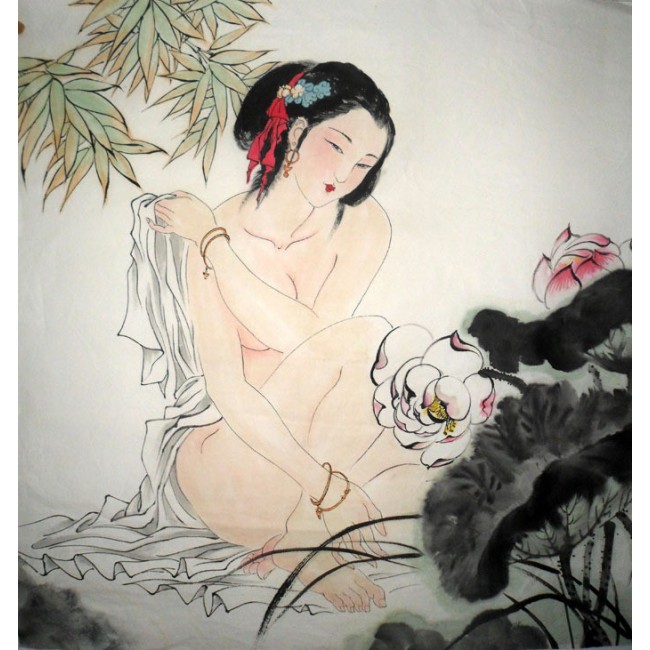
View all my reviews

Posted in Uncategorized | Tagged , , , , , , , , , , , , , , , , , , , , , , , , , , , , , , , , , , , , , , , , , , , , , , , , , , , , , , , , , , , , | Leave a comment

Towards a Eurasian Helsinki Process—On the Need for a Eurasian Helsinki Process, the Creation of an Organization for Security and Cooperation in Eurasia and a New Eurasian Naval and Conventional Arms Control Initiative

Towards a Eurasian Helsinki Process—On the Need for a Eurasian Helsinki Process, the Creation of an Organization for Security and Cooperation in Eurasia and a New Eurasian Naval and Conventional Arms Control Initiative

China's New Liaoning Aircraft Carrier

Launch of Indian Aircraft Carrier Vikram

Commissioning of the New Japanese "Pocket Aircraft Carrier" Izumo

The launch of the new Japanese “Pocket Aircraft Carrier” Izumo coupled with India’s launch of her aircraft carrier Vikrant in the same week, and China’s commissioning of its first aircraft carrier the Liaoning has set alarm bells ringing not only in Beijing, Moscow, New Delhi and Washington but across Eurasia and the Pacific. The cancellation of the Obama-Putin Summit amid the Cold War-esque acrimony underlines the urgency of the need for peacemaking efforts in Eurasia. It is now clear that we are on the slippery-slope of an incipient Eurasian arms race, not limited to the quest for naval supremacy through aircraft carriers but reflecting the expansion of the potential gameboard for a possible future World War III to include all of Eurasia if not the globe, and taking in strategic nuclear weapons, conventional land armies, air supremacy and naval force projection. The economic and industrial rise of incipient powers China and India as well as a host of Eurasian middle-power players threatens to set off a chain reaction of mutual fear and insecurity that resembles that of the years in Europe leading up to World War I and World War II with the rise of Germany, Japan, the USSR and Italy challenging the incumbent superpowers, the British Empire and the rising United States in a time of chronic economic crisis. We know the result of the mismanaged adjustment of power relationships of the last century: over one-hundred million dead and the untold misery and waste of two World Wars and the Cold War.

The challenge of the present time for the Obama administration along with its European Union and NATO allies and its Organization for Cooperation and Security in Europe (OCSE) counterparties such as Russia, is to recognize the new dilated Eurasian-wide playing field of the global balance of power taking in a rising China and India as well as a floundering Japan and other peripheral Asia-Pacific players and act pro-actively to begin a process of containing the incipient arms races and jockeyings for geopolitical power BEFORE such accelerating vicious circles lead to a breakdown of peaceful relations and World War III. In Europe such international institutions as the OSCE only belatedly took shape, almost too late, after the wastage of the two World Wars and the Cold War, in 1989-90 on the very verge of the collapse of the Soviet Union and Warsaw Pact and as a result of the “Helsinki Process” commenced under President Ford in 1975. In contrast to Europe, Asia exhibits a virtual vacuum of International Organizations capable of moderating and containing the conflicts inevitable with a readjustment of power relationships attendant to the rise of new powers and the relative decline of incumbents. The challenge in Eurasia is to “fast forward” the learning process gained over the last century in Europe, including the creation of the OSCE, and thus to pacifically and prophylactically manage that process of change for the better.

• Specifically, we call on President Obama and Secretary of State Kerry to join with President Putin and President Xi to invite China, India, Japan to invite China, India, Russia, Japan, the USA, NATO and the EU and all Eurasian nations to join in the initiative for establishing a new “Eurasian Helsinki Process” leading to the creation of an Organization for Security and Cooperation in Eurasia. This “Eurasian Helsinki Process” should commence with issuance of a “Blue Book” outlining a Eurasia-wide conference in 2015 on the 40th Anniversary of the Helsinki Accords. One of the Conference’s first items of business should be to convene a Eurasian Naval Arms Control Conference based on the precedent of the 1925 Washington Naval Conference which bound the UK, the USA and Japan to a moratorium on construction of capital ships along with a proportional control scheme of tonnage and types of naval armaments, at that time and circumstance set at 5:5:3:1.75:1.75 for the UK, USA, Japan, France and Italy respectively, the German navy already limited by the provisions of the Versailles Treaty. The new Organization for Security and Cooperation in Eurasia, like its forerunner OSCE in Europe should contain comprehensive peace-building dimensions in addition to crisis and arms control initiatives, building on the essential offices and dimensions of the existing OSCE to include, amoung others: Eurasian Permanent Council, Ministerial Council, Forum for Security Cooperation, Chairman-in-Office, Troika, Secretariat, Eurasian Parliamentary Assembly, Eurasian Conflict Prevention Centre, Eurasian Office for Comprehensive Arms Control, Office for Democratic Institutions and Human Rights and Office of the OSCE Representative on Freedom of the Media. It should include the “Three Dimensions” of the existing OSCE, namely: 1) The Politico-Military Dimension, 2) The Economic and Environmental Dimension, and 3) The Human Dimension. Such an organization would also be useful in contributing to the management of such chronic conflicts as those in Afghanistan and the Korean peninsula. The establishment of the Eurasian Parliamentary Assembly on the model of the European OSCE Parliamentary Assembly should be a first step, building on existing institutions such as the European Parliament, Parlatino, Arab Parliament and Pan-African Parliament, to the later-stage global creation of a United Nations Parliamentary Assembly to address the democratic deficit in the United Nations system as a whole. The OSCE should be constituted as a Regional Organization in the sense of Chapter VIII of the United Nations Charter and enjoy Observer status in the United Nations General Assembly, giving routine briefings to the Security Council in the tradition of the European OSCE.

In this regard we call on all of the leaders of the world to heed the words and moral invocation of President Eisenhower, who cannot be accused of naiveté or any lack of Realpolitik realism: “I hate war, as only a soldier who has lived it can, as one who has seen its brutality, it futility, its stupidity.” President Eisenhower then added, “every gun that is made, every warship launched, every rocket fired, signifies in the final sense a theft from those who hunger and are not fed, those who are cold and not clothed.” Furthermore, if not proactively managed, inevitable conflicts arising from the rise and rebalancing of new powers are likely to give rise to blind nationalism, demagoguery and the self-fulfilling prophecies of mutual fears leading to the escalation of manageable conflicts into uncontainable ones as the law of unintended consequences spirals out of control.

THE PRECEDENT OF THE ANGLO-GERMAN NAVAL ARMS RACE AND THE INCIPIENT NAVAL ARMS RACE IN THE ASIA-PACIFIC

The Anglo–German naval arms race of the early 20th century preceded and was one of the several intertwined causes for the First World War. There were also other naval buildups in several other countries which were emerging as great powers, such as the United States and Japan, and in South America. The armament of Germany reflected its status an emerging industrial power rising to dominance. Although Britain had been the first to industrialize and the economic superpower of Europe in the 1800’s, by 1900 Germany’s economy had overtaken it to become the largest in Europe, just as China’s economy overtook that of Japan after 2010 and is rising towards a near parity with the US. At the same time the rapid industrialization of France and Russia presented multi-sided challenges that also fed the arms race on land and at sea. Asia now occupies the analogous position of Europe in the run-up to WWI in that rapid industrialization in China, India and Korea challenge the relative position of the regional incumbent Japan, first economically, and then potentially militarily as economic and industrial capacity becomes capable of being directly converted into military might.
Analogously, Japan was the dominant ship building country from the 1960s through to the end of 1990s. But today, China is the world’s largest shipbuilding country with a global market share of 45% in 2013.

World shipbuilding market share by countries (2012)
Rank Country Combined GT
%
1 China
67,000,000 45%
2 South Korea
53,000,000 29%
3 Japan
28,000,000 18%
4 European Union
4,500,000 1%
Rest of the world 11,000,000 7%

At the present time the pressures building the Naval Arms Race in the Asia-Pacific are escalating. Territorial disputes, such as those between China and Japan over the Diaoyu/Senkaku islands, similar Japanese-Korean disputes, Japan-Russian disputes over the Kuriles/Northern Territories, the chronic unsolved status of Taiwan, as well as disputes over potentially oil-bearing seabed waters in the South China Sea involving Vietnam, the Philippines, Indonesia and other Asian nations all are driving mutual naval armament programs in all the potential actors. With the rise of China’s economy, she finds herself dependent upon sea lanes from the Middle-East for 80% of her oil imports, yet lacking the capacity to militarily secure these arteries from American blockade in time of conflict. China is also in a strategic competition with a rising India, which already possesses aircraft carrier capacity and sits astride China’s oil supply lanes. Many Japanese feel that their nation was forced into aggression in World War II because of the vulnerability of their foreign oil supply sources and lines and the threat of Western interdiction. In short all of the combustible fuel of potential conflict or war is present in the Asia-Pacific, linked to the greater tensions throughout Eurasia as a whole, and failure to manage such pressures may well lead to conflicts and possibly to intended or unintended war arising from situations gone out of control.

Though Great Britain at the run-up to WWI had the biggest navy in the world and the largest shipbuilding capacity, Germany was in the process of catching up. In accord with Kaiser Wilhelm II’s competitive enthusiasm for an expanded German navy, and his own strong desires, Grand Admiral Alfred von Tirpitz, Secretary of State of the German Imperial Naval Office, championed four Fleet Acts between 1898 and 1912 to greatly expand the German High Seas Fleet. The German aim was to build a fleet that would be 2/3 the size of the British navy, while Britain, spread thin by the global burden and vulnerabilities of empire would be reduced to regional near parity. This plan was sparked by the threat of the British Foreign Office in March 1897, after the British invasion of Transvaal that started the Boer War, to blockade the German coast and thereby starve German economy, if Germany would intervene in the conflict in Transvaal. From 1905 on the British navy developed plans for such a blockade that was a central part of British strategy.

In reaction to this challenge to their naval supremacy, from 1902 to 1910, the British Royal Navy embarked on its own massive expansion to keep ahead of the Germans. This competition came to focus on the revolutionary new ships based on HMS Dreadnought, which was launched in 1906, counting on a conventional technological superiority of massive 12” guns and improved engines making it the fastest battleship in the world. Little did this strategy of maintaining dominance at any cost anticipate the further accelerated technological revolutions of airpower, aircraft carriers and submarine warfare.
Illustrating the Law of Unintended Consequences, it is now generally accepted by historians that in early-mid 1914 the Germans adopted a policy of building submarines instead of new dreadnoughts and destroyers, effectively abandoning the quest for battleship parity, but kept this new policy secret so that other powers would be delayed in following suit.

The naval race between Britain and Germany generated huge public support on each side. In the midst of the race, the British public coined the slogan ‘We want eight and we won’t wait!’ referring to the number of dreadnoughts they wanted the government to build. Similarly public support for aircraft carriers in China is strong, with many Chinese perceiving their lack or inferiority in aircraft carriers or comprehensive naval power a national insult deriving from the history of Western colonialism. In Japan the Right-Wing increasingly manipulates public fears of Japan’s vulnerability vis-à-vis the rising giant China as well as a strengthening of Russia and the vulnerability to North Korean eccentric outrages. Nationalism is strong in the Philippines and Vietnam in resisting Chinese claims. With the surge of public support, the government prior to World War I did accelerate naval shipbuilding. To ensure that the British navy was at least the size of the next two largest navies Britain adopted the “Two Power Standard,” just as the US has targeted a “Two War Standard,” a legacy of the two theaters of war in WWII, by which the US necessarily must have the military resources to fight two regional wars simultaneously. In Britain this burden increasingly outran its diminishing industrial base, as in the context of the chronic World Economic Crisis from 2008 America has discovered its military burden is outrunning its economic capacity to bear it just as potential foreign challenges are growing. Britain’s strategic objective of the Two Power Standard failed as WWI approached, due to financial and logistical constraints of the era of the and due to the speed of expansion of the German navy. Britain did, however, still boast the largest and mightiest navy when war broke out in 1914.

Britain managed to build Dreadnought in just 14 months and by the start of the First World War Britain had 49 battleships, compared with Germany’s 29. Although the naval race as such was abandoned by the Germans before the war broke out, it had been one of the chief factors in the United Kingdom joining the Triple Entente, and therefore important in the formation of the alliance system as a whole. Besides, the increasing size of the Russian army compelled the Germans to spend more money on their army and therefore less on the navy. This initiative led to the Haldane mission. Germany proposed a treaty in which Germany would accept British naval superiority in exchange of a British neutrality in a war in which Germany could not be said to be the aggressor. This proposal was rejected by Britain. For Britain there was nothing to gain by such a treaty, since their naval superiority was already secure. Besides, the British Foreign Secretary Grey favoured a more aggressive policy toward Germany.

Immediately after World War I, the United Kingdom had the world’s largest and most powerful navy, followed by the United States and more distantly by Japan. The three nations had been allied for the First World War, but a naval arms race seemed likely for the next few years. This arms race began in the US. President Woodrow Wilson’s administration announced successive plans for the expansion of the US Navy during 1916 and 1919 that, if completed, would result in a massive fleet of 50 modern battleships; currently it was engaged in building six battleships and six battle cruisers.
In response, the Japanese parliament finally authorized construction of warships to enable the Japanese Navy to reach its target of an “eight-eight” fleet program, with eight modern battleships and eight battle cruisers. To this end, the Japanese started work on four battleships and four battlecruisers, all much larger and more powerful than those of the classes preceding.
While the British Royal Navy retained numerical superiority prior to the treaty, most of its ships were old and deteriorated after much use during the war; very few matched the new US or Japanese designs. The 1921 British Naval Estimates planned four battleships and four battlecruisers, with another four battleships to follow the subsequent year.

This “arms race” was widely unwelcome. The US Congress in fact disapproved Wilson’s 1919 plan, and for the 1920 presidential election, US politics resumed the prewar isolationism, with little endorsement for continued naval expansion. Britain could ill afford any resumption of battleship construction, given the exorbitant price of naval construction.

During late 1921, the US government became aware that Britain was planning a conference to discuss the strategic situation in the Pacific and Far East. To forestall the conference and to satisfy domestic pressure for a global disarmament conference, the Harding administration called the Washington Naval Conference during November 1921.

The Washington Naval Treaty, also known as the Five-Power Treaty, was a treaty among the major nations that had won World War I, which by the terms of the treaty agreed to prevent an arms race by limiting naval construction. It was negotiated at the Washington Naval Conference, which was held in Washington, D.C. from November 1921 to February 1922, and signed by the governments of the United Kingdom, the United States, Japan, France, and Italy. It limited the construction of battleships, battlecruisers and aircraft carriers by the signatories. The numbers of other categories of warships, including cruisers, destroyers and submarines, were not limited by the treaty but were limited to 10,000 tons displacement. The outcome of the Treaty was to limit overall naval strength at the status quo, with a proportion of 5:5:3:1.75:1:75 respectively for the UK, US, Japan, France and Italy, with Germany still restrained by the Versailles limitations. The Japanese calculated that with the Americans spread thin over two oceans, with a 5:3 ratio they could achieve parity or superiority over the US in the Pacific in the event of war, enhanced by the power of surprise attack.

Subsequent to the treaty were a number of other naval arms limitation conferences that sought to increase limitations of warship building. The terms of the Washington treaty were modified by the London Naval Treaty of 1930 and the Second London Naval Treaty of 1936, which allowed the Japanese to increase their proportionate strength vis-à-vis the US from 10:6 to 10:7. By the mid-1930s, Japan and Italy, embarked on a long-term strategic plan of imperial expansion, renounced the treaties, making naval arms limitation an increasingly untenable position for the other signatories.

From the foregoing we can see that a naval arms control treaty can be a useful though inevitably limited tool. Its primary advantage is to control the competitive pressure between nations such that the escalating arms race does not become a self-fulfilling prophecy of mutual fears. For those nations motivated by fear and insecurity it offers the superior option of limiting the threat’s strategic capability rather than relying on ever escalating, costly and wasteful additions to its own defensive or counter-offensive military capability. It only works if all of the parties have sufficient motivation in light of their perceived national interests and strategic plans to abide by the agreements, and if the treaty system substantially includes all of the potentially mutually threatening parties as well a reliable mechanism for verification of compliance. If any substantial number of the treaty participants truly intend unlimited aggression and the opportunity for the successful outcome of such aggression presents itself it is likely they would resort either to cheating or withdrawal from the pact’s arms control system. But if the underlying intentions are fundamentally benign, then such an arms control system offers a superior alternative to a mutually wasteful and ultimately useless escalating armaments race driven by mutual fears and uncertainty. The Washington Naval Treaty was thus successful through the Twenties but fell into failure with the rise of the Fascist leaderships of Germany, Japan, Italy and the lesser threat of the USSR in the Thirties up to WWII.

At the present it appears to be the case that none of the major competitors in the naval arms race or the Eurasian geopolitical balance of power harbor any serious intention or possess the capacity to invade or subjugate their potential competitors and therefore the outlook for a rational arms control treaty in their mutual interest is positive. Strategic thinkers always judge other nations, however, not on their present intentions but on their strategic capacity to wage war or conflict, since intentions are ever subject to change and mutability. It is thus that mutually limiting each nation’s offensive capacities against the others through arms control treaties, while providing a framework for resolving disputes involving national interests by means short of war is the most promising approach at the present time.

America has hitherto depended on absolute technological weapons superiority as well a preponderance in numbers and underlying economic capacity. However with the World Economic Crisis and the rise of the technological capacity of China and the BRIC powers, it is rapidly perceiving that this strategy may not be wholly sustainable. It may conclude that it may preserve its privileged position within the status quo better through mutual arms controls than uncontrolled competition with more and more capable adversaries. Though America may derive short-term benefits from the naval arms race by driving nations threatened by rising powers into its quasi-alliance system, such as Japan, India, Vietnam and the Philippines and creating a dependency on access to its military technologies, in the longer term an uncontrolled arms race can only threaten and destabilize the status quo in which it occupies a privileged position, creating much more risk than benefit as well as overtaxing its stagnating economic base.

Rising powers such as China may well embrace such arms controls first to delay any premature confrontation with powers stronger than itself while it builds its underlying industrial and technological infrastructure. This reflects their long term strategy from the time of Deng Xiaoping of “Tiao Guang Yang Hui,” or of keeping a low profile while building underlying competitive strength. In the longer term, however, such arms control regimes’ usefulness would be relative to their long-term strategic interests. They naturally desire acceptance and respect as a great power on relatively equal terms with the incumbent Western powers and such an arms control regime could accommodate such limited ambitions. Whether in the decades to come they would yield to the temptation to use their increased strategic capacity for aggressive ends, including military adventures in the South China Sea or in Central Asia in search of oil resources is unclear and may be a projection of the fears of the incumbent powers. China has an equally important stake in the stability of the world outside their borders and has proven itself capable of supplying its needs for oil and other resources from its own competitive economic and export capacity without aggression, and done so as a stakeholder in peace, just as Japan has done after World War II. Indeed in the nuclear era China as well as other nations are as likely to conclude that even from a position of strength, aggressive war is likely to have no winners, as a lose-lose proposition, and be deterred from using their newfound strength in the same way as Germany or Japan on their economic rise. At present their own economic well-being depends on the viable, peaceful and sustainable functioning of the international trade system in which they have proven successful, even as a common stakeholder alongside the incumbent powers. Thus the rational self-interest of all parties may well lead to compliance with such a regime in both the short-term and longer term. Should rising-power intentions later turn aggressive, the existence of the treaty would have held all the powers’ mutual destructive capacities in check and balance, and the incumbent powers would most likely be able to respond to changed future circumstances at the appropriate future time in no worse position than without the treaty regime, while securing its benefits in peace, prosperity and security.

THE PRECEDENT OF THE EUROPEAN OCSE AS A VALUABLE MODEL FOR COLLECTIVELY MANAGING THE CHANGING BALANCE OF POWER IN EURASIA THROUGH A NEW EURASIAN ORGANIZATION FOR COOPERATION AND SECURITY

The European OSCE Organization has its roots in the 1973 Conference on Security and Co-operation in Europe (CSCE). Talks had been mooted about a European security grouping since the 1950s but the Cold War prevented any substantial progress until the talks at Dipoli in Helsinki began in November 1972. These talks were held at the suggestion of the Soviet Union which wished to use the talks to maintain its control over the communist countries in Eastern Europe. Western Europe, however, saw these talks as a way to reduce the tension in the region, furthering economic cooperation and obtaining humanitarian improvements for the populations of the Communist bloc.

The recommendations of the talks, in the form of “The Blue Book, ”gave the practical foundations for a three-stage conference called the “Helsinki process” The CSCE opened in Helsinki on 3 July 1973 with 35 states sending representatives. Stage I only took five days to agree to follow the Blue Book. Stage II was the main working phase and was conducted in Geneva from 18 September 1973 until 21 July 1975. The result of Stage II was the Helsinki Final Act which was signed by the 35 participating States during Stage III, which took place in Finlandia Hall from 30 July – 1 August 1975. It was opened by Holy See’s diplomat Cardinal Agostino Casaroli, who was chairman of the conference.

The OSCE Final Act represents a political commitment by the heads of government of all signatories to build security and cooperation in Europe on the basis of its provisions. This allows the OSCE to remain a flexible process for the evolution of improved cooperation which avoids disputes and/or sanctions over implementation. By agreeing these commitments, signatories for the first time accepted that treatment of citizens within their borders was also a matter of legitimate international concern. This open process of the OSCE is often given credit for helping build democracy in the Soviet Union and Eastern Europe, thus leading to the end of the Cold War.

The work of the Eurasian OSCE has been anticipated by two pathbreaking antecedent international organizations, the European OSCE, including the USA and the Shanghai Cooperation Organization (SCO), both of which, however, lack the full Eurasian geographical scope necessary to address arms control measures and fail to lack the membership and participation of all of the newly risen and incumbent powers who are Realpolitik actors in geopolitical contention across the Eurasian and Pacific region. The European OSCE includes various out-of-region “Partners for Cooperation” such as Japan, Australia, Thailand and Egypt, and it is anticipated that a Eurasian OSCE could use a similar inclusionary mechanism. The “Eurasian” area should be defined broadly to include those geopolitical and military actors actually affected by and affecting the military and political balance of Power in Eurasia, thus like the European OSCE, including the United States and the Pacific Rim countries or actors such as the Philippines, Indonesia, Taiwan, Australia and New Zealand, and implicitly direct or indirect participation of NATO and the Shanghai Cooperation Organization as well. Arms control agreements would be unworkable if they failed to include potential adversaries against whom the signatories might be expected to plan and contend and whose potential threat would affect their commitments to mutually-assured arms control regimes.

The essential function of the Eurasian OSCE, like the European OSCE would differ from existing organizations and geopolitical groupings in that its primary function is that of preventing, managing, moderating and controlling the conflicts arising from the contention of other groupings of geopolitical actors. The European OSCE came into existence as a tool for dialogue and negotiation in managing the conflicts between potential adversaries and contenders within a given balance of power. Thus the European OSCE arose from the need to bring the two military blocs, NATO and the Warsaw Pact, together for the purpose of managing, mitigating and controlling their potential conflicts short of war. The Eurasian OSCE thus must include NATO and its constituent governments as well as the Shanghai Cooperation Organization (SCO) and its constituent governments as potential Realpolitik contenders for determination of the military and political balance of power in Eurasia. Though Eurasia has not yet polarized into distinctly opposed military alliance systems such as NATO and the Warsaw Pact, nascent groupings may well militate in that direction as NATO expands its theater of operations eastward into Afghanistan and Central Asia and as the CSO becomes more active in response. Additionally, President Obama’s “Pivot Towards Asia” implicitly catalyzes the polarization of Pacific-Rim nations reacting to China’s rising power, including India, Vietnam, Japan, Thailand, the Philippines, Australia and New Zealand with the potential for their joining NATO in a potential “quasi-containment” strategy in the military dimension, even if united with constructive engagement in the economic, social and trade dimensions. By the Law of Unintended Consequences it may also result in the counter-polarization of the SCO grouping into a more cohesive counterbalancing force on the military-politico dimension.

As the key function of the Eurasian OSCE would be conflict prevention and the management of forces, actors and strategies defining the Eurasian balance of power, it is also necessary to define the principal geopolitical strategies and worldviews that the Eurasian players utilize in deploying their power and geopolitical resources. We may group the “Schools” of Eurasian Geopolitical Power in at least two broad theories, consisting of the “Neo-Heartland Theory” based on the works of the British geopolitical pioneer, Sir Halford Mackinder in “The Geographical Pivot of History” and his “Democratic Ideals and Reality,” and the “Neo-Rimland or Seapower Theory” based on the works of Admiral Alfred Mahon, principally “The Influence of Sea Power on World History.” The “Neo-Heartland Theory” iterated in recent years by Zbigniew Brzezinski, contends notionally that “he who controls the Eurasian Heartland controls the world” and emphasizes, as on the chessboard of a chess game, the importance of controlling the center squares of the game, here the Central Asian domain of the Silk Road nations newly independent from the former USSR with their energy supplies and communication routes across Eurasia. Opposed to Mackinder was the voice of Admiral Mahon in his “The Influence of Sea Power on World History,” which emphasized counter to Mackinder’s assertion that the key to the Eurasian balance of power was not the control the “central squares,” which in his time were largely undeveloped steppe, but rather the control of the sea lanes that carried 90% of Eurasian trade in his time, including the bulk of its oil and energy resources. Thus his focus was on “The Rimland” or the sea lanes around Eurasia and linked to Europe and North America, rather than the center of the land mass, arguing that the Heartland theory ignored economic, transportational and technological realities, focusing merely on the seductive illusion of armchair map strategizing. While most geopolitical strategists agreed with Mahon at the time, a new generation looks to revive the Heartland theory, citing the massive and rapid growth of real world communications and transportation within the previously barren Heartland, including new rail, road, oil and gas pipelines and air links across the previously impenetrable Heartland. Both theories are also influenced by the new overlay of Airpower across the Eurasian Theater. Some argue that a concentration of long-range airpower and air supremacy within the Heartland, capable of shifting rapidly between conflict areas from Europe to India and Japan, assuming technological parity, would give the advantage to the central powers just as central railroads once did. The “Neo-Rimland” theorists counter that aircraft carrier based force projection would be more mobile, flexible, sustainable and less vulnerable than land-based air power. For a further discussion of the “Neo Heartland Theory” and the “Neo-Rimland Theory” in the Eurasian Balance of Power see: The New Great Game and the Dance of the Two Pivots: The New Eurasian Ultimate Mission of NATO in the 21st Century https://robertalexandersheppard.wordpress.com/2013/03/10/the-new-great-game-and-the-dance-of-the-two-pivots-the-new-eurasian-ultimate-mission-of-nato-in-the-21st-century/

Regardless of either theory, the mission of a Eurasian OSCE would remain to provide a forum that includes all of the power players and through which they may seek conflict management and arms control options as an alternative to unbridled arms competition and conflict escalation. This is a mission that could not be accomplished within power blocs such as NATO the EU or the SCO or regional groupings such as ASEAN which do not include their potential competitors and adversaries. Recourse to the United Nations itself remains an option, though the global scope of its activities and the complications of universal involvement render its action unwieldy and cumbersome.

Organizationally and procedurally the creation of a European Organization for Cooperation and Security could easily follow the precedent of the European OSCE, designed to manage and mitigate the balance of power of contending geopolitical players across the more limited European Theater, but expanded to include the widened Eurasian Theater attendant upon the rise of new geopolitical powers and players such as the BRIC supernations China and India and other contenders. This “Eurasian Helsinki Process” should thus commence with issuance of a “Blue Book” outlining a Eurasia-wide conference in 2015 on the 40th Anniversary of the Helsinki Accords. One of the Conference’s first items of business should be to convene a Eurasian Naval Arms Control Conference based on the precedent of the 1925 Washington Naval Conference.

The new Organization for Security and Cooperation in Eurasia, like its forerunner OSCE in Europe should contain comprehensive peace-building dimensions in addition to crisis and arms control initiatives, building on the essential offices and dimensions of the existing OSCE to include, amoung others: Eurasian Permanent Council, Ministerial Council, Forum for Security Cooperation, Chairman-in-Office, Troika, Secretariat, Eurasian Parliamentary Assembly, Eurasian Conflict Prevention Centre, Eurasian Office for Comprehensive Arms Control, Office for Democratic Institutions and Human Rights and Office of the OSCE Representative on Freedom of the Media. It should include the “Three Dimensions” of the existing OSCE, namely: 1) The Politico-Military Dimension, 2) The Economic and Environmental Dimension, and 3) The Human Dimension. Such an organization would also be useful in contributing to the management of such chronic conflicts as those in Afghanistan and the Korean peninsula, terrorism threats and nuclear proliferation threats. The establishment of the Eurasian Parliamentary Assembly on the model of the European OSCE Parliamentary Assembly should be a first step, building on existing institutions such as the European Parliament, Parlatino, Arab Parliament and Pan-African Parliament, to the later-stage global creation of a United Nations Parliamentary Assembly to address the democratic deficit in the United Nations system as a whole. The OSCE should be constituted as a Regional Organization in the sense of Chapter VIII of the United Nations Charter and enjoy Observer status in the United Nations General Assembly, giving routine briefings to the Security Council in the tradition of the European OSCE.

In conclusion, we call on President Obama and Secretary of State Kerry to join with President Putin and President Xi to invite China, India, Russia, Japan, the USA, NATO and the EU and all Eurasian nations to join in the initiative for establishing a new “Eurasian Helsinki Process” leading to the creation of an Organization for Security and Cooperation in Eurasia. This “Eurasian Helsinki Process” should commence with issuance of a “Blue Book” outlining a Eurasia-wide conference in 2015 on the 40th Anniversary of the Helsinki Accords and required follow-up measures. One of the Conference’s first items of business should be to convene a Eurasian Naval Arms Control Conference based on the precedent of the 1925 Washington Naval Conference.

Robert Sheppard
Professor of International Law

Posted in Uncategorized | Tagged , , , , , , , , , , , , , , , , , , , , , , , , , , , , , , , , , , , , , , , , , , , , , , , , , , , , , , , , , , , , , , , , , , , , , , , , , , , , , , , , , | Leave a comment

PERSIAN MASTERPIECES OF WORLD LITERATURE–RUMI’S “BOOK OF LOVE & SUFI POEMS,” OMAR KHAYYAM’S “RUBAIYAT,” ATTAR’S “PARLIAMENT OF THE BIRDS,” NIZAMI’S “LAYLA & MAJNUN,” FIRDUSI’S “SHAHNAMA,” POEMS AND GHAZALS OF HAFIZ & GHALIB —FROM THE WORLD LITERATURE FORUM RECOMMENDED CLASSICS AND MASTERPIECES SERIES VIA GOODREADS—-ROBERT SHEPPARD, EDITOR-IN-CHIEF

The Book of Love: Poems of Ecstasy and LongingThe Book of Love: Poems of Ecstasy and Longing by Rumi
My rating: 5 of 5 stars

PERSIAN MASTERPIECES OF WORLD LITERATURE–RUMI’S “BOOK OF LOVE & SUFI POEMS,” OMAR KHAYYAM’S “RUBAIYAT,” ATTAR’S “PARLIAMENT OF THE BIRDS,” NIZAMI’S “LAYLA & MAJNUN,” FIRDUSI’S “SHAHNAMA,” POEMS AND GHAZALS OF HAFIZ & GHALIB —FROM THE WORLD LITERATURE FORUM RECOMMENDED CLASSICS AND MASTERPIECES SERIES VIA GOODREADS—-ROBERT SHEPPARD, EDITOR-IN-CHIEF

Goethe honored Persian Literature as one of the four great literary traditions of World Literature, or “Weltliteratur” as he named it. In his “West-Oestlicher Divan” or (West-East Divan) he celebrated a German translation of the poems of the immortal Persian poet Hafiz (1326-90)as a major revelation of the genius of Persian poetry and its place in World Literature. He called on all writers in Germany and the West to rise to their cosmopolitan duty to widen their cultural horizons globally beyond their own familiar tradition of the West in order to strengthen their own creative powers and participate in the globalization of literature and human consciousness:

“I am more and more convinced, that poetry is the universal possession of mankind, revealing itself everywhere and at all times in hundreds and hundreds of men . . . I therefore like to look about me in foreign nations, and advise everyone to do the same. National literature is now a rather unmeaning term; the epoch of world literature is at hand, and everyone must strive to hasten its approach.”

Matthew Arnold, another keen admirer of Persian Literature who included the classic tale of “Sohrab and Rustum” in his own poetry, seconded Goethe’s view on the crucial necessity for all educated and civilized people in the West and elsewhere—writers, critics and readers, to look for “the best that has been known and thought in the world” without respect to borders, languages, political or religious differences, stating in his seminal essay “The Function of Criticism at the Present Time:”

“But criticism, real criticism, obeys an instinct prompting it to try to know the best that is known and thought in the world, irrespectively of practice, politics, and everything of the kind; and to value knowledge and thought as they approach this best, without the intrusion of any other considerations whatever……one may say, that to get anywhere near this standard, every critic should try and possess one great literature, at least, besides his own; and the more unlike his own, the better.”

It is in this spirit that World Literature Forum has embarked on this series of “Recommended Classics and Masterpieces of World Literature,” on LinkedIn, Facebook, Goodreads and WordPress, including this entry on Persian Literature, to introduce to the literary community and global Republic of Letters in the age of Globalization and the Internet, new authors, works and international perspectives.

INTRODUCTION TO PERSIAN LITERATURE’S CONTRIBUTIONS TO WORLD LITERATURE

The immense contribution of Persian literature and culture to World Literature and the history of global civilization is highly underappreciated, especially in recent times of political and religious conflict. Most of us in the West get our first impressions of Persian civilization from our reading of 5th century Greek history,foremost Herodtodus, in which the Ancient Greeks in the infancy of their own national history, and when “The West” was a mere notional concept, successfully resisted the invasions of a much greater “superpower” Persian Empire under Darius and Xerxes, followed centuries later by the an Greek triumph over it under Alexander the Great. At this time Persia was already the heir and transmitter of a Mesopotamian culture of 3000 years, including contributions from Sumerian, Assyrian, Babylonian and later Egyptian cultures that became part of the Achemaenid Persian Empire.

From the time of Alexander our cultural myopia often loses sight of the immense further contributions of Persian culture, both inside and outside the confines of Iran proper, down to the present. Nietzsche’s landmark book “Also Sprach Zarathrustra,” (Thus Spake Zarathrustra) reminds us of the continuing philosophical and spiritual contributions of Persian culture, across various centuries and dynasties. In the field of Renaissance Studies, or “Early Modern Studies” the contribution of the Arabic Golden Age (750-1250) to the rise of the Western Renaissance through preservation and transmission of the Greek and Roman classics such as Aristotle and Plato through Arabic translations is beginning to be known and appreciated. Less well recognized, however, is the crucial role of Persian culture in enabling that transmission, and thereby the Renaissance itself.

THE PERSIANS AS KEY ENABLERS OF THE WESTERN RENAISSANCE

Even before the rise of Islam Persia was instrumental in preserving the works and culture of classical antiquity from the intolerant Christian suppression under the Byzantine Empire. The thousand year old Great Library of Alexandria was first burnt and destroyed in the Christian represssion of “pagan” culture under the fundamentalist Theodosius, with the job probably being finalized in the Muslim conquest of Egypt. Many classical scholars fled the Byzantine Christian repression in both Alexandria and Constantinople, along with many Nestorian Christians who were branded “heretics,” and settled in Persia, finding work and asylum at the renown Academy of Gondishapur of the Sassanian Persian dynasty. There they were employed in a systematic project to translate all outside works into Persian and preserve their texts and scholarly tradition.

With the coming of Islam and its conquests the Persian scholarly, administrative and technocratic community once again played a highly critical role in enabling the rise of the Arabic Golden Age that then passed on the knowledge and texts of the classical world to enable the Western Renaissance. A critical turning point was the establishment of the Abbasid Caliphate in Baghdad, which occured largely because of Persian support, especially that of the elite and scholarly Persian Barmacids, who then became the Vizirs under the Abbasid Caliphs, most memorably in the case of the Barmacid Jafar, who served as the Vizir of the Caliph Haroun al-Rashid in Baghdad, immortalized in the tales of the “One Thousand and One Nights.”

By necessity the non-urban Arab conquerors turned to professional administrators, scholars and technocrats bred in the older empires such as the Persians. Though armed with the authority and force of the newly founded religion the aid of such scholarly, administrative and technocratic elites such as the Barmacids (Barmakids) of Persia was crucial in preventing the breakdown of the new domain. A crucial turning point in history was when after internecine conflict in the succession to the leadership after Mohammad, the Abbasid Caliphate took power and moved the headquarters from the Ummayad capital in Damascus to the newly founded capital in Baghdad. Moving the power center from the Arabian tribal lands allowed the Persians to assume a dominant role in its administration, though hereditary succession still derived from the lineage of Mohammad. The Persian language came into common use within the royal court and in administration on a widespread basis.

Crucially for literature, culture and the flourishing of the Arab Golden Age civilization, the Persian scholars and admiistrators succeeded in changing the culture of the Caliphate from a narrow Arab ethnocentricity to an inclusive cosmopolitan outlook open to outside influences and progressive internal development, albeit within the framework of the consensus of the Islamic religion and guiding Arabic traditions. The Barmacid Vizirs under Haroun Al-Rashid and Mamun established a key institution, the “House of Wisdom” or “Bayt-al-Hikma” which in and of itself, along with replicated instituions elsewhere in the Caliphate, may be credited with preservation of the bulk of the heritage of classical antiquity and perhaps enabling the rise of the Renaissance in the West. Especially under the Caliph Manun the House of Wisdom grew to become a national library, a center of translation from all languages and cultures into Arabic and Persian and a national Academy of Arts and Sciences supporting scholarly research, writing and projects.

The House of Wisdom was based on and inherited much of the resource base of the prior Sassanid Academy of Gondishapur. Scholars were employed and recruited as civil servants with tenure and high pay and engaged in independent research and scientific experimentation. The faculty was cosmopolitan and drawn from all cultures and religions. The head of the translation department was a Christian, Husayn ibn Ishaq (809-873). Scholars associated with the House of Wisdom included Al-Khwarizmi, the inventor of algebra, algorithims and the mathematician who introduced the Indian decimal system and zero into Arabic science and mathematics as later copied in the West, Alhazen (al-Haythem) the pioneer of Optics, Al-Kindi, master of cryptography, and the Banu Musa Brothers whose “Book of Ingenious Machines” founded the study of Arabic mechanics and engineering. The House of Wisdom’s goal was to translate all the world’s knowledge into Arabic and Persian, including that of the Greek and Roman heritage, Egyptian, Mesopotamian and Indian.

Interestingly, the Barmacids who became the Abbasid Caliph’s Vizirs, or prime ministers, though new Muslims,were descended from Buddhist administrators of the monestery Nava Vihāra (Nawbahar) west of Balkh in the Sassanid Persian empire. The monestery was a renown center of learning referred to by the Chinese master translator Xuanzong, who was translating Indian scriptures into Chinese during the Tang Dynasty around the same period. This Barmacid Buddhist origin also facilitated the transfer of Indian mathematics and philosophy to the Arab world at an early time. The Barmacids also after the Arab defeat of the Chinese at the Battle of Talas brought Chinese paper-making technology to the Arab world, setting up the two first paper mills in Baghdad and in Cordoba in Spain, both of which became enduring centers of scholarship and publishing. It is no exaggeration to believe that without the House of Wisdom in Baghdad, emulated in many other Muslim cities, Aristotle and much of the heritage of antiquity might have been lost to the West, and their “re-birth” in the Renaissance made impossible.

KEY MASTERPIECES OF WORLD LITERATURE FROM PERSIA

THE IMMORTAL SUFI MYSTIC POET RUMI

Jalal al-Din Rumi (1207-1273) is one of the great poets of the Persian language, a Sufi mystic who was the founder of the Mevlevi Sufi and Dervish mystic order and a spiritual explorer of the realms of desire, passion and the quest for union of the soul with God, Allah. Rumi was a scholar and professor when he encountered a famous wandering Dervish, Shams al-Din Tabrizi, who persuaded him to abandon his academic studies and devote himself to the mystic path. From that time he received illumination and the love of God became the basis of his life. Contrary to Muslim practice Rumi gave music and dance a central place in his religious expression, developing the order of dervish dancers as a spiritual approach to unity with God. His diwan (collected poems) and ghazals (love poems) display a wide range of emotions and themes, from sexual love and passion, drunkenness, mystical longing to the holiest intimacy with the mystic presence of God, Allah. His broad tolerance and openness of spirit and keen sense of individuality is expressed in his lyrical voice:

What can I do, Submitters to God? I do not know myself.
I am neither Christian nor Jew, neither Zoroastrian nor Muslim,
I am not from east or west, not from land or sea,
not from the shafts of nature nor from the spheres of the firmament,
not of the earth, not of water, not of air, not of fire.
I am not from the highest heaven, not from this world,
not from existence, not from being.
I am not from India, not from China, not from Bulgar, not from Saqsin,
not from the realm of the two Iraqs, not from the land of Khurasan
I am not from the world, not from beyond,
not from heaven and not from hell.
I am not from Adam, not from Eve, not from paradise and not from Ridwan.

My place is placeless, my trace is traceless,
no body, no soul, I am from the soul of souls.
I have chased out duality, lived the two worlds as one.
One I seek, one I know, one I see, one I call.
He is the first, he is the last, he is the outer, he is the inner.
Beyond “He” and “He is” I know no other.
I am drunk from the cup of love, the two worlds have escaped me.
I have no concern but carouse and rapture.
If one day in my life I spend a moment without you
from that hour and that time I would repent my life.
If one day I am given a moment in solitude with you
I will trample the two worlds underfoot and dance forever.
O Sun of Tabriz (Shams Tabrizi), I am so tipsy here in this world,
I have no tale to tell but tipsiness and rapture.

OMAR KHAYYAM’S “RUBAIYAT”

Omar Khayyam (1048-1131) was a renown mathematician, poet, astronomer, scientist and founders of the field of algebra. In the Islamic world he is more remembered for his mathematical contributions than his poetry, whereas in the West he has been immortalized by the loose adaptaion of his verse in “The Rubaiyat” by Edward FitzGerald.

The Moving Finger writes; and, having writ,
 Moves on: nor all thy Piety nor Wit,
Shall lure it back to cancel half a Line,
 Nor all thy Tears wash out a Word of it.

But helpless pieces in the game He plays,
 Upon this chequer-board of Nights and Days,
He hither and thither moves, and checks… and slays,
 Then one by one, back in the Closet lays.

A Book of Verses underneath the Bough,
 A Jug of Wine, a Loaf of Bread—and Thou,
Beside me singing in the Wilderness,
 And oh, Wilderness is Paradise enow.

Myself when young did eagerly frequent
 Doctor and Saint, and heard great Argument
About it and about: but evermore
 Came out of the same Door as in I went.

Into this Universe, and why not knowing,
 Nor whence, like Water willy-nilly flowing:
And out of it, as Wind along the Waste,
 I know not whither, willy-nilly blowing.

And that inverted Bowl we call The Sky,
 Whereunder crawling coop’t we live and die,
Lift not thy hands to It for help—for It
 Rolls impotently on as Thou or I.

ATTAR’S “PARLIAMENT OF THE BIRDS”

Farid al-Din al-‘Attar (1119-1190) was another great mystic poet influenced by the Sufi tradition. His most famous work is the symbolic and allegorical “Parliament of the Birds” in which a flock of diverse birds led by the Hoopoe set off on a questing journey to find the ultimate bird, the Simurgh, and make him their King. Over many trials and hardships of a world-spanning flight all but thirty of the birds perish before reaching the land of their intention. But there is nothing there. Then the thirty survivors realize that they themselves are the yearned for Simurgh. They then transcendentally merge into one, and by so doing they also perish in the divine, in the ultimate act of Sufi fulfillment and realization.

NIZAMI’S “LAYLA AND MAJNUM

Nizami Ganjavi (1141-1209) is considered the greatest romantic epic poet in Persian Literature. One of his best known tales is that of “Layla and Majnun” which is often considered “The Persian Romeo and Juliet,” a tale of “star-crossed lovers.” In it Majnun falls hopelessly and insanely in love with Layla. Her father forbids her to marry him, citing his poverty and his eccentric madness into which his love has spilled over. Majnun abandons himself to wandering in the desert and peering after her from afar, while Layla submits to her father’s will and marries another, but refuses to consummate the union. In the end Layla dies of a broken heart and Majnun. Later Majnun is found dead beside her grave, leaving behind a poem carved in a nearby rock:

I pass by these walls, the walls of Layla
And I kiss this wall and that wall

It’s not Love of the houses that has taken my heart
But of the One who dwells in those houses

FIRDUSI’S “SHAHNAMAH”

Firdusi (Firdawsi) is considered the greatest epic poet of Persian Literature, celebrated for his “Shahnamah” or “The Book of Kings.” The Shahnamah is a national epic which recounts the kings and dynasties of Iran’s past. Being written in a Muslim context it begins with the creation and gives accounts of Persia’s Zoroastrian heritage limited by the Muslim worldview. It contains such epic tales as that of “Sohrab and Rustum” in which a king kills his own son, not recognizing him, which was also rendered by Matthew Arnold in English.

HAFIZ

Shams al-Din Muhammad Shirzai (1317-1389) is known by his pen-name Hafiz and is considered the father of the “ghazal” or love poem. He led a rich and full life, like many other Persian young men, though Muslim, enjoying excesses of women and wine. Hafiz is celebrated for interweaving the erotic and the mystic, the melancholy of mortality and fate, as well as philosophical paradoxes into his intensely emotional love songs.

GHALIB

Ghalib (1797-1869) was born in Agra in Muslim northern India and wrote ghazals and poems in both Persian and Urdu. This reminds us that Persian was a literary, court and governmental language used alongside Arabic from the Ottoman Empire to Iran and throughout India, such that Persian Literature is not by any means confined to Iran. Urdu in India and Pakistan is heavily influenced by Persian as a legacy of the Mughul Empire, which used Persian as its official language. Ghalib like Hafiz and Rumi wrote ghazals of sensuous love, wine, women, song and the decay of the Mughul empire as it lost control to the British. Like Byron he was an aristocratic rebel with a touch of self-destructiveness about him. More modern in his consciousness, he exhibits a scepticism towards both political loyalty and religious orthodoxy and faith.

SPIRITUS MUNDI AND PERSIAN LITERATURE

The tradition of Persian Literature is reflected in my own contemporary epic novel, Spiritus Mundi. The protagonists in Spiritus Mundi embark on a quest to create a United Nations Parliamentary Assembly, a globalized version of the EU Parliament as a new organ of the UN. En route, taking a theme from Attar’s “Parliament of the Birds” they discover that they themselves constitute and embody the object of their quest, the People of the World, just as the thirty birds came to constitute the mystic “Simurgh” which they had sought. One of the characters in Spiritus Mundi Mohammad ala Rushdie, is a Sufi novice of the Mevlevi dervish order and Sufi themes abound in the work, including poems from Rumi and Mohammad’s spiritual musings on Sufism in the modern world, as well as “Opening the Gates of Ijtihad” as means of renovating modern Islam.

For a fuller discussion of the concept of World Literature you are invited to look into the extended discussion in the new book Spiritus Mundi, by Robert Sheppard, one of the principal themes of which is the emergence and evolution of World Literature:

For Discussions on World Literature and n Literary Criticism in Spiritus Mundi: http://worldliteratureandliterarycrit…

Robert Sheppard

Editor-in-Chief
World Literature Forum
Author, Spiritus Mundi Novel
Author’s Blog:
http://robertalexandersheppard.wordpr…
Spiritus Mundi on Goodreads:
http://www.goodreads.com/book/show/17…
Spiritus Mundi on Amazon, Book I: http://www.amazon.com/dp/B00CIGJFGO
Spiritus Mundi, Book II: The Romance http://www.amazon.com/dp/B00CGM8BZG

Copyright Robert Sheppard 2013 All Rights Reserved

View all my reviews
Firdusi

Posted in Uncategorized | Tagged , , , , , , , , , , , , , , , , , , , , , , , , , , , , , , , , , , , , , , , , , , , , , , , , , , , , , , , , , , , , , , , , , , | Leave a comment

COSMOPOLITAN EXILES & THE EXILE ARCHETYPE IN WORLD LITERATURE–VLADIMIR NABOKOV, CZESLAW MILOSZ, V.S. NAIPAUL, CESAR VALLEJO, RUBEN DARIO, OVID, CHU YUAN AND ADONIS (ALI AHMAD SA’ID)—FROM THE WORLD LITERATURE FORUM RECOMMENDED CLASSICS AND MASTERPIECES SERIES VIA GOODREADS—-ROBERT SHEPPARD, EDITOR-IN-CHIEF

LolitaLolita by Vladimir Nabokov
My rating: 4 of 5 stars

COSMOPOLITAN EXILES & THE EXILE ARCHETYPE IN WORLD LITERATURE–VLADIMIR NABOKOV, CZESLAW MILOSZ, V.S. NAIPAUL, CESAR VALLEJO, RUBEN DARIO, OVID, CHU YUAN AND ADONIS (ALI AHMAD SA’ID)—FROM THE WORLD LITERATURE FORUM RECOMMENDED CLASSICS AND MASTERPIECES SERIES VIA GOODREADS—-ROBERT SHEPPARD, EDITOR-IN-CHIEF

Unprecedented mobility is one of the 20th & 21st Centuries’ most characteristic attributes, accellerated by the invention of the automobile, propeller planes and then the jet airliners that have brought the distant corners of the Earth ever closer together. Mass emigrations, immigration, refugees from war and political upheavals, displacements of populations and voluntary emigration, either in “pursuit of happiness” or in forced exile from persecution have reshaped nation-states and transformed the face of the globe. Writers and artists have often been at the forefront of such mass movements, sometimes arising from the “push factors” of political persecution resulting from their expression of their views in the face of hostile governments or societies, but also from the “pull factors” of attraction to the cosmopolitan centers of culture such as Paris, London or New York where they might hope to find inspiration, adventure, fellows in art, recognition, or a supportive environment.

Cosmopolitan centers have existed from earliest antiquity in such places as Athens, Rome, Alexandria, Baghdad and Chang’An in Tang China. The First Century Greek biographer Plutarch wrote to his young friend Menemechus who was grieving over recent exile from his native Sardis in modern Turkey, that “the exclusion from one city is the freedom to choose from all….On this account you will find that few men of the greatest good sense and wisdom have allowed themselves to be buried in their own country.” Thus exile, voluntary or involuntary, has always proved a double-edged sword, bringing both grief and wider opportunity.

The roll of renown authors who have either been forced into or have voluntarily chosen “exile” for a significant part or the bulk of their lives is legion. Examples include Vladimir Nabokov and Ayn Rand, fleeing from the Russian Revolution, Czeslaw Milos在 and Joseph Conrad, fleeing from occupation of their native Poland by Russia or Germany, Latin American writers from Cesar Vallejo to Ruben Dario, voluntary expatriates such as V.S. Naipaul, James Joyce, Ezra Pound, T.S. Eliot, D.H. Lawrence and countless others. Throughout the history of World Literature the same fate or choice has affected writers as diverse as Emile Zola, Dante, Ovid, Chu Yuan (Qu Yuan), Voltaire, Thomas Paine, Lord Byron, Victor Hugo, Oscar Wilde, Hemingway, Trotsky, Marx, Cervantes, Thomas Mann, Adonis (Ali Ahmad Sa’id) and Salman Rushdie.

THE EXILE ARCHETYPE IN WORLD LITERATURE

At the same time the condition of exile in various forms and connotations has been the subject matter of countless novels, stories and poems, to the extent that the character of the exile, or the condition of exile has taken on symbolic, even archetypal force in World Literature. Odysseus of Homer is a classical case of a hero driven from his home and homeland by forces beyond his control, either war, as in the “Iliad” or the invisible hand of fate or hostile gods such as Poseidon and Hera in the “Odyssey.” Leopold Bloom and Stephen Dedalus in Joyce’s reconfiguration of the Odysseus theme in “Ulysses” have become archetypal exiles, either in the form of the “Wandering Jew” or the displaced and outcast artist.

The Archetype of the Exile thus may potentially becomes a powerful symbol emblematic of inherent contradictions in the human condition capable of embodying the inescapable fate of Everyman. Adam and Eve, the ultimate mother and father of us all were the first exiles. What is birth itself but an expulsion and forced exile from the infantile unconscious “paradise,” provision and all-enveloping protection of the mothering womb? What are the pains, worries and responsibilities of adulthood and increasing old age but an exile from the “childhood,” to which Thomas Wolfe reminds us we can’t go home again, and from which we find ourselves farther and farther from our beginnings, more and more alone? What is death but a violent and involuntary forced exile from the world of the living and the persons and things we have loved? Who is not an exile?

Everyman, Freud would tall us, is an involuntary exile from the blissful sexual union of mother and son enforced through the Oedipus Complex. Everywoman, is a an implicit exile from the family of her mother and father which she is forced to leave behind to join that of her husband in an inescapably patriarchal world. Even the American Dream of fulfillment as a “reborn” free person in a new land casts a shadow of exile from a past or homeland displaced and disowned even by our aspirations.

THE EXILE THEME IN ANCIENT WORLD LITERATURE

In the Western Tradition exile has been a central theme since time immemorial. Ovid, author of the “Metamorphoses” and “Art of Love” (Ars Amorata) is often seen as the exemplary case of the writer in exile in classical antiquity. Once feted and celebrated in the highest court circles of Rome, at the end of his life he was banished by the Emperor Augustus to the farthest corner of the Empire, Pontus on the Black Sea, and died in loneliness. His exile produced the works “Tristia” (Sadness) and “Epistolae ex Ponto” (Letters from the Black Sea) in which he poured out his loneliness and sufferings.

Like Odysseus is the parallel case of Aeneas in Vergil’s “Aeneid,” who himself is exiled from his homeland Troy by the Greek victory enabled by Odysseus’ Trojan Horse strategem. Aeneas then “wanders in strange lands” with his father and son, including Dido’s Carthage, before realizing his destiny of founding a new homeland, the great empire of Rome. For some like Odysseus the dilemma of exile is to find the means of return to the lost homeland. For some, like Aeneas, the possibility of return does not exist, and for it must be subsituted the possibility of finding a new life, destiny, and homeland elsewhere.

Often the fate of exile is not the fate on a single individual only, but is bound up with the fate of entire nations or peoples. Vergil’s epic involves the destruction of the Trojan nation and its re-birth as the greater nation of Rome. In the Bible, the Jewish people as a whole and indiviudal Jews suffer repeated conditions of exile, exodus and return. In Exodus the exile of the Jewish people in Egypt as slaves and their rescue by Moses is recounted, preceded by accounts of Joseph’s involuntary exile to Egypt at the hands of his brothers, and followed by accounts of the Jewish people’s wanderings in Sinai and the desert prior to entry to the “Promised Land” of Caanan, and the founding, like Aeneas, of a new land of destiny. Later the Jews suffer the Babylonian Exile, then return under the Persians.

Exile as punishment, just or unjust, is also a familiar theme of the literature of exile. Adam and Eve became the first exiles (if we do not count Satan) as the presumably just punishment of God for their transgression of His laws with regard to eating the Apple of the Tree of Knowledge. The Prophets continuously warned the Jews of the just wrath of God in puniment for their inequity, of which exile of the whole people was an expected chastisement in the Old Testament. Suffering in exile, even from the time of Adam and Eve is also concomitantly seen as atonement for prior sins and inequity.

Exile and displacement played a prominent role in later Christian literature as well. Most of the Apostles such a Peter and Paul were martyred in exile. The great Medieval Christian epic, “Divina Commedia” or the “Divine Comedy” was composed in Dante’s exile from his native Florence, a fate he also shared with many others in the discords between the Black Guelphs, White Guelphs and Ghibellines, such as Machiavelli, and even Petrarch, who was born in exile after his father’s banishment and exile from Florence.

In other Ancient traditions exiles also abound. China celebrates the life and death of the archetypal Chinese literary exile, the poet Chu Yuan (Qu Yuan) author of the “Li Sao,” or “Song of Everlasting Sorrow”
who was banished by the Emperor, like Ovid, to the extreme wilds of the empire in the south after being defamed by rival courtiers. The Chinese people celebrate the martyrdom of the great poet and patriot in the Dragon Boat Festival, in which offerings of “zongzi” are made to protect his body in the Miluo River, in which he drowned himself in despair during his exile. Siddhartha, Buddha, underwent voluntary exile in search of Enlightenment upon leaving his father’s palace upon his first recognition of the existence of death and suffering in the world. Islam is a religion born in exile as Mohammad fled from Mecca to Medina to establish his following, the Ummah, ultimately to return from exile triumphant.

THE EXILE THEME IN MODERN WORLD LITERATURE

In modern World Literature cases of writers’ exile abound. Emile Zola fled to London to escape unjust imprisonment for the “libel” of telling the truth in the Dreyfus Affair. Voltaire, imprisoned in the Bastille twice for his cutting criticisms of the despotic French King, church and corrupt aristocracy, escaped to London, where he penned his
complimentary “Letters Concerning the English Nation,” praising many points of its superiority and desirability to his own. His “Candide” also features the meeting of four deposed kings in exile. Oscar Wilde was imprisoned, famously in Reading Jail, for homosexual offenses committed with Lord Alfred Douglas, after which public scorn and pressure drove him to live in exile from England, protectively changing his public name to Sebastian Melmoth, after “Melmoth the Wanderer.”

Scandal drove Lord Byron into exile, including public condemnation of his incestuous sexual affair with his half-sister, He took to wandering across the face of Europe, including residence in Geneva where he befriended Shelley and his wife Mary, author of “Frankenstein,” fathering a child out of wedlock with Mary’s sister before taking up the cause of Greek national independence from the Turks, a cause in which he fought and died in Greece.

Henry James and T.S. Eliot felt more at home in cosmopolitan London than in the parochial America of their birth, and both ultimately became British citizens. Ezra Pound also lived for long periods in London and Paris, until famously rejecting what he felt were corrupt Western money-driven democracies by siding with Mussolini in World War II, including making radio broadcasts for the Italian regime during the war, which brought about his arrest and forced repatriation to be charged with treason, had not the case been diverted by a convenient commitment to a mental hospital in Washington, D.C. He remained in involuntary commitment working on his immortal “Cantos” until years later he was released, only to return to Italy. D.H. Lawrence, also went into voluntary exile, travelling to and writing of Australia, Mexico, Italy, France, Ceylon and the USA, rejecting the money-corrupted West and his native England where he was persecuted during World War I for his pacifist anti-war views and for his novels of sexual consciousness, exploration and liberation, most of which were suppressed as alleged “pornography,” a fate he shared with James Joyce with regard to “Ulysses,” another lifetime exile from his native land.

Hemingway joined the exodus of American writers of the “Lost Generation to Europe, where he in his classic “The Sun Also Rises” descrobed the bittersweet and deteriorating condition of the cultural exile:

“You’re an expatriate. You’ve lost touch with the soil. You get precious. Fake European standards have ruined you. You drink yourself to death. You become obsessed with sex. You spend all of your time talking, not working. You are an expatriate, see? You hang around in cafes.”

VLADIMIR NABOKOV—-COSMOPOLITAN EXILE

The experience of exile is as crucial to Vladimir Nabokov own experience as a writer as it is to that of many of the characters in His novels. We have already explored his exiled flight from the aftermath of the Russian Revolution, which he shared with his family from London to Berlin, and then again fleeing the Nazis to Paris and the United States. His most famous novel set in America is “Lolita” in which a middle-aged man, Humbert Humbert, who had previously lost his own teen-aged love, becomes enmeshed in an illicit passion for a pubescent teen-aged girl, which was subsequently made into a famous movie. Humbert, like the exiled Nabokov, arrives in a small college town where he rents a room with a widow, then falling perversely in love with the daughter Lolita he marries the mother to be near the girl, becoming her stepfather. He then molests the girl, taking over her life and going on the road with her to avoid police and social condemnation. Nabokov’s protagonists are often homeless or exiled, and as such they often out of nostalgia for what they have lost in their lives, like Humbert, yield themselves to odd and perverse obsessions to deal with their loss and lonliness. Other of his novels, such as “Pale Fire,” touching on homosexuality, and “Ada, or Ardor” dealing with incest follow similar dynamics.

CESAR VALLEJO—PERUVIAN AND INCAN EXILE & RUBEN DARIO, NICARAGUAAN FOUNDER OF MODERNISMO

Cesar Vallejo was born of a Spanish priest and an Incan-Indian mother in Peru, but spent most of his life in exile. His first book, “The Black Messengers” raises the inconsolable plaint of the Inca heritage of his maternal geneology. In 1920 he was imprisoned for political reasons, then abandoned his country never to return, living in Paris, Madrid and other European cities in poverty, or eking a scant living as a journalist or writer. He became a committed socialist, and his writing during the Spanish Civil War, such as “Tungsteno” expressed solidarity with the Anti-Fascist cause.

Ruben Dario (1867-1916) was one of the great poets of Latin American literature, often recognized as the father of “Modernismo” or Modernism in Hispanic Literature. Born in Nicaragua, his life as a writer and journalist took him on a journey of forced or voluntary exile through El Salvador, Chile, Buenos Aires, Peru, Mexico and Spain. In Spain he covered the Spanish-American War from the Spanish perspective and later served as Ambassador.

CZESLAW MILOSZ—FROM POLISH EXILE TO NOBEL LAUREATE

Czeslaw Milosz is one of the greatest Polish poets and in 1980 was awarded the Nobel Prize in Literature. I had the honor to know him personally when I studied in the Ph.D. Program at the University of California at Berkeley. His leftist views made him a target after the Nazi occupation of Warsaw and he fought in the Resistance. Under the Communist government he served as a diplomat until, like Orwell and many others being disillusioned by the excesses of Stalinism, he defected to France and then the USA. His book “The Captive Mind” was a criticism of Stalinism and the mentality that sustained it. One of Milosz’s renown poems, “Fear-Dream” speaks in the voice of the exile, concluding with: “A refugee from fictitious States, who will want me here?”

V.S. NAIPAUL—VOICE OF UNIVERSAL CIVILIZATION

V.S. Naipaul, Trinidadian-Indian Nobel Prize winner left his home in Trinidad to take up studies in England, later becoming a novelist expressing the overseas Indian experience in “A House for Mr. Biswas” and author of global travel narratives, including visits to his ancestral India in “An Area of Darkess” and the experience of black slaves in exile in “The Middle Passage.” In his Wriston lecture he called on the world’s writers to be the voice of “Universal Civilization” in World Literature.

ADONIS (ALI AHMAD SA’ID)–SYRIAN POET IN EXILE

Alia Ahmand Sa’id, a socialist and revolutionary writing under the penname Adonis was imprisoned in Syria then took up permanent exile in Lebanon, where he became a leading poet through such works as “The Songs of Mihyar the Damascene” inspiring a school of modernist visionary poetry inspired by the tradition of the Sufi’s. A controversial figure in Arabic poetry, he supported the Khomeini Islamic Revolution in Iran, while supporting elements of socialism, revolution and anarchy.

SPIRITUS MUNDI AND THE ARCHETYPE OF EXILE

The experience of exile informs also my own work, especially the Contemporary and Futurist Epic, Spiritus Mundi. Spiritus Mundi was composed entirely in Beijing, China, where I served as a Professor in the fields of World Literature, International Law and other subjects for twenty years during the development and rise of China. Its protagonist, Sartorius, literally circumnavigates the world, from New York to Beijing, the Maldives, London, Berlin, Mexico City, Washington, D.C., Jerusalem, Iran, and Africa in his quest to bring global democracy and peace to the world through the establishment of a United Nations Parliamentary Assembly, a globalized version of the EU European Parliament, as a new organ of the United Nations.

All literature carries exile with it. At least at a symbolic level, and often beyond, any true writer is more than an exile. He dwells in a dimension of imagination that, like the kingdom of Jesus, can never be of this world. He transcends geography. In some real, though inevitably partial sense, books are the only homeland of the true writer, books that may lay on shelves or in memory. Nonetheless, the true artist, maker and creator cannot be fully exiled in any real sense: His hands are his homeland.

Even beyond this, it seems to me, the writer’s relationship with Nation-States is even more pointed. A true writer of genius is symbolically and even actually a Sovereignty unto himself. He is a creator of worlds and of peoples and speaks, like Kings, for a multitude, worthy of the “Royal We.” When a great writer like Goethe or Tolstoy meets with mere Kings, Prime Ministers, Presidents or heads of state, we feel that he speaks not as a subject of any state, but perhaps on a par with a Pope who may take diplomatic, moral and spiritual precedence over all of them. Shelley called writers and artists “the true legislators of the world” in the sense that through their imagination and persuasive force they shape the ultimate visions and values which politicians only decades later embody in new laws and constitutions when they have permeated the common consciousness of the people. When a Goethe or Tolstoy or any true writer meets with a mere Frederick the Great or Tsar, we know that it is they who are passing judgment on on those heads of state, and not vice-versa, and that like Quakers, it would be a perversion of truest decorum for the former to bow, or unhat themselves towards the latter.

For a fuller discussion of the concept of World Literature you are invited to look into the extended discussion in the new book Spiritus Mundi, by Robert Sheppard, one of the principal themes of which is the emergence and evolution of World Literature:

For Discussions on World Literature and n Literary Criticism in Spiritus Mundi: http://worldliteratureandliterarycrit…

Robert Sheppard

Editor-in-Chief
World Literature Forum
Author, Spiritus Mundi Novel
Author’s Blog:
http://robertalexandersheppard.wordpr…
Spiritus Mundi on Goodreads:
http://www.goodreads.com/book/show/17… Mundi on Amazon, Book I: http://www.amazon.com/dp/B00CIGJFGO
Spiritus Mundi, Book II: The Romance http://www.amazon.com/dp/B00CGM8BZG

Copyright Robert Sheppard 2013 All Rights Reserved
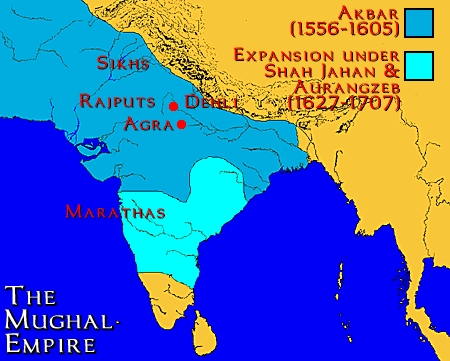
View all my reviews

Posted in Uncategorized | Tagged , , , , , , , , , , , , , , , , , , , , , , , , , , , , , , , , , , , , , , , , , , , , , , , , , , , , , , , , , , , | 1 Comment

SCHEHERAZADE AND HER OFFSPRING—-“A THOUSAND AND ONE NIGHTS, ARABIAN ENTERTAINMENT,” JOHN BARTH’S “DUNYAZADIAD,” ITALO CALVINO’S “INVISIBLE CITIES,” GÜNELI GÜN’S “ROAD FROM BAGHDAD,” AND ASSIA DJEBAR’S “A SISTER TO SHEHERAZADE”—-FROM THE WORLD LITERATURE FORUM RECOMMENDED CLASSICS AND MASTERPIECES SERIES VIA GOODREADS—-ROBERT SHEPPARD, EDITOR-IN-CHIEF

The Arabian Nights: Tales from a Thousand and One NightsThe Arabian Nights: Tales from a Thousand and One Nights by Anonymous
My rating: 5 of 5 stars

SCHEHERAZADE AND HER OFFSPRING—-“A THOUSAND AND ONE NIGHTS, ARABIAN ENTERTAINMENT,” JOHN BARTH’S “DUNYAZADIAD,” ITALO CALVINO’S “INVISIBLE CITIES,” GÜNELI GÜN’S “ROAD FROM BAGHDAD,” AND ASSIA DJEBAR’S “A SISTER TO SHEHERAZADE”—-FROM THE WORLD LITERATURE FORUM RECOMMENDED CLASSICS AND MASTERPIECES SERIES VIA GOODREADS—-ROBERT SHEPPARD, EDITOR-IN-CHIEF

“The Thousand and One Nights,” or “Alf Layla Wa Layla,” is often considered the archetypal narrative text, or the “Mother of All Narrative,” and this may well explain the universal scope of its appeal and enduring influence over the millennia as one of the central classics of World Literature.

Its origins and authorship are obscure, and its narrative matter most likely evolved and coalesced over centuries in various cultures of the Middle-East, including Indian, Persian, Egyptian, Mesopotanian, Arabic and other sources before being integrated into a masterful organic whole sometime during the Golden Age of Islamic Culture under the Abbasid Caliphate, and becoming publicly known and acknowledged sometime in the 12th Century. No single author of the work has been identified, and most likely it was edited into its present form in several stages, beginning with an Arabic adaptation of a looser prior Persian collection, the “Hazar Afsana” (Thousand Tales) into a more organic whole. What we know in the West as the 1001 Nights was also shaped by the translation and further editing by the foremost Western translator, the French Orientalist Jean Antoine Galland (1646-1715) who added additional tales from the Mid-East not included in the original Arabic version, most famously those of “Aladdin’s Lamp” and “Ali Baba and the Forty Theives.”

If the source material is diverse and multi-cultural, nonetheless the culminating integration of the Arabian Nights into a whole reflects the Arabic and Islamic worldview, with its philosophical and religious assumptions. The Islamic Caliphate in the wake of its amazing conquests from Spain to India was faced with the immensse task of handling and integrating dozens of diverse and ancient cultures while attempting to maintain the sources of its own internal cohesion, centered on the Koran and Hadith, in which it was only partly successful. “The Thousand and One Nights” thus constitutes in effect a mirror of the Islamic world, a melange composed of the peoples of a myriad of cultures and histories, and of Arabic culture’s ability to assimilate these varied strands of influence. The bulk of its stories center on the two great cultural centers of gravity in the Islamic world, Baghdad and Iraq on one side and Egypt on the other, and though one finds characters in the stories of Hebrew, Christian, Zoroastrian, Indian, Persian and even Chinese origin, characteristically one sees their conversion to Islam and never vice-versa.

The organic unity of the incredibly diverse tales and stories of the 1001 Nights lies in their rootedness and constant interplay with the ultimate frame story, that of the vizir’s daughter, Scheherezade, the narrator of the extended tales over the one-thousand and one nights, and her perpetually impending death at the hands of her husband, King Shahrayar. Thus the book opens with the account of the visit of the King’s brother, Shahzaman, who is grieved at having been forced to execute his wife for unfaithfulness, having discovered her in flagrante delicto with the palace cook. King Shahrayar then discovers his own wife, the Queen, engaging in orgies alongside her serving maids, with several black slaves disguised in women’s dress, and orders his vizir to execute all of them. Concluding in his grief that henceforth no woman can ever be trusted, he then adopts a brutal plan to marry a new wife every night and having slept with her, order the vizir to execute her at dawn each morning before she has the chance to make the King again a cuckold. This he continues each night and day until hundreds of brides have met their death and the kingdom is thrown into a universal horrified grief. Finally, the vizir’s own daughter, Scheherezade, asks her father the vizir to marry her to the King, come what may. Over her father’s objection she marries Shahrayar, sleeps with him, and with her expected execution looming, calls for her sister Dunyazade to join them in their last hours before daybreak. Dunyazade then asks Scheherezade to entertain the King and herself with her lively stories, and she does so, so entrancing the King with the beginning tale, cut short in a “cliff hanger” pause before its ending, that the King postpones her execution until the next night so that he can hear the continuation of the tale. With this “sword of Damocles” hanging over her head, Scheherezade then continues in the same way for each of the suceeding thousand nights, so entrancing the King and leaving him desirous of the continuation of the stories, which proliferate endlessly, that her execution is continually deferred.

The narrative thus works through the suspension of time by using storytelling to stop its flow, the suspension of time in turn enhancing the narritive in reciprocal circularity of effect. Within this circularity the continuous story develops through variations, echoes, and forward and backward references, rather than linear causal sequences. Each tale thus generates the kernels and seeds of further stories to come, and the overall unity of the work is generated from the interlinking and embeddedness of each story in the others. The stories thus are similar to the familiar nested “Russian Dolls” in which opening one doll one finds another, then another, ad infinitem.

The variety of the stories are legion and encompass almost every genre later to be elaborated in World Literature.

THE CRIME FICTION GENRE

Exemplary instances of the crime or murder mystery and suspense thriller genres, associated with Wilkie Collins, Poe and Conan Doyle are found in abundance in the collection, with multiple plot twists and detective fiction elements, such as “The Three Apples.” In that tale, Harun al-Rashid, the Abbasid Caliph, comes to possess a chest, which, when opened, contains the dead severed body of a young woman. Outraged, Harun gives his vizier, Ja’far, three days to find the culprit or be executed himself . At the end of three days, when Ja’far is about to be executed for his failure, two men come forward, both claiming to be the murderer. As they tell their story it transpires that, although the younger of them, the woman’s husband, was responsible for her death, some of the blame attaches to a certain slave, who had wrongfully taken one of the apples of the title, inadvertantly causing the woman’s murder. Harun then gives Ja’far three more days to find the guilty slave. When he yet again fails to find the culprit, and bids his family goodbye before his execution, he discovers at the last minute by chance his daughter has the missing apple, which she obtained from Ja’far’s own slave, Rayhan. Thus the mystery is solved.

THE HORROR FICTION GENRE

The Arabian Nights tale of “Ali the Cairene and the Haunted House in Baghdad” revolves around a house haunted by jinns, who are superhuman spirits, genies or demons. This Nights story alongside many others is almost certainly the earliest surviving literature that mentions ghouls. Another prime example is the story “The History of Gherib and His Brother Agib,” in which Gherib, an outcast prince, fights off a family of ravenous Ghouls and then enslaves them and converts them to Islam.

THE FANTASY AND SCIENCE FICTION GENRE

Several stories within the One Thousand and One Nights feature early science fiction elements. One example is “The Adventures of Bulukiya,” where the protagonist Bulukiya’s quest for the herb of immortality leads him to explore the seas, journey to Paradise and to Hell, and travel across the cosmos to different worlds much larger than his own world, anticipating elements of galactic science fiction; along the way, he encounters societies of djinns, mermaids, talking serpents, talking trees, and other forms of life. In “Abu al-Husn and His Slave-Girl Tawaddud”, the heroine Tawaddud gives an impromptu lecture on the mansions of the Moon, and the benevolent and sinister aspects of the planets.

In another 1001 Nights tale in the fantasy genre, “Abdullah the Fisherman and Abdullah the Merman”, the protagonist Abdullah the Fisherman gains the ability to breathe underwater and discovers an underwater society that is portrayed as an inverted reflection of society on land, in that the underwater society follows a form of primitive communism where concepts like money and clothing do not exist, echoing also elements of Sir Thomas More’s “Utopia.” Other Arabian Nights tales depict also Amazon societies dominated by women, lost ancient technologies, advanced ancient civilizations that went astray, and catastrophes which overwhelmed them. “The City of Brass” features a group of travellers on an archaeological expedition across the Sahara to find an ancient lost city and attempt to recover a brass vessel that Solomon once used to trap a jinn, and, along the way, encounter a mummified queen, petrified inhabitants, lifelike humanoid robots and automata, seductive marionettes dancing without strings, and a brass horseman robot who directs the party towards the ancient city, which has now become a ghost town.

FEMINIST NARRATIVE—-THE FIRST FEMINIST NARRATIVE IN WORLD LITERATURE

It may seem strange to find early feminist literature within such an Arabic Medieval work expressive of a culture and tradition usually presumed to be the exact opposite of feminist concerns. Yet the entire structure of the 1001 Nights is that of Scherezade’s courageous use of her magnificent intelligence, depth of feeling, creativity and humanity to not only defer the irrational homicidal violence of a male tyrant, but in the very process to re-educate and acclimatize him to greater tolerance and humane civilization. One story of a feminist bent I particulary enjoyed was that of “The Tale of Sympathy the Learned.” In this tale, a female slave named Sympathy, tested by her master and later the Caliph, demonstrates her knowledge as being far superior to all the greatest scholars in Islam. By the end of the tale, she is universally praised for both her loyalty and intelligence and receives for herself and her master wealth and power, rewarded by the Caliph. By telling this tale, Sheherazade is offering the King a new ideal about how women can be trustworthy and virtuous servants. Women can also be as knowledgeable about life and sometimes more so than men if they put the same effort and ability into their studies as men. Women are not predisposed to ignorance based only on their sex.

Sheherazade the narrator herself shares many of the qualities of her protagonist Sympathy. She has also studied much about Islamic culture and ideals as the daughter of the Vizir. Sheherazade also uses her cleverness to accomplish her goals. Sympathy uses knowledge to gain riches for her master and Sheherazade uses knowledge to concoct tales to a tyrant King in order to gain liberation for her people. Both women fight through prejudice to achieve some status by the end of their prospective stories. Sympathy in some ways is a fictional alter ego of Sheherazade.

THEMES OF THE THOUSAND AND ONE NIGHTS—-FATE & DESTINY

A common theme in many Arabian Nights tales is fate and destiny.
Most of the tales begins with an “surfacing of destiny” which manifests itself through an anomaly; one anomaly always generates another,so a chain of anomalies is set up, building to a story of fascination and enchantment. The chain of anomalies always tends to lead back to “normality” in which destiny sinks back into its invisibility in our daily life. The protagonist of the stories may in fact be seen as destiny itself.

THE THOUSAND AND ONE NIGHTS IN WORLD LITERATURE

The influence of the 1001 Nights on World Literature has been and remains profound. Writers as diverse as Henry Fielding to Naguib Mahfouz paid homage to it in their own works. Other writers who have been influenced by the Nights include John Barth, Jorge Luis Borges, Salman Rushdie, Goethe, Walter Scott, Thackeray, Wilkie Collins, Elizabeth Gaskell, Flaubert, Marcel Schwob, Stendhal, Dumas, Gérard de Nerval, Pushkin, Tolstoy, Hofmannsthal, Conan Doyle, W. B. Yeats, H. G. Wells, Cavafy, Calvino, H. P. Lovecraft, Marcel Proust, A. S. Byatt and Angela Carter. Themes and motifs with parallels in the Nights are found in Chaucer’s “Canterbury Tales” (in The Squire’s Tale the hero travels on a flying brass horse) and Boccaccio’s “Decameron” as well as Ariosto’s “Orlando Furioso.” Four modern writers who have not only been influenced by The Nights but gone on to develop its themes and techniques further in unique directions deserve special mention and individual attention:

JOHN BARTH’S “DUNYAZADIAD”

John Barth is one of America’s formost “Post-Modern” writers, and in his modern narrative epic “Dunyaziad” he upends the classical tale of the 1001 Nights by retelling it from the perspective of Scheherezade’s younger sister, Dunyazade. In this retelling Scheherezade is able to tell so many enchanting stories not from her native creative genius but because each night a bald, bespectacled, middle-aged genie appears from the future to tell the tales from a book he has already read: “The Thousand and One Nights.” This “genie” is clearly Barth himself, who epitomizes the “intertextual” process by which stories “tell themselves” and are transmitted from the past to the future and back again, almost independently of their supposed “authors.” Like most of Barth’s narratives, it is intensely self-referential, commenting on its own structure and motifs as they evolve through their narration, often featuring frames within frame narratives, featuring characters who themselves are writers and storytellers in a post-modern metanarrative mise-en-abime.

ITALO CALVINO’S “INVISIBLE CITIES”

In his work Italo Calvino joins history’s caprices with the whimsey of imaginative fancy. Like Jorge Luis Borges, whom he admired, his novels and tales often read as allegories on the human capacity to find worlds in words and to reveal the fragility of the human condition and of what we take to be historical or material reality in our lives. In one of his more delightful concoctions, “Invisible Cities” Calvino brings together two fertile and febrile sources: Scherezade’s sea of stories and his partly factual, partly fantastic extension of of Marco Polo’s Travels. Kublai Khan in fact sent Polo on several “fact finding” missions to the distant corners of his empire. In “Invisible Cities” his reports back to the Khan grow increasingly fantastic as he crosses the border between reality and the imagination. As the Emperor, Polo and the Empire bloat and age, with each return to the throne Polo becomes a Scherezadian storyteller, imposing his will to fancy on reality, just as the Emperor imposes his will to power on reality, engaging in an extended meditation on the sovereign powers of storytelling itself.

GÜNELI GÜN’S “ROAD FROM BAGHDAD”

Günelli Gün is a Turkish female writer educated in the United States and an award-winning translator of Nobel Prize-winning Turkish author Orhan Pamuk’s novel, “The New Life.” In her feminist picaresque “The Road to Baghdad” she presents us with a modernized and post-modernized reworking of the Arabian Nights saga, replete with gender-bending, morphing, cross-dressing and transgressive identities that balance her created world on the cutting edge between unreality and surreality. Interweaving myth, fact and fiction, Gün creates a fanciful, old-fashioned epic that spans the breadth of the Ottoman Empire in the 16th century and tells a meandering tale of a woman’s travels and travails. The awkward young Huru’s adventures begin when her brother abandons her during a journey from Istanbul to Baghdad. By the end of her rambles, when she trades her musical talent for something more valuable, Huru has spent time disguised as a boy and has married a woman; she has seen Persia, Turkey and Syria and traveled through time; she has married a Sultan, borne his son and survived–with help from the spirit world–by her wits and her talent for playing her stone lyre. In the Post-modern idiom she uses the self-referentiality of the narrative with its colloquial theatricality to attempt to unmask what is perceived as the constructedness and fictiveness of the “reality” in which we presume to live.

ASSIA DJEBAR’S “A SISTER TO SHEHERAZADE”

Assia Djebar is a renown Algerian writer who was the first Algerian woman admitted to the prestigous Ecole Normale Superieure in France prior to Independence. Thereafter she became perhaps the most internationally visible woman writer in the Arab world. Her work speaks forcefully for human rights universally, and women’s rights in particular. In her rendering of the material of the “Thousand and One Nights” she universalizes the experience of Scheherezade to that of all brides on their wedding nights, mapping the collision of the world of fairy tales with the realities of centuries old traditions and the powers of men and society, dramatizing the timelessness of women’s subjugation to realities beyond their control, passing from innocence into experience—-that is through the rites of initiation into the timeless Sisterhood of Scherezade.

A THOUSAND AND ONE NIGHTS AND SPIRITUS MUNDI

The “Thousand and One Nights” also significantly influenced the composition of my own work, most notably my contemporary epic Spiritus Mundi. In particular, the chapter “Neptune’s Fury & The Perils of the Sea” including the embedded novella “Naval Diaries and Ship’s Logs of Admiral Sir George Rose Sartorius (1780-1875)” reflect the themes and techniques of the 1001 Nights. In it we follow the fate of the modern protagonist Sartorius’ ancestor, Royal Navy Admiral Sir George Rose Sartorius as he experiences a realm of fantastic adventure, from participating in the naval battles of Trafalgar and Egypt with Lord Nelson, to shipwreck on the Indian Ocean, his sexual encounter with the sorceress “Lilith” or Sir She, and most significantly his confinement in the palace of the “Sultan of the Sea of Stories” in which, like Scheherezade, he and his fellows, Billali the aged scholar, Ibn Battuta the Arab world traveller, and Princess Nooaysua, a Scheherezadian heroine, must daily invent and compose a series of stories for the Sultan’s pleasure, on pain of death.

In conclusion, I would recommend to all of you to take the time to read and enjoy the 1001 Nights and lose yourself in its narrative web and spell, as well as taking a look at its modern and post-modern spiritual offspring in the works of John Barth, Italo Calvino, Günelli Gün, Assia Djebar and in Spiritus Mundi.

For a fuller discussion of the concept of World Literature you are invited to look into the extended discussion in the new book Spiritus Mundi, by Robert Sheppard, one of the principal themes of which is the emergence and evolution of World Literature:

For Discussions on World Literature and n Literary Criticism in Spiritus Mundi: http://worldliteratureandliterarycrit…

Robert Sheppard

Editor-in-Chief
World Literature Forum
Author, Spiritus Mundi Novel
Author’s Blog: http://robertalexandersheppard.wordpr…
Spiritus Mundi on Goodreads: http://www.goodreads.com/book/show/17…
Spiritus Mundi on Amazon, Book I: http://www.amazon.com/dp/B00CIGJFGO
Spiritus Mundi, Book II: The Romance http://www.amazon.com/dp/B00CGM8BZG

Copyright Robert Sheppard 2013 All Rights Reserved

View all my reviews

Posted in Uncategorized | Tagged , , , , , , , , , , , , , , , , , , , , , , , , , , , , , , , , , , , , , , , , , , , , , | Leave a comment

LIBERTINES AND SEXUAL EXCESS IN WORLD LITERATURE–SAIKAKU’S “LIFE OF A SENSUOUS WOMAN,” “THE LOVE POEMS OF THE SIXTH DALAI LAMA,” “DON JUAN,” THE EARL OF ROCHESTER AND THE MARQUIS DE SADE—–FROM THE WORLD LITERATURE FORUM RECOMMENDED CLASSICS AND MASTERPIECES SERIES VIA GOODREADS—-ROBERT SHEPPARD, EDITOR-IN-CHIEF

Justine, Philosophy in the Bedroom, and Other WritingsJustine, Philosophy in the Bedroom, and Other Writings by Marquis de Sade
My rating: 4 of 5 stars

LIBERTINES AND SEXUAL EXCESS IN WORLD LITERATURE–SAIKAKU’S “LIFE OF A SENSUOUS WOMAN,” “THE LOVE POEMS OF THE SIXTH DALAI LAMA,” “DON JUAN,” THE EARL OF ROCHESTER AND THE MARQUIS DE SADE—–FROM THE WORLD LITERATURE FORUM RECOMMENDED CLASSICS AND MASTERPIECES SERIES VIA GOODREADS—-ROBERT SHEPPARD, EDITOR-IN-CHIEF

The word “libertine’ entered the English language not as a sexual term but as a by-product of the wars of religion between Protestants and Catholics in Sixteenth Century Europe, being the name of a French Protestant sect that believed individuals should be guided in religious matters “by their own lights”—-meaning reason, direct divine inspiration, spiritual intuition, or personal free interpretation of holy scripture, rather than by the clergy or traditional dogma. Later the word became synonymous with freethinkers whose behaviour, foremost sexual, is unconstrained by social norms or ethical considerations, even to the point of “outraging public morality.” Nevertheless the history of the term underlines its concern not simply with sexual deviance or excess, but with the ideal of freedom and self-determination, even against the pressure of public hostility or condemnation. It also raises the deeper question of how absolute personal freedom may be once released from political tyranny, religious dogma or blind social prejudice, and when liberty may degenerate into a license heedless of the needs, benefits or rights of others.

Not only in Europe but across Asia to Japan from the Sixteenth to Eighteenth centuries did sexual and social libertinage flourish, a generalized cultural drive towards breaking out of the bondage of traditional authority of all kinds, driven by the global rise of urban culture and the merchant class. Nevertheless, especially in those early days freedom was more a luxury than a right, and characteristically any true measure of individual freedom was enjoyed almost exclusively by the aristocracy or merchant elite, rather than the majority of the population constituting the lower classes, and the libertine was most likely a freethinking wealthy aristocratic male in an Asian or European city.

THE “FLOATING WORLD” OF IHARA SAIKAKU AND “THE LIFE OF A SENSUOUS WOMAN”

Ihara Saikaku (1642-1693) the author of “The Life of a Sensuous Woman” was a Japanese poet and creator of the “floating world” genre of Japanese prose (ukiyo-zōshi). Later in life he began writing racy accounts of the financial, amorous and erotic affairs of the merchant class and the demimonde. These stories catered to the whims of the newly prominent merchant class alongside the declassé aristocracy, whose tastes in entertainment leaned toward the arts and pleasure districts of the rising commercial cities such as his native Osaka.

“The Life of a Sensuous Woman,” an atypicaly female narrative as a sequel to his prior “Life of a Sensuous Man,” is an aging woman’s extended confession to two young men in which she describes her various experiences, beginning from her early childhood as the daughter of a former aristocrat in the capital Kyoto, her life as an attendant in the Imperial Palace, then through a descending order of fates as a courtesan, geisha, teacher of courtly manners and calligraphy to young ladies, hairdresser, go-between for marital engagements, and finally as a common streetwalker, losing her beauty in aging into an unattractive old woman. It structurally echoes the genre of the Buddhist confessional narrative in which someone who becomes a priest or a nun recounts the sins of their past and their moment of crisis leading to spiritual awakening. Hdowever, in this case the old woman in her narrative is implicitly initiating her young visitors into the secrets of the “Way of Love,” describing a life of vitality and sexual desire of which she does not essentially repent. En passant, she satirically reveals the underside of the lives of ministers and lords, powerful samurai, wealthy priests, and upper-class merchants. Often compared to Cleland’s “Fanny Hill” the narrative also celebrates the female protagonist’s pluck and resourcefulness in adversity, reminiscent of Becky Thatcher in Thackeray’s “Vanity Fair.” Only at the end of her life’s narrative, in sight of the five-hundred statues of boddhisatvas arrayed in a Buddhist temple does she have a vision of the five hundred men with whom she has had sexual relations arrayed in their place, and is moved to commit the end of her life to spiritual enlightenment, not essentially renouncing, however, the fated vitality of her former life’s path which had led her there, observing with a cautionary smile of spiritual melancholy to her departing two young initiates:

“A beautiful woman, many ages have agreed, is an axe that cuts down a man’s life. No one, of course, escapes death. The invisible blossoms of the mind finally fall and scatter; the soul leaves; and the body is fed like kindling into a crematorium fire in the night. But for the blossoms to fall all too soon in a morning storm—ah, how foolish are the men who die young of overindulgence in the way of sensuous love. Yet there is no end of them.”

THE SHORT EROTIC LIFE OF TSANGYANG GYATSO, THE SIXTH DALAI LAMA

In the Sixteenth Century, the Mongol Khan proclaimed the head of the leading Buddhist sect the “Dalai Lama,” who enjoyed considerable secular power alongside the spiritual authority of his office. When one Dalai Lama died, a search was undertaken to find his newly reborn reincarnation, who would be raised in the Potala Palace by a Regent until coming of age to reign again as the Dalai Lama. After the the Fifth Dalai Lama died in 1682, Tsangyang Gyatso (1683-1706) was proclaimed the new Dalai Lama, but the unscrupulous Regent schemed to keep him effectively under house arrest in the Palace, retaining all power to himself. In this unfortunate condition, deprived of his destiny, the Sixth Dalai Lama dedicated himself to three passions: the study of Buddhist Scriptures, the erotic worship of beautiful women, and the penning of love poems to his beautiful lovers. As he was a “Living Buddha” it was considered by the girls and their families a great and divine honor to be sexually united with the Dalai Lama, and when a girl residing in the elite Shol district of Lhasa below the Palace became a lover her family painted their house yellow, exalted beyond the common white, celebrating the act of divine favour. Gyatso was so successful in “painting the town red,” although in this case yellow, that a scandal ultimately ensued in which the outside power of the Mongol Khan in the north united with the conservative priests to depose,exile and ultimately assassinate him, claiming that the son of the Mongol Khan was the true Sixth Dalai Lama in a coup d’etat. Nonetheless, the Sixth Dalai Lama left behind a rich body of erotic poetry dedicated to his lovers:

Residing at the Potala
I am Rigdzin Tsangyang Gyatso
But in the back alleys of Shol-town
I am rake and stud.

Lover met by chance on the road,
Girl with delicious-smelling body–
Like picking up a small white turquoise
Only to toss it away again.

If I could meditate as deeply
On the sacred texts as I do
On you, I would clearly be
Enlightened in this lifetime!

THE UNPURITAN LIFE AND VERSE OF JOHN WILMOT, EARL OF ROCHESTER

The Earl of Rochester (1647-1680) was unquestionably one of the “bad boys” of English letters. Born during the dour administration of Oliver Cromwell’s Puritan Commonwealth, he came of age just in time for the Resotation of monarchy, sexual excess and extravagance, and his attitude in word and deed as to libertine sexuality was “cavalier” in the extreme. As his father had engineered Charles II’s escape from England he became a favorite in the Restoration court, yet cavalierly endangered his status with such acts boxing the ears of high lords in the King’s presence and delivering caustic diatribes against the king to his face in fits of anger, accusing the king of being more addicted to sexual excess than the good of the kingdom. Nonetheless, Charles II took a protective interest in Rochester, continuously bailing him out of scrapes and predicaments.

As related in Samuel Pepys’ famous Diary, Rochester, who was poor, contrived to forcibly abduct the heiress of one of England’s wealthiest families, who despite the King’s encouragement, refused to consent to her marriage to Rochester because of his poverty and profligacy. The daughter nonetheless chose to elope with him and they were married. He was a notorious rake, had innumerable mistresses, including the finest actresses of London, and shared some mistresses with the king.

After a brawl between his gang of friends and the police in which a man died, Rochester in disgrace was forced into hiding, disguising himself as a “quack doctor” treating women for “barrenness” or infertility and other gynocological complaints, under the name of “Dr. Bendo.” Rochester in this reputedly attained great success in inducing pregnancy in infertile wives, largely utilizing his own sperm, introduced willingly or surreptitiously. To overcome occasional hesitancy of the women’s mothers or husbands to allow a male doctor to conduct the gynocological examination or treatment, Rochester dressed in drag to impersonate a fictive “Mrs. Bendo,” the putative doctor’s wife, who would conduct the examination and administer the treatment in lieu of the considerate doctor himself.

Rochester died at the age of 33 from a combination of syphillis, gonnorhea and alcoholic liver failure, reportedly wearing a false nose in lieu of the one lost to the disease. After his death several Puritan religious societies circulated an account of his deathbed repentence of his libertinage, the authenticity of which remains uncertain. Nevertheless, many of his forceful poems remain anthologized classics, such as “The Imperfect Enjoyment:”

Naked she lay, clasped in my longing arms,
I filled with love, and she all over charms;
Both equally inspired with eager fire,
Melting through kindness, flaming in desire.
With arms, legs, lips close clinging to embrace,
She clips me to her breast, and sucks me to her face;
Her nimble tongue, Love’s lesser lightning, played
Within my mouth, and to my thoughts conveyed
Swift orders that I should prepare to throw
The all-dissolving thunderbolt below.
My fluttering soul, sprung with the pointed kiss,
Hangs hovering o’er her balmy brinks of bliss,
But whilst her busy hand would guide that part
Which should convey my soul up to her heart,
In liquid raptures I dissolve all o’er.
Melt into sperm, and spend at every pore.
A touch from any part of her had done ‘t:
Her hand, her foot, her very look’s a cunt.
Smiling, she chides in a kind murmuring noise,
And from her body wipes the clammy joys,
When, with a thousand kisses wandering o’er
My panting bosom, “Is there then no more?”
She cries. “All this to love and rapture’s due”
Must we not pay a debt to pleasure too?”

LORD BYRON’S IMMORTAL CLASSIC “DON JUAN”

George Gordon, Lord Byron was celebrated in life for aristocratic excesses, including huge debts, numerous love affairs, a scandalous incestuous liaison with his half-sister, and self-imposed exile and European wanderings, culminating with his sponsorship of a military campaign to win Greek freedom from Ottoman oppression in which he fought and died. He was one of the greatest literary celebrities of Europe, and along with Wordsworth, Keats, Leopardi and Shelley one of the founding patriarchs of the Romantic Movement in Europe. He was regarded by his contemporaries as “mad, bad and dangerous to know.” He became the exemplar of what came to be known as “The Byronic Hero” presented an idealised, but flawed character whose attributes include: great talent; great passion; a distaste for society and social institutions; a lack of respect for rank and privilege (although possessing both); being thwarted in love by social constraint or death; rebellion; exile; an unsavory secret past; arrogance; overconfidence or lack of foresight; and, ultimately, a self-destructive manner.

His classic epic of erotic love is “Don Juan” which ironically and satirically re-casts the famous serial lover whose name itself has become synonymous in the English language with libertinage, rather as a weak man who cannot resist the uncontrollable sexual agressions of women, than as a seducer himself. The epic follows the hero Don Juan from scandal-caused exile from his home in Spain through an unending series of amourous adventures including his rescue from shipwreck and seduction by the dark and beautiful island girl Haidée. The love of Haidée and Juan is however ill-fated as her father Lambro, a pirate master, discovers their affair, seizes and sells Juan as a slave to Constantinople, and Haidée dies of a broken heart with their unborn child within her womb. In Constantinople Don Juan is purchased by a black eunuch at the behest of the Sultana, who desires to make love to him. To smuggle him into the Sultan’s Palace the eunuch forces Juan to dress as a woman, threatening him with castration if he refuses. Brought to the Sultana, he however refuses to make servile love to her, remembering his love for Haidée. Discovered by the Sultan, the Sultan himself is attracted to Juan dressed as a woman, who regrets the “she” is not a Muslim. Don Juan escapes, however, then joins the Russian armies attacking the Ottomans where he becomes a hero. He adopts a ten-year old Muslim girl orphaned in the war, Leila. Taken to the Russian Imperial Court as a war hero, he is seduced by the Empress, Catherine the Great, who becomes his lover until she sends him to England on a mission. There he is seduced by numerous lecherous Englishwomen until he begins to fall in love with Aurora, who reminds him of his lost love Haidée. We do not know how the epic ends, as Byron died before completing it.

THE ULTIMATE LIBERTINE BAD BOY, THE MARQUIS DE SADE

The Marquis de Sade, belying his reputation, was too much of a masochist for his own good. Time and again he proved himself too eager to be caught and punished for his sexual outrages, and the French government, whether of the ancien regime or of Revolutionary France was all too happy to oblige him. The errant aristocrat spent most of his life in jail writing furiously, or when at liberty, conceiving escapades of excess that would send him promptly back to incarceration. He served as an officer in the Seven Years’ War, then married, then committed outrages in whorehouses or with abducted females and males, including flagellation, sodomy, and poisioning prostitutes that landed him in the Bastille. Liberated by the Revolution, he quickly offended again, at the cost of imprisonment and having all his property confiscated, leaving him penniless at the end of his life.

A philosopher of liberty in addition to a sexual libertine, in his classic “Philosophy in the Boudoir” he advocated the absolute freedom of the individual, even at the expense of the injury of others, claiming that such absolute liberty would strengthen and catalyze the growth of all individuals in creative equilibrium and produce much more good than ethical repression of even deviant expressions of freedom. “Nothing is a crime” he declared defiantly….”Laws are not made for the individual but for the generality, which is what puts them in perpetual conflict with self-interest, given that personal self-interest is always in conflict with society. Laws that are good for society are bad for the individuals that compose it, becuase for every time they actually protect or defend an individual, they obstruct or ensnare him for three-quarters of his life.” He denied the bonds between children and parents, husband and wife, and advocated the reign of an absolute liberty in their stead. He called on the people to deny and overthrow both the state and the church: “The only gods should be courage and liberty” he declared. He dauntlessly championed the first of the three ideals of the French Revolution—-liberty, taken absolutely, while ignoring the second two of the triumverate, equality and fraternity. Ironically, his philosophy is often more entertaining than his pornography. His pornographic classics such as “120 Days of Sodom” often become arid and mechanical exercizes in carnal repetition which soon lose interest after the initial prurience and shock value are dissipated.

SPIRITUS MUNDI, SEXUALITY AND SEXUAL LIBERTY

Sexuality and sexual liberty have a stong presence in my own work, the recently published contemporary epic Spiritus Mundi. I grew up as a writer very much in the tradition of D.H. Lawrence and James Joyce, both of whom embraced the central importance of sexuality in human consciousness and existence in their works and worldviews. We are all living intellectually in the wake of the Freudian and Darwinian revolutions, as well the “sexual revolution” in popular culture since the Sixties. Our sexuality is the life blood of our lives and of our consciousness, not to mention our unconsciousness, collective or individual. In my view of sexuality, common with D. H. Lawrence and C.G. Jung, sexuality is intimately connected with the spiritual dimension of human existence as well—sexuality can lead to dehumanization and animalization of our beings but alternatively sexuality can also lead just as naturally in the direction of the humanization of our natural and biological impulses, their civilizing, and even to their spiritualization, as Jung observed.

In regard to sexuality I take as a starting point that it is a natural part of our lives and should be positively embraced in all dimensions of our existence—that it is a necessary and wholesome part of our individual and collective mental health. That is not to deny that it has its chaotic, selfish, destructive and socially disruptive side as well, which society has difficulty managing, which it always must, but it is important that it should not be irrationally repressed in the individual or the society at large, as Freud and Jung have taught us.

The sexual lives of the characters in fiction are a vital dimension of their beings, and a vital dimension for judging the viability, mental health and value of the worldviews of their authors. Hollywood and Washington have long judged their projects asking the question “Will it play in Peoria?” and writers similarly have tested their worldviews by asking “Will it play between the sheets?” In Spiritus Mundi sexuality is linked to the spiritual lives of the characters, but also to the “life force” which drives human evolution and the collective unconscious of the human race, necessary to its survival. The progressive humanization, civilization and spiritualization of our most primal sexual animal impulses in the forms of love, family, community and communion is the story of the progress of our individual lives in microcosm and of our civilizational lives in macrocosm.

For a fuller discussion of the concept of World Literature you are invited to look into the extended discussion in the new book Spiritus Mundi, by Robert Sheppard, one of the principal themes of which is the emergence and evolution of World Literature:

For Discussions on World Literature and n Literary Criticism in Spiritus Mundi: http://worldliteratureandliterarycrit…

Robert Sheppard

Editor-in-Chief
World Literature Forum
Author, Spiritus Mundi Novel
Author’s Blog: http://robertalexandersheppard.wordpr…
Spiritus Mundi on Goodreads: http://www.goodreads.com/book/show/17…
Spiritus Mundi on Amazon, Book I: http://www.amazon.com/dp/B00CIGJFGO
Spiritus Mundi, Book II: The Romance http://www.amazon.com/dp/B00CGM8BZG

Copyright Robert Sheppard 2013 All Rights Reserved

View all my reviews

Posted in Uncategorized | Tagged , , , , , , , , , , , , , , , , , , , , , , , , , , , , , , , , , , , , , , , , , , | 1 Comment