See on Scoop.it – World Literature Forum

Top US software entrepreneur faces new contradiction claims over rags-to-riches memoir of personal torment in 60s China
See on www.guardian.co.uk

See on Scoop.it – World Literature Forum
Top US software entrepreneur faces new contradiction claims over rags-to-riches memoir of personal torment in 60s China
See on www.guardian.co.uk
See on Scoop.it – World Literature Forum
World Literature Forum regrets the passing of Chinua Achebe last Thursday, author of "Things Fall Apart" and one of the great African contributors to our emerging World Literature.
See on www.worldliteraturetoday.org
See on Scoop.it – World Literature Forum
Note: The following is a Dialogue on African Literature and World Literature taking place in Midrand, South Africa, the site of the meeting of the Pan-African Parliament of the African Union (AU),…
Follow World Literature Forum on Sccop.it! for New Insights Into World Literature!
See on Scoop.it – World Literature Forum
Follow the World Literature Forum for Insights into World Lit on Scoop.it!
See on www.worldliteraturetoday.org
See on Scoop.it – World Literature Forum
The emergence of World Literature is part of the irreversible process of Globalization reshaping every aspect of our lives in today’s world, from the World Economic Crisis to the Internet, the iPad…
See on Scoop.it – World Literature Forum
From 16th-century Mughal rulers, to daring Victorian spies and today’s Taliban, the travel writer and historian picks his favourites from a rich literature (William Dalrymple’s top 10 books on Afghanistan http://t.co/3ungQVjAAh...
From the time of Goethe’s "East-West Divan" and his Concept of "Weltliteratur" to Omar Khayam to the modern Age of the e-Global Villiage Western Literature, Islamic Literature and the Literature of the East have Enriched one another. Follow the World Literature Forum on Scoop.it! for great insights into the growth of World Literature in our time!
See on www.guardian.co.uk
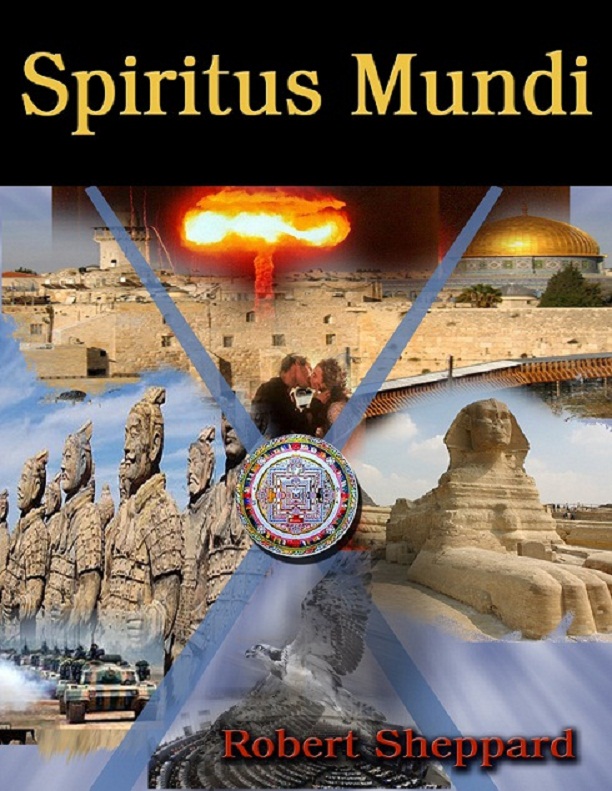
ON THE USE OF THE 2ND PERSON HYPNOTIC NARRATIVE IN THE TEATRO MAGICO SEQUENCE OF SPIRITUS MUNDI: THE ROLE OF ARTISTIC EXPERIMENTATION IN THE IMAGINATIVE ARTS
The rarest mode in literature (though quite common in song lyrics) is the second-person narrative mode, in which the narrator refers to the reader as “you”, therefore making the audience member feel as if he or she is a character within the story. Second-person narrative occurs when the protagonist or another main character is referred to by employment of second-personal personal pronouns and other kinds of addressing forms, for example the English second-person pronoun ”you” or “yours,” as for example in these opening lines of Jay McInerney’s modern novel, Bright Lights, Big City:
“You are not the kind of guy who would be at a place like this at this time of the morning. But here you are, and you cannot say that the terrain is entirely unfamiliar, although the details are fuzzy.”
Or in the opening lines of the well known novel, If On a Winter’s Night a Traveller, by Italo Calvino:
“In the shop window you have promptly identified the cover with the title you were looking for. Following this visual trail, you have forced your way through the shop past the thick barricade of Books You Haven’t Read, which were frowning at you from the tables and shelves, trying to cow you.”
The Second-person narrative thus has an extraordinary power to reach out, grab by the throat, and immerse the reader radically, intimately and unexpectedly in the text and story, breaking the expected frame and utterly erasing the distance, safety and uninvolvement of the more traditional Third-person “He or She” narrative, or even the interpersonal separation of the First-person “I” narrative.
This Second-person narrative is used extensively in the modern epic Spiritus Mundi by Robert Sheppard in the culminating hallucino-mythic sequence of the Teatro Magico, or Magic Theater, final part of the more extended Chapter 28, The Volcano’s Underworld, taking place in the murky underrealm of Mexico City’s music, sex, drugs and cabaret subculture. In that sequence, the reader experiences in his own person the hypnotic-surreal adventures of the protagonist, failing social activist Robert Sartorius in the occult Magic Theater, in extremis from excesses of Mescal, alcohol, longing, sex and despair in contemplation of suicide on his fiftieth birthday in Mexico City, impelled through a radical and unexpected shift from the Third to the Second-person voice, hypnotically forcing the reader’s direct participation in a shape-shifting and hallucinatory experience of the fantastic, drawing him inexorably onward into a dream-vortex and living nightmare beyond his control.
[For the full text of the The Volcano’s Underworld and Teatro Magico sequence go to: http://www.behance.net/gallery/The-Volcanos-Underworld-Teatro-Magico-Mexico-City/6271207 or see the excerpts below.]
It is also no accident that the 2nd Person is the obligatory form of address and induction in Hypnotic Scripts used by professional hypnotists or hypnotherapists:
“the feeling of every muscle of your body is just loosening up, and just letting go, and lying flat like a limp rubber band, very deeply relaxed, and although you’re aware of my voice, you can be even more aware of the wave of comfort embracing your awareness, as you continue enjoying the restfulness of not having to do anything in particular right now.”
“your whole body can now be separate from your immediate experience…. Almost as if, you are just far away, and you are just, all mind, floating freely … almost as if you could just lift right out of your body, and just float like a cloud in a beautiful blue sky.”
The hypnotized subject thus entering and accepting the hypnotic state abandons himself to an overpowering Second-person voice—giving way to a deeper unconscious desire to lay aside the weary burden of self and reality, willingly suspend disbelief, and consensually, if temporarily, to abandon the painful burden of self-autonomy and self-control enabling entrance into a more vital realm of uncanny experience:
“In a moment, I am going to ask you to open your eyes, and when you do, I would like you to lean forward and to look to your left. When you look to your left, you will see a mirror. The mirror you will see will have properties of a normal mirror, with one major difference. The person you see in the mirror will not be you, it will be a stranger. When you open your eyes and turn your head to your left, whilst remaining as deeply relaxed and comfortably hypnotised as you feel now, you will see a stranger reflected in the mirror. I would now like you to slowly open your eyes, turn your head to the left, and look into the mirror………….”
“In a moment, I am going to ask you to open your eyes, and when you do, I would like you to lean forward and to look to your left. When you look to your left, you will see a window through to another room. When you open your eyes and turn your head to your left, whilst remaining as deeply relaxed and comfortably hypnotised as you feel now, you will be able to see what is on the other side of the window. I would now like you to slowly open your eyes, turn your head to the left, and look through the window…………”
“Now, I am going to ask you to open your eyes, and when you do, I would like you to lean forward and to look to your left. When you look to your left, you will see a window and through the window, you will see a stranger. When you open your eyes and turn your head to your left, whilst remaining as deeply relaxed and comfortably hypnotised as you feel now, you will be able to see the stranger on the other side of the window. I would now like you to slowly open your eyes, turn your head to the left, and look through the window, recognizing the person you see.”
Words have served healers, doctors, priests, shamans, leaders and politicians from time immemorial. Consider how words affect attitudes, change beliefs, and nurture faith. Through our words, deep inner resources for self-love are kindled which become physiological changes. In at least one Creation story, the Word was sufficiently powerful to create the world. We do maintain our identities with the words of our stories about ourselves and perhaps our stories also maintain the integrity of our body, for words are physical events, even as are the bodily dreams by which we daily recuperate and reconstitute ourselves, spoken and undergone by people through bodies with vibrational energy and more than seldomly bearing some compelling capacity to change and alter those who hear these words.
Hypnosis is the art of speaking persuasively and suggestively. Hypnosis is one of the Fictional Arts, linked in its primeval origins to individual and collective dream, to shared collective vision, conscious and unconscious, and to the tribal merging of the fragile, fleeting and equivocal individual self into the collective being of family, tribe, polis, nation, and religious communities of faith. Out of such common primal roots have also grown the voice of the vatic poet, the Dionysian and Apollonian mysteries of Tragedy and Comedy, the rituals, mystic trances and communions of faiths, and also drama, dance, film and the Literature of the printed word.
The Second-person thus bears the power to take us back to the primal depths and the primal unities, the drum-trance beside the night’s campfire or cavefire and the loss of self in the dance of the tribe, or in the voice of the stars. Willingly we surrender ourselves to sleep and dream at the end of weary day. Willingly we follow entranced some occult messenger of Eros or Thanatos or Buddha or of some other sleeping god. Willingly from time to time we lay down the burden of ourselves and our realities to surrender ourselves to visions, communions and renewing ritual energies greater than and more sustainable than ourselves.
One of the conundrums in approaching a deeper understanding of the use of the Second-person voice lies in the Protean and equivocal character of such a mode or genre—–what is Second-person narrative? But a little exploration of its manifestations will easily uncover many secondary and rhetorical uses of the pronoun “you” which are not necessarily central to the practice of Second-person narrative per se. But given the rarity of the Second-person Narrative, it seems counterproductive to be overly exclusionary and more helpful to inclusively embrace a wide variety of its uses. A working definition of Second-person Narrative might thus begin with: A narrative the NARRATEE of which is the PROTAGONIST in the story he or she is being told using the Second-person “you” address. Of such Second-person narrative we might thus identify several basic types.
The first instance of the Second-Person Narrative might be found in the situation in which the narrator addresses him or herself as “you,” as we often dissociatively do in interrogating or philosophizing about ourselves, attaining some greater or lesser distance from our own acts and thoughts. An example might thus be taken from Frank Morehouse’s Walking Out:
“How, in bed early Thursday morning, do you explain to your father and mother whom you have lived with for 22 years, that you do not want to go to work and that you do not want to see your friends? How do you explain that you’d rather not see them too? How do you explain that the idea of working and the idea of seeing your friends makes you feel sick in the head? How do you explain that you think that life stinks and that you want to lie down somewhere on your own?
So I lay on my back in bed early Thursday morning knowing that the clock was ticking toward seven o’clock. . . .”
A schematic of this form of the Second-person “you” might be as follows:
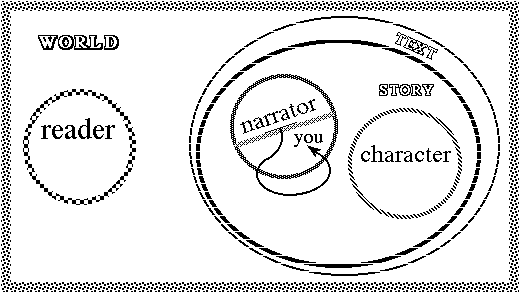
Here, however, the use of the “you” falls short of constituting the “you” as the protagonist of the story, and is revealed as a rather rhetorical device, a form of address of the reader outside the frame of narration for a limited time and purpose, before the text and story shifts back to a more traditional “I.”
A second instance of the Second-person narrative might go further, constituting the “you” as a separate character from the narrator of whose address he is more or less conscious and independent within the frame of the story and text. Examples might include Fuentes’ Change of Skin, or the above mentioned opening lines of Italo Calvino’s classic, If On a Winters Night a Traveller:
“In the shop window you have promptly identified the cover with the title you were looking for. Following this visual trail, you have forced your way through the shop past the thick barricade of Books You Haven’t Read, which were frowning at you from the tables and shelves, trying to cow you.”
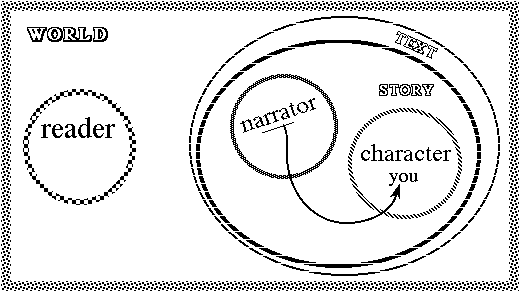
Here the “you” attains at least an ontological parity with the narrator, a personhood of equal dignity and weight of potential shared existence in a shared world of common existence.
A third instance of the Second-person Narrative would be even more radical still, crossing the murky and indefinite boundary between the “you” of a character constituted within the frame of the story and text to directly address the Reader himself. Thus we might recall the classic short story of Ring Lardner, “Haircut” in which the reader himself is summoned to take his place in the narrator’s barber’s chair:
“I got another barber that comes over from Carterville and helps me out on Saturdays, but the rest of the time I can get along all right alone. You can see for yourself that this ain’t no New York City. [. . .]
You’re a newcomer, aren’t you? I thought I hadn’t seen you round before. I hope you like it good enough to stay.”
A schematic of this more radical reconstitution of the field of Second-person narration might be illustrated as:

Such a more deeply transformed relationship with the reader is more difficult to induce, and still more difficult to sustain over narrative time and space. The reader may constantly fall away in sympathy, energy or imaginative connectedness, or may suffer the anomie of the mise-en-abime, constantly reframing and blinking himself in and out of the narrative as he is pursued outside the narrative frame. Pushed to its limits, the 2nd Person “you” discloses its inherent instability, the “slither of self.” Indeed, the residual grammatical form of the 2nd Person in English, taking curiously the pluralized verb “you are” rather than the more logical “you is” when addressing a single person, intimates the latent pluralities of self dormant in both pronoun and its implicitly addressed self. Thus the Second-person, pushed to its limits may suffer the fleeting instability of Quantum States and the Uncertainty Principle of high-energy sub-atomic physics’evasive protagonists—leptons, hadrons, quarks, bosons and anti-matter.
Nonetheless, or rather in consequence rather than in spite of such challenges, the Second-person Narrative has attracted more and more contenders. Such would include Sheppard’s Spiritus Mundi, alongside such new and old works as Barnes’ Talking it Over, Sterne’s Tristram Shandy, Barth’s Lost in the Funhouse, Federman’s Take it Or Leave It, Margaret Atwood’s “Rape Fantasies,” Butlin’s The Sound of My Voice, Fuentes’s A Change of Skin, and Daniel Gunn’s Almost You.
In Spiritus Mundi, the scene of the radical ‘breaking of the frame” to summons the “you” of the reader to partake directly of the hypno-hallucinogenic journey into the Magic Theater of the Teatro Magico is prepared by a long narrative of the protagonist’s progressive psychic breakdown under the influence of his alcoholism, suicidal fears, consciousness of failure, Mescal overdoses and wandering exile across the Mexico City of the festival of the Day of the Dead, sexual detours and mental disintegration leading later towards its surreal denouement:
“Towards four in the morning, Sartorius was oozing Mescal and alcohol from every pore and had danced with Maria and Teresa alternately for hours. Teresa pressed her body close to his and stroked his ear, whispering into it: “Roberto!—-I think you are ready for something special! I don’t take everybody there—it is a special place only for special people. You have to be the right kind of person at the right time——and be ready for something new—it is a private club and you need a pass to be admitted. Here—-this is your pass—I have signed you in as my special guest—let’s get Maria and Oskar and grab a taxi.” –He handed Sartorius a card with the drawing of a magician in top-hat and tails levitating a beautiful girl over whom he passed a hoop, upon it. The name of the club was printed on the top: Teatro Magico: For Madmen Only!—-(Private Club: Admission by Membership or Personal Invitation Only).
The Teatro Magico, or Magic Theatre, was lit by a neon sign poorly visible from the street and at the end of a long alleyway towards the rear of the compound. Sartorius, Maria and Teresa approached the massive solid red wooden door and Sartorius rang the doorbell. Overhead, above the face of the door was a moderately sized flashing neon sign in purple and red with exactly the same design as the card–stating again:
Teatro Magico: For Madmen Only!—-(Private Club: Admission by Membership or Personal Invitation Only).
Once inside, Sartorius and the reader learn of the nature of the Magic Theater:
“The Teatro Magico, was not one theater and had no central hall for an audience, but fashioned on the popular “Cineplex” model, rather consisted of an array of smaller theatres in a semi-circular ringed hallway sided at intervals by small lounges, to the far side of which were arrayed various ornate gilded doors, each inscribed with an alluring title designed to invite entrance, and the near side of which was an endless curved mirror. Anyone was free to enter or not enter as many of the smaller theatres as one wished or none at all at his own choice. This with one great difference, Teresa cautioned, there were no seats or audience, but that the partaker himself was taken up in a role in the drama, as it were, as part of a dream come alive, a ‘virtual reality’ or an incarnation into another life, to continue until he should chose to exit by the door by which he entered.—-Thus, transcending its origin as a ‘Cineplex,’ it might be better styled a ‘Psychoplex.’ “
The sympathetic participation in the Third-person narrative of the protagonist’s increasing mental disintegration and ritual transiting of the boundaries of this netherrealm prepares the reader, as does the hypnotist’s seductive hypnotic induction and relaxation of self, for his own coming Quantum Leap of person:
“Drunk with a trembling expectation of the appearance of her face, and beginning to feel his pulse quicken under the kick, Sartorius braced himself with a second spoonful of cocaine and walked precipitously towards the hanging curtain. Sartorius then, after a lingering moment of seeming numbness as he laid his fingers against the velvet cloth, pulled against the curtain, struggling against a charm that seemed to deprive him of all his will and all his energy, and of almost all of his lucidity at the moment he wanted them most. He succeeded in drawing back the curtain that hid her face from him and he walked to where Maria stood. She herself seemed moving backward, towards the back of the small enclosure, the whole of which was occupied by a great mirror that reflected her image, but not his, for he was just behind her and entirely covered by her. He heard her voice singing the sultry cabaret song in ineffably exalted sirenlike tones that pulled against his heart with a physical force as she approached the mirror: “In olden days…………….Now heaven knows, Anything goes!” As she sang Maria walked towards her image in the glass with her arms outstretched and the image came towards her. The two Marias—the real one and the reflection—ended by touching, and then their hands touching and seeming to melt and pass into each other just as Sartorius put out his arms to clasp the two in one embrace. But, by a sort of dazzling miracle that sent him staggering, Sartorius was suddenly flung back, while an icy blast swept over his face; he saw, not two, but four, eight, then hundreds of Marias spinning around him, laughing at him and fleeing so swiftly that he could not touch one of them. At last, everything stood still again, and he saw himself in the glass. But Maria had disappeared.
He rushed up to the glass. He struck at the walls and at the glass surface with the heels of his hands and fists. Nobody! And tears from somewhere fell, streaming downwards like a soft rain upon the cold glass. Which way had she gone? Which way would she return? Only an invisible voice rang out again its sultry Porteresque echo: ‘Now heaven knows, Anything goes!’”
Finally, Sartorius enters the First Theater of the Teatro Magico, and the reader experiences the shock of the 2nd Person address with the force of a Mescaline-induced hallucination of his own mind:
“Returning to find him, Teresa gathered Sartorius together and led him down the curving hallway towards the ornate multiple doorways of the Cineplex. She told Sartorius he was free to choose. Sartorius walked a few paces to inspect the titles of the offerings on the first three doors: (1) “You Rule All Before You With Absolute Power!” (2) “A Friendly Ball Game” (3) “All the Women of the World are Yours!”—–Sartorius entered the first door:
As the door of the theatre closed behind you, you strode forward, noticing first that you were clothed in a turquoise coloured ceremonial robe and with a large jade image of a Jaguar pendent from a heavy jade necklace suspended on your chest. On your head was a crown of jade and gold, topped with innumerable long and striking trogon feathers, the blue-green of meter long quetzal feathers, and the multi-coloured rainbow like feathers of the troupial. You were seated on an ornate throne of pure gold atop the Grand Pyramid, Tempel Major, above which was sculpted in bas relief the images of the Gods: First and foremost Huizilopochtli, the Sun and War God, patron and protector of the Aztec empire; then of Tlaloc, the Rain God; then Xochiquetzel, and then Quetzelcoatl, the Plumed Serpent and patron of the city of Tenotichtlan. A eunuch slave approached you, prostrating himself on the ground before he spoke without daring to raise his eyes to your own:
“Lord Tlacaelel, the Tlaxcallan war captives have arrived at the base of the Pyramid. The priests and the warriors await your orders.”
“Bring the first son of the captive Tlaxcallan king to me here, and send his daughters to my palace apartment and prepare them for their fates.” you ordered.
You looked below, down the glittering and terrifying expanse of the Grand Pyramid. The eunuch made his way down the long stone stairs from the peak of the pyramid where you were seated towards its base, an armed warrior at every landing and a torchbearer at every ten steps. The steps were stained a purplish brown along their length from decades of the river of running blood from their top and the rolling of the dead, heartless bodies down to the base, where below the chiefs of the abattoir severed and carved the limbs of the defeated soldiers into the cooking vats to be shared out to our victorious Aztec warriors. When the eunuch reached the head of the column of prisoners, their hands bound with leather straps behind their backs, and relayed the instructions to the ear of the Lieutenant of the Guard, the warrior guards moved to execute his orders. You could see the white haired head of the captive King of the Tlaxcallans drop helplessly as he saw his children being led away from him—-his son to certain death and his daughters in sexual bondage to the harem of his lifelong enemy, you, Lord Tlacaelel. You saw his knees collapse and his white hair cover the ground as the body shook with convulsive sobbing.
The Captain of the Guard, Marlo Xiloj approached and prostrated himself, then rose to speak into your ear: “Lord Tlacaelel, shall the old man die as well?”
You answered: “No, he is broken to the power of Tlacaelel. He will return home childless and chastened before his people, a living testimony to our absolute power.”
The Captain responded: “Why do we let them live? Why don’t we exterminate the Tlaxcallans and their kingdom and reduce them to slaves, as we have all the other kingdoms surrounding us and them? They are defeated in battle—-why let them go on?” he queried.
You answered: “If we kill all the actors, our Theater of Terror will go dark! No! The whole world witnesses our power here clearly and willingly submits. And furthermore, the Tlaxcallans are our close cousins! Nothing is so sweet as to devour a hated brother! And furthermore, our God, the great Huizilopochli does not like the flesh of the barbarous peoples from far away. He devours his own close kin! To our god the captives from those distant foreign expeditions are like hard yellowish, tasteless tortillas in his mouth! Only sacrificial victims from nearby cities, our own near flesh and blood will come to our god like warm tortillas, soft, tasty, straight from the fire!—sweet as your own sister!—-We keep the Tlaxcallans alive and free to suffer beautifully for the glory of our Beloved One, Huizilopochli—–Marlo Xiloj!—if you are going to be a captain you mustn’t be afraid to look straight-eyed into the dark beauty of the heart of darkness!” you say.
Then the bound captive Prince, proud and defiant, was led before you and the priests and guards forced him onto his back upon the altar. You took up the black obsidian knife, scalpel sharp, tore open the tunic of the prince and with a single deft motion entered the cavity of the chest, the priests prying back the ribs exposing the beating heart. You looked into the Tlaxcallan prince’s eyes, still conscious. With a motion of your arm you forced your right hand into the open chest and under beating heart of the supine prince, and without severing the vessels you lifted it up out of the chest where it continued to beat gloriously, hot and living in your hand! You looked from the heart to the eyes and saw the lids droop, and close, like the eyes of the Tlaxcallan queen, the boy’s mother when you entered her, forcing her legs apart for the first time after the victory at the battle at Taxcala. As you took the obsidian knife and cut the arteries of the beating heart in your hand, spilling and spattering the blood in a wild orgasmic chaos you were in near delirium as you raised the still beating heart to the beloved face of your God Huizilopochli and watched the streaming red blood bring life to the face of the Adored One before you!
As you felt your teeth enter the warm and still beating heart, the hot blood running down the corners of your mouth and as you kissed the upturned lips of the idol you convulsed, then began to shriek with revulsion and you ran, hyperventilating, to escape. You pulled open the door of the Theatre and saw Teresa standing next to a gilded mirror smoking a cigarette in a long cigarette-holder while leaning against an ivory statue of Cupid on a pedestal.
“Roberto!—what is wrong?” she pleaded, grasping your hand and comforting you.
“The horror!” you answered hypnotically, “……the Horror!”
Within the Psychoplex of the Magic Theater the Reader is thus impelled, under the hypnotic trance of the 2nd Person voice to tear away the “Fourth Wall” of the proscenium stage, becoming for the interval of the trance the character himself:
Thereafter, the reader assuming the role of the protagonist Sartorius follows his mythic misadventure through the two remaining doors of the mysterious theater, once recuperating the archetype of the Trickster and Sojourner in the Underworld, another as Tragic Hero and Scapegoat, until transformed and exiting the tranceworld, he boards the airplane back to his London home in contemplation of a change of life, reuniting with his new London love Eva, and the prospect of renewal of his mundane world:
“Well, Roberto, you had better get a grip on yourself before the next feature. Here, sit down and have a drink.” She motioned for the usher behind the theatre bar and he brought a large bottle of Mescal, pouring out two glasses. You drained one glass, then half of the other. Though you were back in your own clothes, you noticed the stream of blood about your mouth from the previous scene trickling down the side of your mouth and into the cup. Teresa picked up the half drained, blood stained second glass of Mescal, raising it to her lips, saying jokingly to you as she drained it: “Leave me my bloody bever for soothsay,” after which the usher then refilled both glasses from the bottle. Then Theresa picked up one of the glasses, handing you the other and proposed a toast: “To Roberto—and his Brave New World!” and you downed the ether together, “…..but maybe you need something a little lighter for a change….which do you choose next?”
Having recovered yourself, you agreed with Teresa’s suggestion and looked down the hallway for your options. You chose door number two…….”A Friendly Ball Game…” Teresa said, to reassure you “And if you are still a little bit nervous, we can go in together.” You walked in side by side.
“Xbalanque! Quick get it!” you heard from behind you as you found yourself running forward. You caught the heavy rubber gummi ball full on the yoke you were wearing around your middle, then kept it in the air, dribbling it with the motions of your thighs and upper arms, which were padded. Two opponents were quick on your heels giving chase. Across the field to your right you saw Tiresias in his male form running parallel to you dressed in the same coloured yoke and pads. You and Tiresias were teammates, and bore an uncanny resemblance to each other—appeared to be twins, almost mirror images of each other. Just as you were about to be overtaken by the opposing trio you turned and quick-batted the ball adroitly towards the line of advance where Tiresias was sure to arrive in the next second when the ball would reach him. He looked halfway down the field and saw his object: a stone hoop mounted atop the stone wall of the court, towards which you were intent on propelling the ball.
“You’re up, Hunahpu!” you bellowed out, “………to your right!…..Go!Go!Go!”
Both the Red and the Blue teams were shouting madly as Tiresias scampered down the right sideline, three paces ahead of his pursuers, frantic on his heels. The gathered crowd roared out their excitement, rising to their feet as Tiresias took his shot——A miss!—-but so close!
Happy you were, you Divine Twins, to be playing the Mayan ball game again, having swept out the ball court of your fathers, the prior generation of Divine Twins, One Hunahpu and Seven Hunahpu who had been so cruelly killed and dismembered by Xibalba, the Lord of the Underworld for disturbing his peace with their loud sporting revels, as was told in the Popul Vuh, the Council Book, which recorded all things past and foretold all things…..whether there would be death, or whether there would be famine, or whether quarrels or wars would occur. You knew it for certain, since there was a place to see it—-there was a book. The Popul Vu, the Council Book, was your name for it.
Below the earth, as you and Tiresias played and shouted, Xibalba, horrible and stately in mien, covered his ears to shut out the din:
“Damn! Damn! Damn!—-I thought we had gotten rid of that horrible game long ago!” he, One Thanato, Lord of Death, said to his underling Seven Thanato, his captain. “Seven Thanato—-go up to the world of the Roof of the Sun and invite those damned new players down for a Friendly Ball Game!——-‘You are summoned you will tell them—–You must come—–We would play ball with you here in the Court of the Underworld.’”
“It is done, Lord Death.” said Seven Thanato.
You and Tiresias received Seven Thanato graciously and accepted his invitation. You knew that your own Fathers, One Hunahpu and Seven Hunahpu had received a similar invitation and met a cruel death by accepting. But you were not of a character to turn down a challenge, however daunting.
On the first day of the game, the team of Death played against you and Tiresias unto a draw, and you broke off, retiring for the night. Seven Thanato took you, the Divine Twins, you and Tiresias to the House of Cadavers to sleep, giving you a torch and two cigars. “You must burn the torch and smoke the cigars through the night, but return them intact in the morning, on penalty of death, instructed Seven Thanato,” who then returned gloatingly to Lord Death, sure that he would return to see their cadavers on the morn. You, however had a plan——you had brought a jar of honey with you to refresh yourself throughout the game, and you smeared some of the honey on the tip of the torch and the tips of the cigars. The honey attracted the fireflies during the night, so that from the distance that Seven Thanato watched you, it appeared that you had lit them. Seven Thanato reported to Lord Death that the game was underway and that they were sure to find the dead twins on the morrow. However, much to his chagrin, on the dawn you returned the torch and the cigars to him intact, and the Lord Death was forced to concede his loss of the engagement and ordered the second day of the Friendly Ball Game to begin.
The second day of the game, so unexpected, attracted a jostling crowd of Demons, Spectres and Devils of the Underworld in their thousands as spectators. Looking on as you and Tiresias donned your yokes, pads and equipment they gossiped: “What’s happening? Where did they come from? Who begot them and bore them? Our hearts are hurting, because what they are doing to our team is no good! They are different in their looks and different in their very being!” they said amoungst themselves.
Hearing thus, Lord Death, whose own name was Xibalba and who presided over the game stopped you both when you bowed before him to pay your respects prior to the commencement of the action, so as to ask a few friendly questions:
“Where might you have come from? Please name it.” Xibalba asked them.
“Well, wherever did we come from?” you asked rhetorically, looking towards Tiresias “To tell you the truth we don’t know!” That was all you said. You didn’t name it.
“Very Well, then.” said Lord Death “Let the game proceed!”
“Let’s play ball boys!” you called over to the Team of Death, and you ran out in full spirits to enjoy the sport.
As they had done before to trap your fathers One Hunahpu and Seven Hunahpu to their deaths, Xibalba prepared tricks they were sure would prove fatal. Xibalba after an hour said the old ball which you both had brought with you was defective, and insisted on using a new ball. You complained, saying the old ball was fine and the new ball was nothing but a covered skull. Xibalba insisted, however and you acceded to his wish. The Captain of the Team of Death smashed the ball hard at you, aimed directly at your heart. Instead of intercepting the ball, you dove in a somersault on the ground, letting the ball pass over you and strike the stone wall of the Ball Court behind you. With a loud crash the new ball splintered and a knife blade emerged from it, clattering upon the ground.
“What’s that?” you and Tiresias cried, “Death is the only thing you want—-you don’t have the honour to play fairly! You summoned us to the game and now you cheat! If you can’t play fair we will simply take our ball and leave!”
“Well, don’t go boys! Don’t be spoil sports! We can still play a fine game, and to show you what good sports we are, we’ll even use your ball!” said Xibalba.
So the game continued through the second day, ending again in a draw. So Xibalba gave you both leave to retire for the evening. Seven Thanato again plotted your deaths during the night, locking you into to the Jaguar-Demon House to die. “Good-bye, my boys! I don’t think we will be seeing each other soon! Let me introduce our good friends you will be lodging with here tonight to you: Here is the one called Gouger of Faces, he delights in gouging out your eyeballs!—There is the one called Sudden Bloodletter, he snaps off your heads!—-then comes Crunching Jaguar, the eater of flesh, and Tearing Jaguar, who tears your bodies open!—Sweet Dreams!” The heads of the many demons loomed at you out of the darkness like the devouring heads of Scylla, the Hydra-headed devourer. You, however had stuffed your bag and poncho with the carrion bones from the House of Cadavers of the night before, and then threw them to the demons, saying: “Don’t eat us! We brought you something even better that should be yours! Bon Appetite!” with which the demons began to gorge themselves on the carrion, fighting amoungst themselves for the last scrap, until they fell asleep over themselves, tired and satiated. Xibalba and Seven Thanatos arrived at dawn again in a light and joyful mood. Xibalba said to him: “Let’s collect their skeletons and put them into our trophy case to remember this game by!” However when they opened the door they found the Jaguar-Demons on the floor, still asleep, and you two, the Divine Twins beaming with health, Tiresias calling out to them with a playful sneer: “Let’s play ball boys—we’re up for it!”
“Why haven’t they died?” cried out the throng of demons assembled at the Ball Court of the Underworld, and were amazed at the feats of the two of you, the Celestial Twins in the House of Death. “I can’t believe what I am seeing—I must have drunk too much Mescal last night and I’m hallucinating all this!” said Seven Thanatos. The game proceeded and finally you made a supreme effort at the end of the last inning, and leaping a head higher than the captain of the Team of Death, batted the ball through the stone hoop with your shoulder.
Sweet as the victory was, there was great danger in it. You knew the Lord of Death was above all a sore loser, and spite was at the core of his being and character. Xibalba, Lord Death invited you to a celebration dinner before returning home, but you suspected another attempt on your lives before you would be allowed to leave his domain. You had in California been a fan of the Magic Castle, which had a club for teaching young magicians magic tricks. Knowing the delight of the demons and lords of death for destruction, you announced that you would provide some light entertainment at the celebration dinner by performing some magic tricks, destroying things and magically restoring them.
First, you took a watch and placed it on the table, covering it with a handkerchief. Then you smashed the watch into pieces, showing them to the demons. Then you placed the pieces in the handkerchief in the pocket of Seven Thanato. You chanted the magic phrase: “AllyeAllyeOxenFreeFreeFree!” and then took out the handkerchief, opening it. The watch was whole and restored! The Demons were delighted!—–You had discovered that they were all really such children at heart!
Next you drew a live dove from beneath your tunic. You took up an obsidian knife and cut off its head, and the Demons laughed as they watched the headless bird run about the floor, not knowing that it was dead! Then you picked up the carcass of the dead bird and the head and placed them within a bird cage. You covered the bird cage with its night cover and said the magic words: “EenyMeenyMinyMoe—CatchA…..” then pulled off the cover, opened the cage and the dove flew skywards to freedom! There was a stomping of feet and chortling cheering heard far and wide across the House of Death.
Then Xibalba, Lord of Death, arose and said: “Very Good! Excellent indeed! But before you can return home you must do one more trick for us. You know the rite of human sacrifice. The losing team in the Ball Game is condemned to death. You have yet to kill a person! Yet you must be confident in all your wonderful magic that you can bring him back to life! This is my command and condition for your safe return home to the World of Light: You must kill your Twin brother Hunahpu and bring him back to life! You must make a human sacrifice without Death! We love our small delights here in the House of Death——delightful entertainment is a bit in short supply down here unfortunately!”
So Seven Thanato and Xibalba laid Tiresias on a black marble altar and opened his tunic at the chest. Xibalba picked up an obsidian knife and incised his chest, then Seven Thanato pulled back the ribs, exposing the beating heart. They then handed you the obsidian knife and instructed: “Make your Deathless Sacrifice now, Magister Ludi!”
You wedged your hand beneath Tiresias’ beating heart and lifted it upwards. But instead of cutting out the heart you took the obsidian knife and applied it to the center of the top of his head and dissecting his entire body along the centerline, separating and bisecting his body into two neat halves. The demons, specters and devils of the Underworld gasped in amazement as they saw that one half of Teresias’ body was male and the other half transformed into a female, cut away separately completely, linked only by the beating heart shared between them! Then Tiresias arose, severed and bisected into two halves, and his two halves began to dance and sing, sliding across the dance floor making a good imitation of Fred Astaire and Ginger Rodgers: “S’Wonderful!—S’Marvellous!—-that you should care for me!” he-and-she sang and danced and twirled together, breaking into a tap dance between refrains!
The demons and specters after recovering their breath burst into an uncontrolled applause: “They must be reincarnations of Ometeotl, the “Dual God,” male and female both—-both the mother and father of the Gods!” they shouted
Then you escorted the he-and-she halves of Tiresias back to the altar. You severed the beating heart between them and held it high above your head until it stopped and there was no doubt Tiresias was dead. You then replaced the heart between the dead male and female halves of the cadaver and covered them with a white sheet. You passed your hand over the cadaver and repeated the magic words: “NihilHumanumAlienumEst!”
Then Tiresias rose under the white sheet like a ghost at Halloween, the cloth still covering his face and body. You held the edge of the sheet in front of Tiresias’ body as his body rose to a standing position, and as the suspense built you finally let go with a dramatic flair, whipping the white sheet away! Before the assembled devils, demons and specters appeared Tiresias in his performance costume—half male and half female—half Teresias in a tophat and tails, and half Teresa in her drag dinner dress of silver sequin, bisected neatly down the centre! After milking the moment of shock for all it was worth Tiresias turned to break into his performance, singing, gliding and tapdancing:
You’re the top!
You’re the Coliseum.
You’re the top!
You’re the Louver Museum.
You’re a melody from a symphony by Strauss
You’re a Bendel bonnet,
A Shakespeare’s sonnet…..
You’re Mickey Mouse!
You’re the Nile,
You’re the Tower of Pisa,
You’re the smile on the Mona Lisa!
I’m a worthless check, a total wreck, a flop,
But if, baby, I’m the bottom you’re the top!
The effect was sensational and the applause thunderous! Then from here and there in the audience spontaneously you began to hear the words: “Me!….Me!….Let me try it!…..Cut me in two and bring me back to life again!……I want to try it!” as the hearts of the Underworld were filled with a childish longing and yearning for the dance.
You were about to perform the trick on Seven Thanatos, when Xibalba, the Lord of Death was insulted by your offence to his pride and announced: “No—-Protocol demands that I go first as the Lord of the Underworld”—he said as he moved to your side, shooing the captain aside.
“Very Well” you said, “You ought to come back to life. After all aren’t you Death? And aren’t we making you happy, along with all the vassals of your domains?”
Thus Xibalba, the Lord of Death was the first one to be sacrificed, and you cut out his beating heart, which was Black and spurted blood of black ink in your hands when it was severed. You cut, bisecting his body into two, as you had done with Tiresias. And, then you said the magic would take a short time, so you would do a few more while we all waited, and you similarly sacrificed Seven Thanatos and his lieutenants. They did not come back to life. They had no regenerative other, no soul to rejoin their bodies. Their bodies lay sexless and dead, the dismembered Eunuchs of Death. Their end was their end and no new beginning.
And then the Xibalban vassals, devils, demons, specters of the undead rose in a panic, seeing their Lords dead before them. “Death be not Proud!” they shrieked and scurried like lemmings to the edge of the abyss, the Pit of Eblis. There they piled up, on the edge of the abyss, like myriad ants, Myrmidian spectres trying to make up a single body from a buzzing swarm of ants, to replace their dismembered Lord, the Lord of Flies; but failing they tumbled into the abyss, free-falling for hours until they reached absolute bottom, all bent low in surrender, meek and defeated in the lake of sulphur and fiery brimstone. Then you and Tiresias wheeled the dismembered bodies of Xibalba and Seven Thanato to the edge of the abyss and pushed them over, following them with your gaze, disappearing into the black chaos below.
Then you two, you Divine Twins, embraced each other and wept in each other’s arms with manly though tender tears of joy. Such was the defeat of the Rulers of the Underworld, the omnipotent Lord Death Xibalba and his servile minions. And you brothers accomplished all this only through Wonders and Self-Transformations.
Arm in arm, you glorious two headed for the exit door of the small theatre of the Psychoplex and returned to the hallway. Sitting to recover your breath, the usher poured two more glasses of Mescal, and you toasted each other: “Tie Ger Mer! Sworn Brothers!—Semper Fi!” you exchanged, drawing off the cool ether of the Mescal.
“Now I’m getting into the fun of it!” you blurted out, putting down your glass of Mescal. “Now for the next adventure!” you effused, moving towards the third door: “All the Women of the World are Yours!”—–“Perhaps I’ll try this one alone!” you said smiling back at Teresias, opening the ornate door.
Immediately you discovered yourself in a wonderful forested glade, watered with a beautiful stream with the most luxurious foliage, flowers, and the cooing voices of the exotic jungle birds—-quetzel, trogon and troupial. In the center of a large clearing in the glade was an immense tree, singular in its immensity, that seemed to tower to the heavens—a veritable Tree of Igdrasil in its proportions. Beneath it was a young Aztec warrior, exquisitely handsome and well muscled, Adonis-like in his beauty, standing ever vigilant with a sword beneath the tree, fields of ripening maize corn visible at the edges of the clearing further down the glade. Upon his head was a golden crown, encrusted with sun-shot jade and precious gems, ears of maize corn sculpted in purest gold upon the crown, and topped with a headdress of brightly coloured feathers, green-blue, orange and iridescent purple, of the quetzal, trogon and troupial.
You crept in the underbrush until moving about behind the Aztec warrior, deliberately aside of his field of vision. Then wagering that you could affect the surprise, you drew your spear and ran straight at him, just out his peripheral vision. You built up speed and momentum as you neared the beautiful youth, raising your javelin to your shoulder. The warrior heard your footsteps and turned to face you—–too late!——and you released the javelin straight into his naked neck, cutting the jugular vein and with half its length emerging out the backside of his spine. The blood spurted frantically as the youth dropped to his knees, then looking up into your face to see his undoer. As his eyes caught your gaze, your hands rested boldly upon your hips, your pelvis thrust forward in proud triumphant display; the fallen man’s eyelids lifted, then drooped, and he died kneeling, the spear shaft thrust through his throat holding him up in a posture of prayer, his lips mouthing words, mocking speech, but with nothing to be heard but the congested gurgling of his ebbing and effusing blood.
From a palace far below you caught sight of a filing troupe of one hundred of the most beautiful women you had ever seen, clad entirely in immaculate white, their hair exquisitely done up, and carrying on their heads jars and urns of oil, food, dates, and other delicacies, or articles of gold embroidered clothing. Some played flutes and lyres and wondrous instruments. At their head was a being, one could say a woman, but the being was too beautiful to be an earthly woman, and seemed to have a superhuman radiant aura about her, intimating that she was not of earthly origin but a Goddess.
As the vestal column neared and found you standing over the kneeling corpse, the Goddess spoke out decisively: “The King is Dead—Long Live the King!” With that she lifted the golden crown from the blood-spattered head of the fallen youth and placed it on your head. Her underling women then stripped the robe from the fallen victim, removed the spear, and laid him out naked upon the ground—the gaping bloody hole opened wide beneath his open gasping fishlike mouth, still in frozen dead posture seeming to want to say something, but unable. The women took the naked body on a stretcher, anointed it with oil, and then cast it into a newly dug and unmarked grave, between two rows of maize corn.
The women removed your blood-bespattered clothing, poured water, soap and then oil and incense upon your naked well-muscled skin, washing your naked body and genitals unashamedly, then clothing you in a gold embroidered tunic and adjusting the quetzal feathers on your golden crown. Then the Goddess spoke:
“I am Xochiquetzal, Goddess of Love and Fertility. You are now my earthly king! You shall reign with absolute power until the next King comes to slay you, as you have just slain the King before you! Until that time you shall rule with the power of an emperor, vital and unageing. All the women of this land shall be your harem and your semen’s seed shall spread over their bodies like the kernels of maize corn upon the land of the fertile plain! You shall marry me and become as a God! The women of the earth shall worship your body, your phallus and your seed as their God! We shall retire to the Palace and consummate the ceremony! Then the women carried you and the Goddess, seated side by side, hand in hand in a sedan-chair litter on poles, in royal estate towards the palace. As they chanted their entoxicating melodies, singing joyfully in choral unison as the procession neared the Palace, you abandoned yourself willingly to the songs of the Sirens.
At the palace thousands of women, all nubile and gorgeous, lined the halls and bowed to you as you entered, the Goddess at your side. They installed you in your apartments next to the Goddess’ and then bathed you in frankincense and myrrh, and anointed your well-muscled body with holy oils, christening your skin. They brought you endless delicacies to eat, dates, exotic nuts, curries, puddings, gels, meat and fowl, fish and vegetables, in the most diverse sauces and spices. Aphrodisiac spices and wines were brought, powdered rhinoceros horn and tiger bone, oysters and shellfish, and hosts of others. Music was played endlessly by a female band, naked to the waist who entertained you, while oriental singers sang lyrics of great seductiveness and delicacy, suffusing the imagination. You felt your potency surge within you violently.
Then the Chief Priestess returned at the head of an endless train of nubile women clad in the most enticing garments. Behind her walked three gruesome hags who carried a litter surrounded with a purpled cloth curtain. They placed the litter, which looked like a small puppet stage beside a white marble pillar thrust up behind the altar. Each hag, a pale semblance of a Medusa, was accompanied by a priestess of a secondary order of extraordinary beauty. The three gruesome hags, who alone could approach the litter, drew back the curtain of the litter and before you appeared an extraordinary face atop a limbless torso, limbless except for one withered leg which extended upwards and across the back of the shoulders and base of the neck, with a diminutive foot, exquisitely wrapped in Chinese foot bindings and a silken shoelet dangling helplessly behind the figure’s left ear. The leg was atrophied and devoid of muscle, and at its base there was but a small pubic mound from which the genitals had been excised. The torso was sewn tightly into a silken sack like a papoose on the chest of which was a mystic arabesque. Atop the torso was a face of seeming feminine beauty dressed entirely in a consummate feathered headdress of immaculately white down feathers which drew tightly about the outline of the face, concealing any presence of hair like a nun’s white wimple. The skin was of perfect smoothness and delicately rouged and the lips protruded thickly in a perfect guled cupid’s bow glossed and pointed at its tips and ridges. The eyes seemed splayed like two extended wings of a delicate small bird of an immaculate white that resembled a masquerade ball mask, but with the feathers seeming to grow from the eyes themselves. The eyelids were closed, but also shingled with tiny soft white feathers, which took the place of eyelashes, with a line of diamonds and tiny coloured jewels limning the very edge of the upper lid as if penciled by a royal cosmetician. The three hags lifted the papoosed torso up a small ladder and placed it in its cradling nest atop the erect pillar.
At a signal from the Chief Priestess drums took up a relentless jungle beat and the train of maenad women raised their voices in a collective wailing song which must have been of the repertoire of the Sirens, jazzing to a mounting frenzy. The women of the train tore the clothes from their bodies and danced a frenzied writhing hypnotic dance, hormonally-crazed about the marble pillar, some by turns pressing and sliding their splayed vulvas up and down its erect length like the pole dancers of an erotic theatre. With the rising wails of the maenads the face began to turn upon its neck in slow tortured ritual circles and the grimacing mouth began to moan and attempt speech in an unknown glossalalia. At a climaxing drumstroke the perfectly fletched and splayed feathered eyelids of the face burst open with an awakening start, revealing within their downed frame the empty blood-red caverns of the gaping eye sockets from which the balls had been gouged and torn. The face shrieked in a tone that was clearly of a residual male timbre, and the mouth gaped open, from which issued not a human tongue but two, the tongue having been sliced precisely in two from its tip to its base, revealing two forked tips, one of red and the other of green, snakelike, from which no human speech issued, but a serpentine babbling or talking in tongues or helpless shrieks and plaintive moans. All about the crazed maenad chorus rose and quickened to the drumbeats in a frenzying ecstasy and violent crescendo of chant: “Imbunche, Imbunche, Imbunche……………………Imbunche!”
Finally, the Chief Priestess of the Goddess in a purple robe entered your chamber and announced it was time to conduct and consummate the marriage ceremony. The priestess performed the ritual, chanting the verses, and a maenad chorus replied hypnotically in sensual song and dance; then she led the Goddess to her nuptial bed, preparing her concealed behind the gauze curtain veil of the crimson-purple wedding chamber. Then the Priestess indicated only one thing remained of the ritual before the consummation and the night of pleasure and sublime ecstasy: The Sacrifice.
She indicated that to consummate the ceremony the living, beating heart of a woman must be excised from her body, then placed upon a silver tray, and placed over the marital bed while still alive and beating. She led you to the sacrificial altar, where was bound the body of a selected victim, a handsome woman, writhing, naked to the waist, with her face covered with a veil. The Priestess placed the sacred curved obsidian knife in your hands, then pulled back the outer curtain of the sacrificial altar. You hesitated, unsure of yourself, then raised your hand. You could see the fear in the eyes of the sacrifice, somehow vaguely familiar. You watched as she struggled against the leather bands that held her hands tight, and she squealed against the gag in her mouth, emitting a high hysterical and plaintiff whine. As you stepped forward the Priestess uncovered the sacrifice’s veil and removed it from her face. It was Eva!—your sister and your own heart! To your horror you saw the Priestess cut open her chest and pry back her ribs. You reached between the ribs and held Eva’s beating heart in the palm of your hand. You froze, inexplicable to yourself, unable to move or act.
“Strike!” The Priestess shrieked at you “Strike and sever the beating heart!–Strike or you shall be stricken dead!”
You raised the obsidian knife above your head–the full arm’s length above your head….you struck downward with all your remaining might——striking dead—–the Priestess and not Eva! You rushed to Eva, cutting her bonds and gag with your obsidian knife, then kissing her frenzied face and lips, bent on your knees, so uncontrollably desperate and frantic in your holiness towards her. Then you then picked her up in your arms and rushing towards the Exit of the theatre of the Psychoplex you pushed open the gilded door, re-entering the hallway. But when you had regained the hallway all had disappeared as into a lost dream, and Eva was no longer in your arms. Neither was the Teatro Magico behind the door, but you found yourself naked in your own hotel room at the Marco Polo Hotel, pushing open your bathroom door and re-entering your sitting room, darkened except for the moonlight shining through the translucent curtains. You collapsed onto the sitting room sofa, then poured yourself a large water tumbler full of Mescal from a large bottle on the coffee table before you. You gulped it down incredulously, first one, then two then the final gulp, drawing down and draining the Mescal’s ether to the bottom. You wiped your eyes and heard the buzzing about your ears and the shock of the Mescal hitting your spine and your bloodstream. Then you looked towards the bedroom, and you saw Maria rise from the bed, naked except for her lace panties, drawing you backwards towards the bed. You saw the exquisite tropical butterfly, floridly tattooed, large and iridescent across the small of her back, moving above her sculpted buttocks as she walked you towards the bed—and beneath it, delicately stenciled, the word: “Mariposa.” You became the butterfly as she moved, and fluttered drunkenly around her enticing body, like a moth before a flame in the night.
“Roberto!” she intoned pleadingly, “Come back to bed!—–we are getting cold waiting for you!” As she kissed you and caressed you inside your thigh, fondling your genitals, the stiffening shaft and heavy balls, which lifted, hardened and surged before you at her caressing touch; you glanced to the other side of the double King-sized bed and saw Teresa in a seductive negligee, fully feminine and inviting, yet with Tiresias somehow, submerged somewhere there within, half-hidden under the sheet, beaming back at you warmly and joining Maria in caressing your hardening penis, then lowering to suck your aching left ball and mouth then the tip and end of your cock playfully as Maria slid her tongue, French kissing, inside your mouth. Then the Mescal flooded your senses and you were unsure where you were, who, what you were doing or whom with, or doing to. You lost yourself in the rush of yourself, like the rushing wings of the butterfly emerging from the chrysalis into the unknown realm of flight towards the blinding sun upwards, and then dark, down into sleep and into a long unremembering…………..
Sartorius awoke at noon in an empty room, nursing a wild hangover. He could not tell if it all had been dream or real. It was as if he could not tell if he were a man dreaming he were a butterfly or a butterfly dreaming he was a man. He leaned over from the bed and poured himself a last glass of Mescal, draining the bottle and sucking down its strong ether. He lay long incoherent in the bed, and closed his eyes, drowsing several times, then regaining a fuller consciousness; then he considered what he had to do—–his plane for London would leave at 6:00 pm. As he raised himself to shower, he glanced back at the bed. Fallen between the pillows was a handscrawled note: “Roberto!—-Vaya con Dios!” It was unsigned.
Sartorius pulled the cord drawing back the curtains and looked outside his room: it was pouring rain from a thick dark deck of rainclouds above, thunder rumbling above his head like the threatening voices of the gods. An occasional flash of lightning would illuminate the gloom below. Slowly he gathered himself together, nursing his hangover with small sips of Mescal, then calling room service to have a lunch brought up to his room, then finally getting himself into the hot shower, that “three-minute miracle of self-transformation,” with which he was wont to undertake the daily ritual re-emergence. After the shower he took his meal in his robe, then smoked a cigarette, blowing the smoke upwards towards the ceiling. He dressed and gathered his things together, packing his bags, and then called down to the desk for a taxi to Benito Juarez Airport. The traffic was slow and heavy under the pouring rain, and Sartorius rested his forehead against the cool glass of the car window in a melancholy stare, dragging on a cigarette along the way.
The flight was delayed because of the rainstorm and he took a string of Tequilas in the airport bar, waiting and waiting. Sartorius sat long at the airport bar looking at the rows on rows of bottles arrayed on display before him and looking at himself in the array of mirrors behind the bar long and long. He stared at the bottles—-bottles on bottles—-half-empty, then fully empty bottles receding with himself into the endless mise-en-abime of refracted emptiness. He dropped his eyes at last. Suddenly he saw them, the bottles of aguardiente, of anis, of jereez, of Highland Queen, the glasses, a babel-tower of glasses—a towering, a babel of glasses rising high above the clouds into the sky, and then the bottles, the vast and empty volcanic mountain of empty bottles, piled high like the towering, heavenward gaping mouth of an extinct volcano—–the cumulation of all the bottles of his empty life—-the glasses and the bottles empty, the sum total of all that he had drunk and thought in his life—–he saw them all piled tower-like, babel-like high into the airy sky—-and he saw them come crashing, come crashing downward like a grand Niagara of broken glass, plunging downwards with an unbearable din, the broken bottles and glasses of a lifetime, plunging downwards and fracturing and splintering themselves, bursting into smithereens, bursting into tangled shards, a sea of tangled shards stretching out before his feet. He saw them all, and smelt them all, from the very beginning—-bottles, bottles, bottles, and glasses, glasses, glasses, of bitter, of Dubonnet, of Falstaff, Rye, of Johnny Walker, Vieux whisky, blanc Canadien, the aperitifs, the digestifs, the demis, the dobles, the noch ein Herr Obers, the et glas Araks, the tusen taks, the bottles, the bottles, the beautiful bottles of Tequila, and the gourds, the gourds, gourds, the millions of gourds of beautiful Mescal…….
Sartorius sat very still. How could he hope to find himself to begin again when, somewhere, perhaps, in one of those lost or broken bottles, in one of those glasses, lay, forever, the lost shard—–the solitary clue to his identity? How could he go back now and look, and scrabble and clutch, bloody-fingered around in the broken glass, under the eternal bars and under the glazed-glass oceans?
Then he fumbled in his pocket and re-found the letter. Eva’s letter. He read and re-read it, long and long. Eva’s face floated before him, seeming to appear above the looming abyss and constellate itself towards him like a beckoning beam of a lighthouse in a storm to a sailor in peril, tossed on a deadly sea; her face appeared to him——Beatrix-like to his Dante, Sita-like to his Rama, a Guan Yin and Madzu appearing before his eyes; Layla-like to his Majnoun, Gretschen-and-Helen-like to his Faust, his ewige Weibliche—his Eve to his Adam—–his Virgen de la Soledad, all seemed beckoning above the waves to the shipwrecked sailor, clasping at his spar, clasping at his lost shard. A line out of Rilke floated up and into his consciousness, like a last piece of flotsam or jetsam bubbling up from a sinking ship: “For here there is no place that does not see you: You must change your life. “
Then the delayed plane finally boarded, taxied, and took off. Sartorius held his hot brow against the cooling glass of the porthole window as the plane mounted, swung and spiraled heavenward through the beating rain and gloom. Then suddenly, with a flash of golden light, the airplane burst through the cloud cover below and emerged into the bright sunlight above the cloud-deck, as Sartorius watched the flashes of lightning buried and smothering in the translucent dark clouds below. The plane circled, first heading Southwest then coming round on a course heading towards the Northeast, in the direction of London. As it did so it passed between the twin volcanic peaks of Popocatepetl, the Passionate Warrior, and Ixtaccihuatl, the Sleeping Woman, their heads pushing bravely into the sun above, encircled by the whirlpooling deck of blackened and thundering cumulus girdled below their waists. As he looked down, strapped and buckled firmly into his airseat amidst the galley rows of open portholes, taking in Popocatepetl to his left and Ixtaccihuatl to his right, he felt a sense of release, of tension suddenly letting go from a danger passed, an evanescing of nemesis into the blue, clear sundrenched sky above; and he felt as he felt Odysseus must have felt, clearing the twin perils of the black swirling whirlpool of Charybdis and the many-headed devouring monster of Scylla behind him, or lashed to his mast, as he heard faintly disappearing, the sweet but deadly voices of the Sirens, those around him with wax-plugged ears pulling, eyes-averted in their airseats on the oars of their daily lives. He thought of Eva and felt her presence near him, near to his heart, and reached out his arms inwardly to embrace her there, and he said yes, yes he said, yes he said to himself, yes he said as he asked himself if he would, and his heart was going like mad as he drew his face near down to her face in his mind, and he could feel her breasts against him all perfume, and he said yes, and his heart was going mad and he said yes to himself, yes I will, Yes.”
Of course the use of the Second-person Voice in Spiritus Mundi is a limited experiment, and no attempt is made to make that narrative mode the principal mode for the entire novel, which, given the epic length and breadth of the work, might well be unsustainable. In fact, Spiritus Mundi uses a large variety of narrative modes, with the dominant Third-person narrative playing a dominant role, complemented in large part by extensive First-person narrative through the “Blog Journals” of four of the principal characters, protagonist Robert Sartorius, his lover and later wife Eva Strong, Eva’s former lover and colleague of Sartorius in the Campaign for a United Nations Parliamentary Assembly, Andreas Sarkozy, and Japanese Artist, Clairvoyante, and UNPA Activist Yoriko Oe. These five voices or “Multiple Points of View” including the Hypo-Hallucinogenic 2nd Person of the Teatro Magico are further complemented by a wide range of narrative devices and modes, including the use of Internet RSS “NewsFeeds” intended as the Internet Age equivalent of Dos Passos’ cinematic “camera-eye” and Headline voices of the USA epic, the use of dialogic Internet “Chat” text, the First-person embedded novella, “Neptune’s Fury,” a “Naval Diary” telling the story of Sartorius’ ancestor’s shipwreck in the Indian Ocean in the 1800’s, the dialogic-dramatic US Congressional Hearing Transcript in Washington, D.C., Sartorius’ embedded poetry alongside many embedded song and poetic lyrics of diverse origin, and a wide variety of intertextual references and allusions, and stylistic emulations recapitulating the history and canon of World Literature, reminiscent of Joyce’s recapitulative canonic stylistics in Ulysses. Thus, the 2nd Person voice plays a limited role, in secondary complement to other narrative modes. Had it been the principal mode, it might well have been more fully developed along other possible innovative and radically experimental lines to exploit the fuller energies and narratologically radical potential of the Second-person Voice and point of view. However, used as it is, as a quantum –leap hypno-hallucinogenic shift of Point-of-View to embody a transitorily altered psychic state, it plays an important role in the epic novel as a whole.
One additional use of the Second-person “you” address also occurs in the “The Volcano’s Underworld” chapter of Spiritus Mundi, namely the Baudelairian “Hypocrite Lecteur” passage in which the Reader is directly addressed and expelled from the novel in a fit of drug-induced pique by the hallucinating protagonist, Sartorius, once again “breaking the frame,” “baring the device,” and using a direct and pointed 2nd Person address of the Reader to tear down the “fourth wall” in a Brechtian use of the “Verfremdungseffekt,” or narrative strategy of “making strange:”
“Sartorius lifted the third Mescal and in a single motion drained it. Setting the glass upside down on the table with a muted clatter he noticed a man with a mustache staring impolitely at him and frowning menacingly at him, but he returned the grimace, as the man followed his every motion, seemingly mocking him in imitation, setting his glass upside down on the counter in front of himself just as he did. One of Salvador Dali’s clocks was draped over his wrist, the spinning hands of which stopping at 2:46 then reversing themselves in the mirror to 6:42. Sartorius checked his own watch and 6:42 it was—-he had to run across the street or he would be stranded outside the city. He shoved a note towards the Senora and ran out, clutching his laptop carrying case. He ran across the street and reached the stand. 6:48. No bus. He sat down on the bench and looked around him trying to decide what to do. On the opposite corner was a small hotel—unbelievably dirty and dreary. Depressed, he closed his eyes and seemed to slumber. He found himself walking desperately, like a man lost in a jungle or in a labyrinth suffused in thick fog. He turned and turned and turned. Then he caught sight of a woman, beautiful, leaning against a wall. He took her for a streetwalker at first, trying to catch his eye. Then he looked again and the woman, pulling a thin veil from across her head, revealed a face the very image of Eva. He approached her and kissed her violently on the mouth, she closing her eyes and loosening her lips to take him. He then raised his head and eyes and then flung himself back in horror as a red rat pushed its head and then body from inside her glossed lips and scurried down her blouse…….He sat down bleary eyed at a picnic table inside a gazebo just next to the bus stop and opened his laptop and began to type violently:
“HYPOCRITE LECTEUR!—-THIS MEANS YOU!
Mon Semblable! Mon Frere!
You! Lousy Reader! Get out!
Yes You! Don’t pretend you don’t know who it is I am talking to!
What makes you think you have got any fucking right sticking your ugly nose in here when real people are suffering! Go! Now! Go!—Get Out!
Get your filthy hands off this book—Now!—You!—you lowlife! You think you can just barge in here with your lousy twenty bucks or your fucking library card Nook or iPad and own, rent and gawk and manipulate real people’s lives from your chinsy invulnerable tower with its lousy cheap little peep hole? I’m 86’ing your ass out of this fucking text right now! Get lost you closet faggot!—You Peeping-Tom! Go back where you fucking came from!”
Then his head slumped into an unconscious torpor pushing down shut the top of the laptop beneath him.”
Further playful incidents of a parallel nature occur with more frequency in Book II of Spiritus Mundi, “Spiritus Mundi the Romance,” as the greater plasticity of the latter form opens with numerous intrusions of the authorial voice in direct address to the Reader, reminiscent of transitional passages of authorial address in Fielding’s Tom Jones, or of Sterne’s Tristram Shandy. There also further “breaking of the frame” sequences occur, such as the “labor strike” of the characters against the author and publisher and the appearance of God in the text, reminiscent of the dissociation techniques of Pirandello’s “Six Characters in Search of an Author.”
CONCLUSION:
Human survival has always depended on a shared vision. The modern Cartesian self, one of the crowning achievements of Western Civilization freeing the genius, scientific and rational judgment and unbounded energies of the individual mind from the bondage of tribal dominance and repression, unleashing its untold creative energies, nonetheless must be tempered by the realization that the “cogito ergo sum” of its declaration of independence and of the full autonomy of the individual, as though such disembodied individual could blithely go on existing should the rest of humanity, history and the world cease to exist, is at least partly the exercise of a willful fiction not wholly sustainable within reality. Aristotle famously stated that “man is a social animal.” Evolutionary Biology asserts that the survival of the human species must in some part have depended upon a shared language and a shared social vision of reality which would enable to mobilization and concerted action of the entire community in times both of peaceful development and of lethal crisis. The mere existence of the faculties of language and human reason, in and of themselves, constitute the necessary, but not sufficient conditions for indispensible social cooperation, cohesion and extended action in the face of hostile natural or human threats. To language must be added the power of vision, the power of the imagination to create a vision of reality and human identity and destiny capable of strengthening the cohesion of the human community and of realizing across generations the dreams of an uncertain yet possible future which might unite the human commonwealth for survival. Art and Literature, alongside myth, religion, cultural heritage, and the arts have always been called upon to provide such vision and through it the common understandings and common identities requisite for mobilizing the means of individual and communal survival and finding out the common direction of the further evolution of our species on earth.
Within the imaginative arts, states of consciousness transcending the individual ego and drawing the greater self within into more comprehensive and sustainable relationships with the human community and the cosmos have always been found necessary from primordial times to the present and into the future. The transitory abandonment of individual autonomy in hypnosis, dream, tribal ritual and dance, religious trance, ecstasy and ritual, and in the residual power of such intersubjective forms as Second-person narrative and song provide lasting opportunities for the recuperation, strengthening and renewal of the individual self through its recurrent merger with the energies of the collective unconscious in heightened imaginative experience.
It is the role of the artist and of the writer is to mediate between the greatness of the past and the new. This implies a progressive conservatism of the future: its goal is the preservation of a core of values around which, in beautiful forms, the new might crystallize. Art and the imagination supply the missing seed crystals of this process. Modern art and literature reach into the primordial past, the collective unconscious and the evolving canon and find the links to powerful states of consciousness, sometimes submerged, which can be revitalized in newer and evolving forms. Experimental techniques such as Second-Person Narrative hold potential for recuperating states of consciousness transcending the modern individual ego and potentially enabling it to find sources of renewal and regeneration, and of greater inner and outer wholeness and health. It is hoped that Spiritus Mundi may make some small contribution to this ongoing effort.
[Acknowledgment for visuals and for further 2nd Person reference: http://members.westnet.com.au/emmas/2p/thesis/1.htm#1-1%5D
Related Links and Websites: Spiritus Mundi, Novel by Robert Sheppard
For Introduction and Overview of the Novel: https://spiritusmundinovel.wordpress.com/
For Updates on the Upcoming Movie Version of the Novel, Spiritus Mundi & Casting of Actors and Actresses for Leading Roles See: https://robertalexandersheppard.wordpress.com/
For Author’s Blog: https://robertalexandersheppard.wordpress.com//
To Read Abut the Occupy Wall Street Movement in Spiritus Mundi: http://occupywallstreetnovel.wordpress.com/
To Read a Sample Chapter from Spiritus Mundi: https://spiritusmundisamplechapters.wordpress.com/
To Read Fantasy, Myth and Magical Realism Excerpts from Spiritus Mundi: https://spiritusmundifantasymythandmagicalrealism.wordpress.com/
To Read Sexual Excerpts from Spiritus Mundi: The Varieties of Sexual Experience: https://spiritusmundivarietiesofsexualexperience.wordpress.com/
To Read Spy, Espionage and Counter-terrorism Thriller Excerpts from Spiritus Mundi: http://spiritusmundispyespionagecounterterrorism.wordpress.com/
To Read Geopolitical and World War Three Excerpts from Spiritus Mundi: https://spiritusmundigeopoliticalworldwar3.wordpress.com/
To Read Spiritual and Religious Excerpts from Spiritus Mundi: https://spiritusmundionspiritualityandreligion.wordpress.com/
To Read about the Global Campaign for a United Nations Parliamentary Assembly in Spiritus Mundi: https://spiritusmundiunitednationsparliamentaryassembly.wordpress.com/
To Read Poetry from Spiritus Mundi:https://spiritusmundipoetry.wordpress.com/
For Discussions on World Literature and Literary Criticism in Spiritus Mundi: http://worldliteratureandliterarycriticism.wordpress.com/
For Discussions of World History and World Civilization in Spiritus Mundi: https://worldhistoryandcivilizationspiritusmundi.wordpress.com/
To Read the Blog of Eva Strong from Spiritus Mundi: https://evasblogfromspiritusmundi.wordpress.com/
To Read the Blog of Andreas Sarkozy from Spiritus Mundi: http://andreasblogfromspiritusmundi.wordpress.com/
To Read the Blog of Yoriko Oe from Spiritus Mundi: http://yorikosblogfromspiritusmundi.wordpress.com/
To Read the Blog of Robert Sartorius from Spiritus Mundi: http://sartoriusblogfromspiritusmundi.wordpress.com/
ON SPIRITUS MUNDI
“Read Robert Sheppard’s sprawling, supple novel, Spiritus Mundi, an epic story of global intrigue and sexual and spiritual revelation. Compelling characters, wisdom, insight, and beautiful depictions of locations all over the world will power you through the book. You’ll exit wishing the story lines would go on and on.” May 13, 2012
Robert McDowell, Editor, Writer, Marketer, Editorial Cra, The Nature of Words
______________________________________________________
“Robert Sheppard’s novel, “Spiritus Mundi,” has everything. “Spiritus Mundi” is Latin, meaning “spirit” or “soul of the world.” According to the Norton Anthology of English Literature, the phrase refers to “the spirit or soul of the universe” with which all individual souls are connected through the “Great Memory.” This amazing novel is all inclusive and unceasingly riveting. If you are interested in politics, philosophy, human relationships, sex, intrigue, betrayal, poetry and even philosophy — buy and read “Spiritus Mundi”!”November 18, 2012
Raymond P. Keen, School Psychologist, Department of Defense Dependents Schools (DODDS)
—————————————————————-
“Robert Sheppard’s new novel “Spiritus Mundi” is a new twist on a well-loved genre. Robert leaves no stone unturned in this compelling page turner you’ll experience mystery, suspense, thrills, and excitement. Robert touches on sexuality and spirituality in such a way that the reader is compelled to ask themselves “what would you do if faced with these trials?” Robert is a master at taking the reader out of their own lives and into the world he created. If you’re looking for a “can’t put down” read pick up Spiritus Mundi!” May 20, 2012
Nicole Breanne, Content Coordinator, Ranker.com
_____________________________________________________
“Longing for a thrilling experience of the sexual and spiritual world? Expecting a thorough summoning of your inner heart? Aspiring to find an extraordinary voice to enlighten your understanding heart? Then you can’t miss this extraordinary novel, Spiritus Mundi by Robert Sheppard. The author will spirit you into a exciting world filled with fantasy, myth, conflicts and wisdom from a fresh perspective. Don’t hesitate, just turn to the 1st page and start out enjoying this marvellous journey.”November 17, 2012
Alina Mu Liu, Official Interpreter, Editor & Translator, HM Courts & Tribunal Service, London UK & the United Nations
——————————————————————————
“Robert Sheppard’s Spiritus Mundi is a literary novel for those with an extensive vocabulary, and who believe how you tell a story is as important as what occurs in it. It is as current as today’s headlines.
Jaime Martinez-Tolentino, Writer” November 19, 2012
————————————————————————–
“Robert Sheppard’s exciting new novel, Spiritus Mundi, is an unforgettable read and epic journey of high adventure and self-discovery across the scarred landscape of the modern world and into the mysteries beyond. Its compelling saga reveals the sexual and spiritual lives of struggling global protesters and idealists overcoming despair, nuclear terrorism, espionage and a threatened World War III to bring the world together from the brink of destruction with a revolutionary United Nations Parliamentary Assembly and spiritual rebirth. This modern epic is a must read and compelling vision of the future for all Citizens of the Modern World and a beacon of hope pointing us all towards a better world struggling against all odds to be born.” May 19, 2012
Lara Biyuts, Reviewer and Blogger at Goodreads.com and Revue Blanche
________________________________________________________
“Robert Sheppard’s “Spiritus Mundi” is a book of major importance and depth. A must read for any thinking, compassionate human being living in these perilous times. I highly recommend this powerful testament of the current course of our so-called life on his planet. April 25, 2012
Doug Draime Writer, Freelance
___________________________________________________
“This new novel ‘Spiritus Mundi’ brings together history, politics, future society, and blends with a plausible World War Three scenario. I have read it and find it over the top fascinating. I am very glad to see Robert share his creativity with the world through this work of fiction, and know it will be a huge hit.” April 28, 2012
Jim Rogers, Owner and Director, AXL
______________________________________________
“Robert Sheppard is an exceptional thinker! His work should be read and made the subject of critical study.”May 26, 2012
Georgia Banks-Martin, Editor, New Mirage Journal
——————————————————————————
“This novel rocks the reader with its supple strength. You want to say “No, No,” and you end up saying, “Maybe.” Political science fiction at its highest, most memorable level.”November 17, 2012
Carl Macki, Owner, Carl Macki Social Media
——————————————————————————
“Robert Sheppard’s Novel Spiritus Mundi confronts politics and philosophies of the world. He’s examined multiple layers of personality in his characters; male, female, Chinese, Arab, English, and American melding them into a story of possible outcomes. How else can I convey the intelligent presentation of fiction woven with sensitivity to our world’s governments, religious influences and sectarian principles? We must not forget the influence of a largely secular world. Robert tirelessly checked, rechecked and triple checked his resources in order to bring a fiction of occurrence, and psychological impact as set forth in his novel Spiritus Mundi.”November 18, 2012
Glenda Fralin, Author, Organization NWG
__________________________________________________________
“Robert was one of my best guests. His novel is as wide ranging as are his interests and expertise. He can explain his various ideas with great clarity and he does this with compassion. Novel is worthwhile reading.”November 18, 2012
Dr. Robert Rose, Radio Show Host, http://www.blogtalkradio.com/icdrrose
________________________________________________________________
I write to introduce to your attention my double novel Spiritus Mundi, consisting of Spiritus Mundi, the Novel—Book I, and Spiritus Mundi, the Romance—Book II. Book I’s espionage-terror-political-religious thriller-action criss-crosses the globe from Beijing to London to Washington, Mexico City and Jerusalem presenting a vast panorama of the contemporary international world, including compelling action, deep and realistic characters and surreal adventures, while Book II dialates the setting and scope into a fantasy (though still rooted in the real) adventure where the protagonists embark on a quest to the realms of Middle Earth and its Crystal Bead Game and through a wormhole to the Council of the Immortals in the Amphitheater in the center of the Milky Way Galaxy in search of the crucial Silmaril Crystal, and to plead for the continuance of the human race in the face of threatened extinction from a nuclear World War III, all followed by a triple-somersault thriller ending in which a common garden-variety terrorist attack is first uncovered by MI6 and the CIA as the opening gambit a Greatpower Game of States threatening World War III and then, incredibly, as the nexus of a Time Travel conspiracy involving an attempt by fascist forces of the 23rd Century to alter a benign World History by a time-travelling raid on their past and our present to provoke that World War III, foiled by the heroic efforts of the democratic 23rd Century world government, the Senate of the United States of Earth, to hunt down the fascist interlopers before their history is irrevocably altered for evil.
When activist Robert Sartorius, leading a global campaign to create a European Parliament-style world-wide United Nations Parliamentary Assembly presses the proposal in New York on his old friend the UN Secretary-General and is rebuffed due to the hostile pressure of the conservative American administration, his Committee resolves to fight back by launching a celebrity-driven Bono-Geldof-Band Aid/Live 8-style “People Power” media campaign and telethon spearheaded by rock superstars Isis and Osiris and former UN Secretary General Boutros Boutros-Ghali to mobilize global public support and pressure in alliance with the Occupy Wall Street Movements worldwide. The Blogs of Sartorius, activist Eva Strong and Committee Chairman Andreas Sarkozy reveal the campaign’s working struggle, their tangled love affairs, a loss of faith, attempted suicide, reconciliation of father and son after divorce, and recovery of personal love and faith.
Things fall apart as the idealists’ global crusade is infiltrated by a cell of jihadist terrorists using it as a cover, then counter-infiltrated by CIA agent Jack McKinsey and British MI6 agent Etienne Dearlove. A cat-and-mouse game of espionage and intrigue ensues pitting them against the Chinese MSS espionage network allied with the Iranian Quds Force crossing Beijing, London, Moscow, Washington and Jerusalem unleashing an uncontrollable series of events which sees the American Olympic Track and Field Team bombed on an airplane in London, uncovers a secret conspiracy of China, Russia and Iran to jointly seize the oil reserves of the Middle-East, and witnesses Presidents Clinton and Carter taken hostage with Sartorius, McKinsey, Eva and other activists at a Jerusalem telethon rally cut short by the explosion of a concealed atomic device in a loaned Chinese Terracotta Warrior, then flown by capturing terrorists to Qom, Iran as “human shields” to deter a retaliatory nuclear attack.
In Book II, Spiritus Mundi, the Romance they encounter Iran’s Supreme Leader in Qom as the world teeters on the brink of nuclear confrontation and World War III, while mysterious events unfold leading Sartorius and McKinsey from their captivity in the underground nuclear facilities of Qom into a hidden neo-mythic dimension that takes them to a vast ocean and land at the center of the world, Middle Earth, Inner Shambhala, and to involvement in a mysterious Castalian “Crystal Bead Game” linked to the destiny of the human race on earth. They then embark on a quest for the Silmaril, or Missing Seed Crystal to the central island of Omphalos in the Great Central Sea in the middle of the globe, aided by Goethe, the Chinese Monkey King, Captain Nemo, the African God-Hero Ogun, and a Sufi mystic they traverse a ‘wormhole’ at the center of the earth guarded by ‘The Mothers’ and the fallen angel tribe of the Grigori (Genesis 6:1-4) which leads the way to critical meeting of the “Council of the Immortals” at the Black Hole in the center of the Milky Way Galaxy to determine the final fate of the human species. The heroes battle and overcome the treacherous opposition of Mephisto and his satanic subaltern Mundus through their Underworld and Otherworld adventures and successfully plead the cause of the continuation of the human species before the Immortals, returning with the critical Silmaril Crystal, resolving the Crystal Bead Game and thereby inspiring through the Archangel Gabriel a dream in the mind of Iran’s Supreme Leader which brings a new Revelation causing him to release the hostages and an end the crisis. China and Russia stand down from aiding Iran in seizing the Mid-East oil reserves, but in a treacherous blow the Chinese instead utilize their forward-positioned armies to attack their former ally Russia and seize Siberia with its large oil and gas reserves instead. President Barret Osama, America’s newly-elected first black President then invites Russia, Japan and South Korea to join NATO and together they succeed in expelling the Chinese from Siberia and usher in a new Eurasian and global balance of power and a New World Order.
Rock Superstar Osiris meanwhile, after undertaking a narcissistic Messianic mission in the wake of the Jerusalem atomic blast is dramatically assassinated on live world-wide television on Jerusalem’s Via Dolorosa by a disillusioned follower. His wife and rock-star partner Isis then leads a spiritual movement to reconcile and unite the clashing religions and catalyze a common global spiritual Renaissance through a Global Progressive Spiritual Alliance which seeks to construct an Inter-faith Temple on the ruins of the atomic blast in Jerusalem. In counter-reaction to the cataclysmic events the world finally implements Sartorius’ crusade for a United Nations Parliamentary Assembly, but not before Sartorius has himself has died, Moses-like of a heart attack while helping to foil a metaconspiracy mediated by Time Travel in which a fascist agent from the 23rd Century who has time-transited back to our time to alter a benign history by causing WWIII and thus preventing the evolution of a democratic world government, the United States of Earth, which follows him through time and nabs him just in the “nick of time” to prevent Aramgeddon. The book ends with the opening ceremony of the UN Parliamentary Assembly which is attended in Sartorius’ name by his widow Eva Strong, whom Sartorius had fallen in love with and married in the course of the novel, and by their son Euphy, newborn after Sartorius’ death. They are joined in cinematic climax at the ceremony by newly chosen UN Secretary-General Clinton, President Osama and UN Parliamentary Assembly Committee Chairman Andreas Sarkozy who have just received the Nobel Peace Prize for their work in creation of the world’s first world parliamentary assembly within the United Nations, bringing together the representative voices of the peoples of the world in face-to-face assembly and dialogue for the first time in world history.
Highlights:
All the Highlights of the novel cannot be contained in such a short Introduction, but a few of them would include:
1. Spiritus Mundi is the first novel in world history to portray the creation of a United Nations Parliamentary Assemblyon the working model, inter alia, of the European Parliament and the first novel to portray the Occupy Wall Street Movement and related movements worldwide;
2. Spiritus Mundi is a prophetic geo-political WWIII novel of the near future forseeing a conflict and conspiratorial surprise attack by a resurgent “Axis” of China, Russia and Iran seeking by a decisive blow in jointly seizing the Middle-East oil fields to radically alter the global balance of power vis-a-vis the West in the world and Eurasia. Like Clancy’s The Bear and the Dragon, it forsees the inclusion of Russia in NATO, and goes far beyond in forseeing the inclusion of South Korea and Japan, following a joint Chinese-Russian occupation of a collapsing North Korea and the Axis strike at the Middle-Eastern oil fields;
3. Spiritus Mundi is an exciting espionage thriller involving the American CIA. British MI6, the Chinese MSS, or Ministry of State Security and the Russian SVR contending in a deul of intrigue and espionage;
4. Spiritus Mundi is a Spellbinding Terrorism/Counterterrorism novel involving a global plot to conceal an atomic bomb in a Chinese Teracotta Warrior to be detonated in Jerusalem;
5. Features the romantic and sexual searching and encounters of dozens of idealist activists, rock-stars, CIA and MI6 agents, public-relations spinmeisters and billionaires with a detour into the bi-sexual and gay scenes of Beijing, New York, California, London and Tokyo:
6. Establishes and grounds the new genre of the Global Novel written in Global English, the international language of the world,
7. Spiritus Mundi is a novel of Spiritual Searching featuring the religious searching of Sufi mystic Mohammad ala Rushdie, as well as the loss of faith, depression, attempted suicide and recovery of faith in life of protagonist Sartorius. Follows bogus religious cult leaders and the Messiah-Complex megalomanic-narcissistic mission of rock superstar Osiris that leads to his dramatic assassination on worldwide television in Jerusalem, followed by the religious conversion of his wife and rock-star parner Isis;
8. Features the search for love and sexual fulfillment of Eva Strong, a deeply and realistically portrayed divorced single mother involved in the United Nations campaign, who reveals her tortured heart and soul in her Blog throughout several disastrous sexual affairs and ultimately through her final attainment of love and marriage to Sartorius;
9. Features Sartorius’ experience of a bitter divorce, alienation and reconciliation with his son, his loss of faith and attempted suicide, his battle against drugs and alcoholism, his surreal and sexual adventures in Mexico City, and his subsequent redeeming love and marriage to Eva Strong;
10. Contains the in–depth literary conversations of Sartorius and his best friend, Literature Nobel Laureate Günther Gross, as they conduct worldwide interviews and research for at book they are jointly writing on the emergence of the new institution of World Literature, building on Goethe’s original concept of “Weltliteratur” and its foundations and contributions from all the world’s traditions and cultures;
11. Predicts the emergence of the institution and quest of “The Great Global Novel” as a successor to the prior quest after “The Great American Novel” in the newer age of the globalization of literature in Global English and generally;
12. Features the cross-cultural experiences and search for roots, sexual and spiritual fulfillment and authenticity of Asian-American character Jennie Zheng, and Pari Kasiwar of India;
13. For the first time incorporates in the dramatic narrative flow of action the mythic traditions of all the cultures and literatures of the world, including such figures as Goethe, The Chinese Monkey King, the African God-Hero Ogun, surreal adventures in the ‘Theatro Magico’ in Mexico City bringing to life figures from the Mayan-Aztec Popul Vuh, Hanuman from the Indian classic the Ramayana, and many more;
14. Book Two, Spiritus Mundi, the Romance is a fantastic Fantasy, Myth and Magical Realism Rollercoaster Ride: The more mythic Book Two utilizes a Wellsian motif of Time Travel to explore the making of history and its attempted unmaking (a la Terminator) by a hositile raid from the future on the past, our present, and the foiling of the fascist attempt by an alliance of men and women of goodwill and courage from past, present and future generations united in a Commonwealth of Human Destiny; Like Thomas Pynchon’s Against the Day and Welles’ Journey to the Center of the Earth it involves a journey to an interior realm of the “Middle Earth;” it also contains a futuristic travel through a wormhole to the center of our Milky Way Galaxy for a meeting with the “Council of the Immortals” where the fate of the human race will be decided;
15. Is a fantastic read on a roller-coaster ride of high adventure and self-exploration!
C Copyright 2013 Robert Sheppard All Rights Reserved
Odyssey
A man is movement, motion, a continuum. There is no beginning and no end to his voyage. He runs through his ancestors, and the only beginning is the primal beginning of the single cell in the slime.
The essential connections of man and his universe are not subject to the verbal abstractions of the intellect. If we insist on confining knowing to rational knowledge then we can know nothing beyond our own powers to create; and man has created neither himself nor his universe, neither his reason nor his “little man inside,” the ego, or the voice of intuition in the service of his unconscious. If we reason about our place in linear time and learn to intuit with the unconscious our more fundamental place in primordial time, then we have the possibility of both maintaining and nurturing the individual living self, while harnessing the generative power of our archetypal selves.
The proper study of mankind is man, but man is an endless curve on the eternal graph paper, and who can see the curve in its wholeness?
God’s Work
I do not know if there is a God or not, but one thing is clear: If there is no God we must do God’s work ourselves.
The Voices of the Sirens
What could protect the hearer from self-destruction having once put their ear to the heart of the universal will, and felt the raging desire for existence pour fourth into all the arteries of the world? What protects the hearer from this self-destruction is the interposition of the narrative of intrinsic beauty and of the tragic myth and the figure of the tragic hero—of Odysseus straining at his bonds. They are the forms that shield the partaker from the collapse of all form, even the illusory form of the fragile vial of his own fragile self, releasing him into an ecstatic union with the primal oneness behind all appearances. Self-abandon restores the almost shattered individual with the illusion of transcendent beauty, the Apollinian arising from the convulsion of the Dionysian, rescued by the healing balm of illusion and blissful deception. The Dionysian threatens to destroy the individual. The Apollinian wrenches man out of his orgiastic self-destruction.
Man finds his pathways: at first they are foot tracks, following those of the beasts in the wilderness; now they are swift and invisible; his thoughts dive through the unfathomed ocean and limitless recesses of space, and his feet follow; his wishes thread the air and the intergalactic aether: Has he found all the pathways yet? What reaches him stays with him; what he reaches for exceeds ever his grasp; he must accept it, sojourner, so journeying, not knowing its pathway.
The world is full of mysteries that only the dead can answer. We partake in the mysteries like Acoetes, the humble ship’s pilot voyaging out of Homer and Pound’s Cantos who found on his boat as unexpected passenger the god Dionysos, first disguised as a young boy, loggy with vine must, then as the boat is hijacked by thugs, eager to sell the boy into slavery, revealed in his living divine power in dazzling metamorphoses, summoning from thin air the Bacchic totems, then transforming the thugs into monsters, the ship into a tangle of living vines afloat on a wine-dark sea. We are all sailors on this primordial and undying sea. And our voyage is both an enchantment and a disenchantment. A disenchantment, in that metamorphosis leads ugly things to distend their ugliness and in their ugliness dismember and drag us downwards towards death. An enchantment, in that metamorphosis is the controlling force of human evolution. Let us suppose the onward evolution of the human species. Let us suppose the evolution of new organs of a deeper life exteriorizing from the living roots of the human organism—a horn, a halo, an Eye of Horus…. Given a brain of man’s power, the question arises, what organ, and to what purpose? But man goes on making, drawing out of his roots, organs and onward trajectories, new faculties, new forms of genius—-from the faculty of hearing the simultaneous counterpoint of the weave of voices of the musical fugue or canon—–the counter-melody of the Four Quartets, punctus contra punctum———-to the nose for money………
Fare thee not well but fare forward then, O Brothers and Sisters! ….Our voyaging eyes thusly forever transfixed upon the floating horizons, the great horizons of human life and of human existence, that our voyage might hasten the morphing evolution of a newer human race—–a race that sprouted horns, occult eyes for newer and finer wavelengths, transcendent whiskers for brushes with the unseen, antennae sensitive to the divine trembling in the aether, so that…………………………
Dynamic Principles of Art and Literature:
1) The Apollinian—formal beauty and achieved balance of aesthetic perfection;
2) The Dionysian—Magnification and channeling of the infinite energies of Life and the Cosmos
3) The Promethean—The Creative and Self-Creative Impulse: Declaration of Independence from the powers of the gods and of nature—Revolutionary Humanism—-The Faustian Aspirational
4) The Transformational—Maturation, Self-transformation and Re-harmonization of creative man with the sustaining energies of Nature, Spirit, the World and the Cosmos; Continuity of Life and Death, the Living, Dead and Yet Unborn—Evolutionary Sustainability.
Possible Standards of Intrinsic/Extrinsic Literary Merit (for evaluating candidates for inclusion in the corpus of World Literature:
1) Relative Comprehensiveness of Vision
2) Degree of Power of Expression/Skill of Technique
3) Degree of Intensity of Experience and Memorableness Evoked
4) Degree of Beauty and Pleasure Experienced
Plus: Standards of Extrinsic Literary Merit:
5) Degree of Cultural and Historical Impact, Influence and Embodiment
6) Degree to which the Work has become Foundational to Values and World Views of Major Cultures, Traditions and Civilizations
7) Degree of Universality and Cross-Cultural Validity and Influence Attained
8) Subjective: Degree of Contribution to Strengthening of Collective and Individual Life Force/Enhancement of Human Powers for the Struggle of Human Life within the Cosmos
How the New Enters the World: The Function of the Modern Writer at the Present Time
The function of the modern writer is to mediate between the greatness of the past and the new. This implies a progressive conservatism of the future: its goal is the preservation of a core of values around which, in beautiful forms, the new might crystallize. Art and the imagination supply the missing seed crystals of this process. This also implies the hermeneutic imperative to understand and interpret our experience of the world and the ongoing life of which we are a part. To inherit something one has to understand it; inheritance is, after all, culture. Life is also inheritance and transformation, ever evolving onward, down to the double helical core of every cell of our inner being.
NOTE: The above is an excerpt from “Sartorius’ Blog,” appearing in the new novel Spiritus Mundi, by Robert Sheppard.
FOR FURTHER INFORMATION ON SPIRITUS MUNDI, NOVEL BY ROBERT SHEPPARD:
Related Links and Websites: Spiritus Mundi, Novel by Robert Sheppard
For Introduction and Overview of the Novel: https://spiritusmundinovel.wordpress.com/
For Updates on the Upcoming Movie Version of the Novel, Spiritus Mundi & Casting of Actors and Actresses for Leading Roles See: https://robertalexandersheppard.wordpress.com/
For Author’s Blog: https://robertalexandersheppard.wordpress.com//
To Read Abut the Occupy Wall Street Movement in Spiritus Mundi: http://occupywallstreetnovel.wordpress.com/
To Read a Sample Chapter from Spiritus Mundi: https://spiritusmundisamplechapters.wordpress.com/
To Read Fantasy, Myth and Magical Realism Excerpts from Spiritus Mundi: https://spiritusmundifantasymythandmagicalrealism.wordpress.com/
To Read Sexual Excerpts from Spiritus Mundi: The Varieties of Sexual Experience: https://spiritusmundivarietiesofsexualexperience.wordpress.com/
To Read Spy, Espionage and Counter-terrorism Thriller Excerpts from Spiritus Mundi: http://spiritusmundispyespionagecounterterrorism.wordpress.com/
To Read Geopolitical and World War Three Excerpts from Spiritus Mundi: https://spiritusmundigeopoliticalworldwar3.wordpress.com/
To Read Spiritual and Religious Excerpts from Spiritus Mundi: https://spiritusmundionspiritualityandreligion.wordpress.com/
To Read about the Global Campaign for a United Nations Parliamentary Assembly in Spiritus Mundi: https://spiritusmundiunitednationsparliamentaryassembly.wordpress.com/
To Read Poetry from Spiritus Mundi:https://spiritusmundipoetry.wordpress.com/
For Discussions on World Literature and Literary Criticism in Spiritus Mundi: http://worldliteratureandliterarycriticism.wordpress.com/
For Discussions of World History and World Civilization in Spiritus Mundi: https://worldhistoryandcivilizationspiritusmundi.wordpress.com/
To Read the Blog of Eva Strong from Spiritus Mundi: https://evasblogfromspiritusmundi.wordpress.com/
To Read the Blog of Andreas Sarkozy from Spiritus Mundi: http://andreasblogfromspiritusmundi.wordpress.com/
To Read the Blog of Yoriko Oe from Spiritus Mundi: http://yorikosblogfromspiritusmundi.wordpress.com/
To Read the Blog of Robert Sartorius from Spiritus Mundi: http://sartoriusblogfromspiritusmundi.wordpress.com/
ON SPIRITUS MUNDI
“Read Robert Sheppard’s sprawling, supple novel, Spiritus Mundi, an epic story of global intrigue and sexual and spiritual revelation. Compelling characters, wisdom, insight, and beautiful depictions of locations all over the world will power you through the book. You’ll exit wishing the story lines would go on and on.” May 13, 2012
Robert McDowell, Editor, Writer, Marketer, Editorial Cra, The Nature of Words
______________________________________________________
“Robert Sheppard’s novel, “Spiritus Mundi,” has everything. “Spiritus Mundi” is Latin, meaning “spirit” or “soul of the world.” According to the Norton Anthology of English Literature, the phrase refers to “the spirit or soul of the universe” with which all individual souls are connected through the “Great Memory.” This amazing novel is all inclusive and unceasingly riveting. If you are interested in politics, philosophy, human relationships, sex, intrigue, betrayal, poetry and even philosophy — buy and read “Spiritus Mundi”!”November 18, 2012
Raymond P. Keen, School Psychologist, Department of Defense Dependents Schools (DODDS)
—————————————————————-
“Robert Sheppard’s new novel “Spiritus Mundi” is a new twist on a well-loved genre. Robert leaves no stone unturned in this compelling page turner you’ll experience mystery, suspense, thrills, and excitement. Robert touches on sexuality and spirituality in such a way that the reader is compelled to ask themselves “what would you do if faced with these trials?” Robert is a master at taking the reader out of their own lives and into the world he created. If you’re looking for a “can’t put down” read pick up Spiritus Mundi!” May 20, 2012
Nicole Breanne, Content Coordinator, Ranker.com
_____________________________________________________
“Longing for a thrilling experience of the sexual and spiritual world? Expecting a thorough summoning of your inner heart? Aspiring to find an extraordinary voice to enlighten your understanding heart? Then you can’t miss this extraordinary novel, Spiritus Mundi by Robert Sheppard. The author will spirit you into a exciting world filled with fantasy, myth, conflicts and wisdom from a fresh perspective. Don’t hesitate, just turn to the 1st page and start out enjoying this marvellous journey.”November 17, 2012
Alina Mu Liu, Official Interpreter, Editor & Translator, HM Courts & Tribunal Service, London UK & the United Nations
——————————————————————————
“Robert Sheppard’s Spiritus Mundi is a literary novel for those with an extensive vocabulary, and who believe how you tell a story is as important as what occurs in it. It is as current as today’s headlines.
Jaime Martinez-Tolentino, Writer” November 19, 2012
————————————————————————–
“Robert Sheppard’s exciting new novel, Spiritus Mundi, is an unforgettable read and epic journey of high adventure and self-discovery across the scarred landscape of the modern world and into the mysteries beyond. Its compelling saga reveals the sexual and spiritual lives of struggling global protesters and idealists overcoming despair, nuclear terrorism, espionage and a threatened World War III to bring the world together from the brink of destruction with a revolutionary United Nations Parliamentary Assembly and spiritual rebirth. This modern epic is a must read and compelling vision of the future for all Citizens of the Modern World and a beacon of hope pointing us all towards a better world struggling against all odds to be born.” May 19, 2012
Lara Biyuts, Reviewer and Blogger at Goodreads.com and Revue Blanche
________________________________________________________
“Robert Sheppard’s “Spiritus Mundi” is a book of major importance and depth. A must read for any thinking, compassionate human being living in these perilous times. I highly recommend this powerful testament of the current course of our so-called life on his planet. April 25, 2012
Doug Draime Writer, Freelance
___________________________________________________
“This new novel ‘Spiritus Mundi’ brings together history, politics, future society, and blends with a plausible World War Three scenario. I have read it and find it over the top fascinating. I am very glad to see Robert share his creativity with the world through this work of fiction, and know it will be a huge hit.” April 28, 2012
Jim Rogers, Owner and Director, AXL
______________________________________________
“Robert Sheppard is an exceptional thinker! His work should be read and made the subject of critical study.”May 26, 2012
Georgia Banks-Martin, Editor, New Mirage Journal
——————————————————————————
“This novel rocks the reader with its supple strength. You want to say “No, No,” and you end up saying, “Maybe.” Political science fiction at its highest, most memorable level.”November 17, 2012
Carl Macki, Owner, Carl Macki Social Media
——————————————————————————
“Robert Sheppard’s Novel Spiritus Mundi confronts politics and philosophies of the world. He’s examined multiple layers of personality in his characters; male, female, Chinese, Arab, English, and American melding them into a story of possible outcomes. How else can I convey the intelligent presentation of fiction woven with sensitivity to our world’s governments, religious influences and sectarian principles? We must not forget the influence of a largely secular world. Robert tirelessly checked, rechecked and triple checked his resources in order to bring a fiction of occurrence, and psychological impact as set forth in his novel Spiritus Mundi.”November 18, 2012
Glenda Fralin, Author, Organization NWG
__________________________________________________________
“Robert was one of my best guests. His novel is as wide ranging as are his interests and expertise. He can explain his various ideas with great clarity and he does this with compassion. Novel is worthwhile reading.”November 18, 2012
Dr. Robert Rose, Radio Show Host, http://www.blogtalkradio.com/icdrrose
Copyright Robert Sheppard 2013 All Rights Reserved

Note: The following is a Dialogue on African Literature and World Literature taking place in Midrand, South Africa, the site of the meeting of the Pan-African Parliament of the African Union (AU), amoung several renown African Writers, Scholars and activists in the Campaign for a United Nations Parliamentary Assembly for global democracy. The participants include the celebrated African author and Pan-African Parliament Committee on African Culture and Literature Chairman Wole Obatala, Dr. Robert Sartorius a scholar on World Literature, and Pieter Verhoven, Professor of Evolutionary Biology at the University of Witwatersrand. The Dialogue touches on such fundamental questions as: 1) What is African Literature? 2) What is African Literature’s greatest potential contribution to the emerging body of World Literature? 3) Who are the most prominent potential African candidates for inclusion in the evolving canon of World Literature? 4) The question of the use of the major international languages such as English and French versus the native vernacular; 4) The role of Universal Archetypes in African and World Literature; 5) The role of the Archetypal Categories, including the Apollinian, Dionysian, Promethean and the Transformational; 6) The role of religion and tribe from the perspective of Evolutionary Biology; 7) The Question of “Roots and Shoots,” or the dilemma of the conflict of rootedness of the writer and literature in local native culture and tradition versus participation in universal values, global cosmopolitan society and Universal Civiization. The Dialogue is excerpted from the novel Spiritus Mundi, by author Robert Sheppard.
ON AFRICAN LITERATURE & WORLD LITERATURE–A DIALOGUE FROM SPIRITUS MUNDI, NOVEL BY ROBERT SHEPPARD
SARTORIUS: “Gladly! Well let’s see…….How should I get the ball rolling?……..Wait, let me get my notebook and take down a few notes—-I’ll never remember anything unless I get my legal tablets out…….All Right, how about starting off with a broad question?—————-What would you consider to be Africa’s greatest potential contribution to World Literature?”
WOLE OBATALA: “Well, not to be purposefully cryptic or paradoxical, I would say that the greatest contribution African writers and artists can make to World Literature is by remaining African, that is in vital contact with the African World and its particular genius, which, deeply rooted, is also part of the universal archetypal genius of humanity as a whole. As Leopold Senghor was wont to say drawing analogy to a flourishing plant or tree, Africans and African writers—-if I or anyone can presume to speak for so diverse a myriad of peoples and traditions and individuals—-should be both rooted in their own unique milieu, rooted in their own African soil, yet send forth their branches and vines in all directions to draw nourishment from the sun and light of all the world in all directions, and from all the peoples and cultures and traditions of the world.
What contribution shall Africa best make? What defines its potential unique contribution? I would say this by way of general observation, with the inherent qualifications of all very broad generalizations: Africa, like the ancient Greeks, remains in her constituent cultures, rooted in the more immanent experience of the soil, the Earth, and of palpable material experience. What I mean is not a naïve romantic primitivism, but rather the notion that the African World embodied in the millennia old cultures of the peoples of Africa and their experience of their gods and communities that are more firmly rooted both in the soil of their origin, and in the cosmic totality, perhaps in an age in which that umbilical connection has been attenuated or lost by other civilizations focused more on metaphysical abstraction, science, consumer market materialism and institutionalized or ideologized religion. This is not to deny that all peoples in their origins have been similarly rooted and in interaction with the cosmic totality, perhaps in a universal collective unconsciousness that is the common heritage of all mankind, but that perhaps this vital connection has been more vitally preserved in the communal, perhaps tribal cultures of the diverse African peoples. Within this communal culture, ritual tradition has perhaps preserved this link, and as Nietzsche has often observed in his work with relation to the very similar origins of Greek tragedy, myth, music, dance, the plastic visual arts, and ultimately literature and the collective conscious and unconscious are all rooted in the Ritual Heritage of mankind-drawing the whole community together in ritually enacted dream under the totality of the cosmic sky and upon the broad fertile Earth, as in the rites of Dionysos, which gave birth to Greek tragedy.
But modern civilization in its industrial and post-industrial uprootedness, social- and self-alienations, severing individuals in vast metropolises and conurbations from their communities, families, communal roots, rituals and traditions, has posed a stark spiritual challenge to the peoples of the world, African and other. In the West perhaps the transition from the classical Greek and Roman gods to the Platonic-Christian tradition heightened this alienation from the cosmic totality rooted in the earth, confining the world of the spirit to the world of the mind, excluding the world of the earth, governed by science and reason, and excluding the chthonic, unconscious underworld realm, attenuated but never wholly lost anywhere. In the West D.H. Lawrence is associated with the counter-movement back into the sensual and subconscious realms, particularly through a re-spiritualization of sexuality, but also including a regeneration and re-spiritualization of the communal culture and its immanent immersion in the cosmos. In the Asiatic realm, perhaps Buddhism, that twin-brother of Christianity likewise oriented towards an individual salvation, similarly alienated those peoples from their cosmic, chthonic, communal and earthly roots, confining their spirituality to a more mental realm. Perhaps in the modern world, the relative contribution of the African World to the spirituality of global humanity might be to be, relatively speaking, good brothers to the spirit of the Greeks and in making a bridge of themselves to the realms of the Dionysian, Apollinian and the Promethean universal spirits of mankind, while adding their own communal heritage, their accommodating and balancing of the realms of the human and of the divine in a cosmic social harmony, of the sense of the common life of the living, the dead and the yet unborn in a common community of the spirit communicated via vital communal ritual, and a celebration of the transit of the realm of transition, dismemberment, transformation, and regeneration in the hero or god’s middle passage between those diverse cosmic realms.
The archetypal protagonists of the chthonic realm, Orpheus, Xbalanque and Huanahpu, Gilgamesh, and Ulysses did penetrate into the chthonic netherworld in concrete and elemental terms. And in Asia, Lord Shiva drove his ecstatic course through the very earth, uniting all of the elements of the cosmos with his powerful erection, which burst through to the Earth’s surface, split in three, and spurted sperm into the upper cosmos like a vast cosmic geyser from the chthonic depths! If the African writer and artist is only a fraction better situated from his communal heritage to follow the thread of Ariadne, collective Mnemosyne perhaps,—–to guide humanity from its lost wanderings in the Labyrinth of Alienation of modern civilization back to the organic light of the cosmic sun; to help it overcome its schizophrenic compartmentalization of world and self and refigure globalization to include a greater completing of the cosmic circle, human consciousness and collective unconsciousness circumnavigating each other in reconstitution of a lost organic unity——it is only because, perhaps they have kept the silken thread of the universal human collective unconscious more firmly between their communal fingers.
As you know, I am from Nigeria, and my study of World Literature and of the Greek tragedy, with its struggles of humanity and the gods, its Dionysian, Apollinian and Promethean spirits, leads me ever back to my own Yoruba heritage, and the stories of our African gods, Ogun, Obatala and Sango. Our ritual enactment of the drama of our ancient gods correlates well with the common heritage of mankind reflected in the better-known Greek tragedy, and there are many parallels, though of course many divergences, between Ogun and Dionysos and the Dionysian and perhaps Promethean universal human spirits and sensibilities and Obatala, and the Apollinian. Not that one or the other tradition is better or worse, but perhaps because we still have authentic communal enactments of their tragic stories within our extant tribal communities, and the “choric voice” of the tribe still, in a weakened state or transformed state, preserves a link to the masked archetypal voice of the collective unconscious common heritage of mankind, so perhaps we can make a unique contribution at the present moment, perhaps in aid of such Western artists as Joyce, Lawrence, Yeats and innumerable others, struggling to recover the endangered common archetypal and cosmic imagination and so dialate the consciousness of all mankind. With them we may find again everything sacred and nothing profane. T.S. Eliot, in his famous Tradition and the Individual Talent elaborates on the plastic nature of the collective wisdom of mankind, and how each new master work takes its place in “the tradition” and adds to and modifies it by its presence. Despite in colonial days being revolutionary, Africans are also deep traditionalists, attached to the traditions of their tribes and ancestors as much as Eliot to his own great tradition. The best African writers are also Protagonists of Continuity, especially with relationship to their communal heritages, along with Eliot, as well as persistent reformers and even revolutionaries with regard to social exploitation, corruption and disintegration which the evils of modern life too often inflict on that continuity. Much of their effort is directed at a retrieval of this common heritage of all mankind, alongside their own communal or tribal heritage, even though some may yield to the inferior temptation of ressentiment in attempting a retributive and spurious racial retrieval—Rastifarian nonsense, based not on the collective consciousness and unconsciousness of the race, one with the human race as a whole, but a pseudo-tribalist war-totem of pigment and hate alien to their own heritage. The task is not to overthrow tradition, as the early Modernists would have done, but first of all to widen it to include the millennia of contributions of all civilizations and their ancient written and oral heritages, and then form a new living relationship with that “globalized tradition” including the heritage of conscious literature and myth alongside the eternal presence of the collective unconscious, yet not allowing the tradition to ossify and strangle new and creative innovation, but rather to lend energy and resource to such innovation in the constant evolution of the ever-transforming collective wisdom of humanity. In some ways the sagas and myths of the African gods such as the suffering and struggling god Ogun and the archetypally saintly Obatala draw renewed modern vitality because these gods are, like struggling modern man, struggling with their own destinies, limitations and errors in an uncertain cosmos; they are journeying gods, exploring gods, making their way through a cosmic wilderness——a realm of uncertain meaning and destiny—– much in common with modern and classical Western human heroes——-in the struggle to work out their own destiny in a universe where, brother with modern man, the fate of the gods may be as uncertain or as absurd even, as the fates of their cosmic brothers, modern man and mankind, with whom they are common members of a more comprehensive spiritual cosmic community—including gods and men, female and male, man and nature, and the spirits of the living, the dead and the yet unborn—–which they must struggle against odds to restore, revitalize and rebalance to sustain the process of cosmic life.
The transformation of uncivil urges into the woof and web of human society—-family and community—is one of the great mysteries and miracles of human civilization. Sexuality, profound, savage, perverse and life-giving, the fear of death and the craving for life, the fear of the dead and the dream of the immortality of the flesh as well as the spirit—these are all part of the sexual dialectic within us. Mastery and submission, sadism and masochism, the desire to hurt those whom we love and be hurt by them for our desires, the conflict within us between knowledge formed into a civilizing power and the sustaining and solely sustainable power of unknowable and profoundly uncivil urges of primordial vitality, balanced precariously between the desire for eternal peace and rest and the equal and opposite desire for ever renewed and endlessly vibrant life, these contradictions and involutions of the human spirit, they have always been and will always be within us. Its terror, its horror and orgasmic beauties will always threaten and convulse the fragile vial of mere individuality, and dissolve and re-dissolve its essence into the greater colloidal solution, the great suspension of living energy, life and life force, out of which it is forever precipitating and returning to its mothering solution. The fusion of the male and female nucleus, and the male and female psyches, one into another, necessitating the mutual obliteration of both into a greater whole, is the horror and beauty to which we are born. All this gives ever renewing life energy and force to our myths, our religions, our art and to our world literature, both here in Africa and universally across the living world of man.
The very environmental movement calls out for a new and creative reconciliation of man and nature, hitherto implacable tormenters of each other. Thus Ogun, with Osiris and Dionysos-Zagreus, and by extension Christ, shares the experience of modern man in his psychic disintegration, and they must face the psychic abyss of dismemberment, death, greater reintegration and resurrection to a greater life—they must negotiate the Passage of Terror—the middle passage between the realms of life, and death and greater life. African myth may thus make some vital contribution to the psychic and social sanity of modern man and modern civilization—the strengthening of the communal psyche of global humanity, rendering it more fit for global life. In the end, what is the social and cosmic role of myth, literature and the imaginative arts—African literature and World Literature included?—-we can only say that they are in service to life, and their role and their measure of success is the extent to which they strengthen the individual and the collective communal strength and capacity for life—and to marshal, mobilize and enhance their maximum common energies——–to endure life’s horrors, contradictions, transitions and trials—inevitable death, transformation and re-birth included, and to more completely partake of life’s beauties, ecstasies and joys—to live most wholly and most vitally.” concluded Obatala.
“Well, I am afraid my brother here is much too much of a romantic for me…….” enjoined Pieter Verhoven, Professor of the University of Witwatersrand while draining the first glass of his second bottle of Scotch, “I am a scientist, an anthropologist and an evolutionary biologist and I have seen too much of the veldt and the jungle to believe in the benign face of nature and the all harmonizing power of mankind’s myths and religions. For me a Darwinian approach offers the key to understanding myth, ritual and religion—–in other words, as an evolutionary biologist I side with those who think man’s propensity for religion has some adaptive function—some survival function. Faith would not have persisted over thousands of generations if it had not helped the human race to survive. Oh, yes, I know what you are thinking—-that a true materialist scientist of the Enlightenment would conclude that faith is a useless or retrograde by-product of other human characteristics, best superseded by reason and science. Does Darwinian selection take place at the level only of individuals, or of groups as well? You can denounce me as a “Social Darwinist” but I firmly believe that groups which practised religion effectively and enjoyed its benefits were likely to prevail over those which lacked these advantages. Of course, the picture is muddied by the vast changes that religion went through in the journey from tribal dancing to Anglican hymns and as the opium of social class exploitation denounced by Marx. The advent of settled, agricultural societies, at least 10,000 years ago, led to a new division of labour, in which priestly castes tried to monopolise access to the divine, and the authorities sought to control sacred ecstasy, both in pursuit of their own class interests.
Still, the modifications that religion has undergone should not distract from focusing of faith’s basic functions. In what way, then, does religion enhance a group’s survival? Above all, by promoting moral rules and cementing cohesion and an inner dedication of the evolving powers of the individual to a collective mission, in a way that makes people ready to subordinate, regiment and sacrifice themselves for the group and to deal ruthlessly with outsiders. Faith survives against all odds and all evidence because of the collective instinct for survival bred in the bones. At root all religions are “churches militant” and all gods are war totems—even when we make a religion of a people or a state—“Das Volk—über alles!”—“Ein fester Schloss ist unser Gott!”……Believe me the believing heart is a savage heart, but a heart with a sacred respect for the holiness of the life force itself! The great proselytizing religions have the further advantage of widening the previously tribal cults to a civilizational basis and allowing a ever wider population to struggle for survival together, united in supertribal quasi-war totems and enhancing their probability of survival against the smaller cults. Can any religion become universal, then, uniting the entire human community for the purpose of all of humanity’s common survival? Ethically this would be a logical culmination of the process of evolution, but would probably degenerate into schism and struggle of competing power elites within such a universal religion for power and control—-unmasking the rootedness of all religion in the will to power and the survival instinct.
All religion is concerned in varying degrees with metaphysical ideas, moral norms and mystical experience. But in the great religions, the moral and the mystical have often been in tension. The more a religion stresses ecstasy, the less it seems hidebound by rules—especially rules of public behaviour, as opposed to purely religious norms. And religious movements from the Deuteronomists and Pharisees of ancient Israel to the English Puritans that emphasise moral norms tend to eschew the ecstatic. Max Weber, one of the fathers of religious sociology, contrasted the transcendental feelings enjoyed by Catholic mass-goers with the Protestant obsession with behaviour. In Imperial Russia, Peter the Great tried to pull the Russian Orthodox church from the former extreme to the latter: to curb its love of rite and mystery and make it more of a moral agency like the Lutheran churches of northern Europe. He failed. Russians liked things mystical, and they didn’t like being told what to do and how they must do it———especially being told to abandon their instincts.
We must distinguish the truth value of religion from its social, civilizational and moral and survival value. I have always been underimpressed with the truth value of Islam: I consider it a plagiarism of a plagiarism of a hearsay of a hearsay, of an illusion of an illusion extending to the fabrication of a few non-events, qualities it shares with the other great religions. But nonetheless I respect Islam as the taproot of a great civilization which at times in history has even eclipsed the West in its accomplishments and manifestations, and which has played a profound role in raising tribal societies to the level of civilization, no doubt enabling their further survival in Darwinian terms. I demystify these things and put them on a scientific basis.” he said.
“Science may explain people, but it cannot understand them.” offered Eva.
“You may say so, my dear lady, but nevertheless the roots of religion are blood red and savage, like the Aztec gods Huitzilapochtli and Quetzalquatl and those roots are firmly rooted in the urge to survival of the blood—-survival of the tribe and the Volk even above the claims of the survival of the individual. But there is where mankind runs into its contradictions—for every tribe or race or Volk is a small part of humanity and so the totems have to be rationalized and moralized into ethical forms and norms that can broaden and unite the billions and not just the savage ten-thousand or one million of one’s own tribe and race. But then they get farther from the blood and enervate into plaster saints and pastel images that fail to grip the individual heart or the communal common heart. So every millennium or so demands a cathartic religious revolution or reformation that pours the living blood back into the ennervate chalices, and it’s usually a religious war that does the trick nicely, bringing back the atavistic heart and blood to the sacrificial alter. No, I am not optimistic about the spirit of man—-yes, religions and myths unite our metatribes with ethical and spiritual metanorms and metavalues—but they demand an Anti-Christ, an apostate, an enemy of the true faith, an inimical tribe of unbelievers, a realm of darkness, an Infidel barbarian “Evil Empire” to hate and crush as the price of that unity—believe me the holy altars are covered with homicidal war totems and the unwashable stains of blood—and it is the very effectiveness of these war totems which has led to the survival of their peoples—assuredly each one the “chosen people” of their totem god like the fierce Yaweh dismembering the Canaanites and Amelekites for his chosen lovelies! Believe me—if you have any candid honesty to look upon humanity without cheerful optimistic delusions you will see that Hate is older than Love in the human heart and in its tabernacles, and its roots have sunk in and set themselves down far deeper! If you rent the veil of the Temple and every human heart within it you will find two inimical Giants eternally struggling with each other—Eros and Thanatos—powerfully muscled limb to limb, tooth to fang and blood to blood—- Love yes—but a love rooted in the hate and aggression of the human heart fighting for survival in the jungle into which Adam and Eve found themselves cast—from an Eden which was surely but a myth covering the fact that the true god was not of any Paradise but always of the Jungle with a savage face conceived by man’s fevered brain out of his struggle with that jungle to which he had to unite his whole frightened will through the collective strength and will of his tribesmen and their totems and protecting gods to survive! Shiva the Destroyer has always been part of the pantheon even beside Shiva the Sustainer. And where does all of this leave a civilized man of enlightenment and science? God only knows! Probably man will strangle and choke himself to extinction on his own hate and aggression and short-sightedness while praying to his God while his enemy prays to his own God by a hated name in another language! I think Huntington’s Clash of so-called Civilizations will be nearer the truth in the end than Naipaul’s “Universal Civilization.”—-don’t get me wrong—I hope to God that I am wrong, but I don’t think I am. I don’t think we are going to root out the Savage God in the savage human heart by denying he exists. Rationality and the light of the Enlightenment click off in the human brain when the red light of threat, survival, instinct and do-or-die sacrifice goes on! Or maybe hidden in that savage heart so savagely struggling for survival is the secret wish of Thanatos for the Dark Nirvana of death and peace—as in Swinburne’s Garden of Proserpine—“Only the sleep eternal, in eternal night.” Civilization—civilization is eternally struggling with the caged ape within—-struggling with its deepest rooted collective unconscious and most savage instincts. Civilization may survive—I give it a fighting chance—I am one of its discontents but also its loyal prodigal son—–but if it does it will be by the skin of its teeth!
“Pieter, Pieter…..lighten up! You’ll have to cut Pieter a little slack—-with him mankind’s quest for collective ecstasy takes myriad forms—in his case melodramatic melancholy flowing out of an excess of Schnapps!” chirped in Obatala jokingly.
“What would you consider the strongest candidates of African Literature for inclusion in a body of World Literature?” continued Sartorius, scratching in the question on his yellow legal pad behind another Roman Numeral.
“Well, of course, in terms of the instantly recognizable “names” of African literature in the global public imagination, there are of course the Nobel Prize winners such as Wole Soyinka of Nigeria, and Nadine Gordimer and J.M. Coetzee of South Africa, and the North African-Arabic contingent such as Naguib Mahfouz and perhaps Camus, as well as many African writers who have attained considerable global currency such as Chinua Achebe, the author of Things Fall Apart, Alan Paton, Ben Okri, Leopold Senghor, Mariama Ba and many, many others.
If we move beyond the obvious, however, then we get into perhaps theoretical difficulties in conceiving what exactly this presupposed “African Literature” might be, what its contributions to a corpus or canon of World Literature might be over the ages, and hence what “Masters” or “Masterpieces,” whatever they might be, could or ought to be included, by any reasonable criteria
What then, is African Literature? Presumably, we would want the most inclusive definitions possible, though by so doing we might well step on others’ toes. First of all, it is inescapable to recognize that Africa in an incredibly diverse continent, with thousands of tribes and languages, each with their own culture and history, not to speak of the many modern nation-states, with somewhat the heritage of European colonialism superimposed upon them. Here we get into the complexities that bedevil African literature as a concept that are not so problematic to many European literatures, focusing on more compact peoples united in language, geographical territory and political or ethnic unity, though even there we often encounter many of the same problems if we scratch but a little beneath the surface. Should we include or exclude, for instance, white or colonial writers writing in or about Africa?—Arabic writers?—Writers of African hereditary, racial, and cultural origin, but displaced to other geographical regions such as Derek Walcott or Toni Morrison?—-African Writers in English or French or other non-African languages? Non-African writers writing of or about Africa—such as Conrad in the Heart of Darkness or Rider Hagard, of Isaak Dinisen? Afrikaans writers such as Ernst van Heerden? All these are threshold problems of large proportions. At the base of these questions lies a deeper question: What is “Africa?” It is a large chunk of land, of course, a continent—but is “Africa” also a particular people, a particular race or a particular culture, one or more “civilization?” or a “world,”——or is it a chaos of disconnected tribes—a primordial wilderness jungle of human and pre-human heritage—an absence of civilization as some might imagine in derogation?—does it have any particular source of indigenous cohesion exclusive of its external influences from other civilizations? Is the unity of Africa only an alien illusion imposed upon it by alien cartographers looking at it from the outside, or is it a psychic unity somehow present in all its inhabitants ready to be rediscovered for the looking? Is Africa black? —or is it also white, and Khoisan, and Pygmy and going back to its roots from the ‘Out of Africa Theory” did Africa include all the races in their origins, even to the whites and Asians, some remaining in part and others departing in part, some returning but all of the same mother? But if we assume that Mother Africa would not disown any of her children that sought her, and seek for a definition that would be most inclusive we might find African Literature would include at least four broad divisions:
1) The Westerner or other non-African writer who utilizes the subject matter of Africa in a language not native to the African continent—-E.g. Conrad, Greene; and Castro Soromenho.
2) The African writer, black or white, who utilizes the subject matter of Africa, or other subject matter, in a language native to the African continent—Eg. Mofolo and Thiong’o;
3) The African writer who utilizes the subject matter of Africa, but who writes in a non-African language that has, by custom, become part of the African means of communication—-English, French, Arabic—-Achebe, Soyinka, Mahfouz, Senghor, Ba, Gordimer;
4) The Non-African writer of significant African heritage writing in any language incorporating major elements of that heritage or the subject matter of Africa—Walcott, Morrison, Aimee Cesaire, etc.
In addition to these categorical problems, we also have the complication of the interface and relationship of the signal forms of language itself—namely the relationship of written Literature to, what we might term Oral Literature or, for want of a better term, “Orature.” For here the special problem of Africa, really a universal problem rather than a merely African problem, however, raises its head——namely, how can we take account of “Literature” amoung the thousands of African languages which had no writing or system of writing prior to colonization, and if, as we assume, their cultural genius and wisdom in the absence of a written language was transmitted by oral forms in an oral cultural tradition, then how do we integrate that reality into our concept of “World Literature,” whatever that brave new concept might prove to be? We might think of this as a special African problem, but it is really a universal one, since, by anthropological conjecture, all branches of the human family were without writing during most of their evolution and history, minimally for at least sixty-four or five of the last seventy-thousand years, and almost assuredly such works as the Iliad and Odyssey, the Chinese Book of Songs and parts of the Bible began as oral compositions before being recorded in written form in later centuries.” Obatala continued as his voice hoarsened.
“Would you like another glass of cognac or some fruit juice” asked Christina, sensing his discomfort after talking at so extended a length.
“Yes, both if you would” he replied, taking up a tall beaker-glass of fruit punch.
But if we set aside those deeper questions for a short moment, and just take a panoramic tour-de-horizon around the continent of the recent era to get a broad overview of some of the strong writers who, either now or in the oncoming generation may rise to the level of global interest then we could say, first, in the broad area of East and Central African Literature we have strong candidates in Ngugi wa Thiong’o of Kenya, novelist, short-story and essayist—author of such works as Weep Not, Child, A Grain of Wheat, The River Between and Devil on the Cross; then we could include Nuruddin Farah of Somalia—-From a Crooked Rib and Sweet and Sour Milk and Okot p’Bitek of Uganda and Shaaban Robert of Tanzania—Maisha Yanga and A Conceivable World. David Rubadir of Malawi and Tchicaya u Tam’si of Congo could also be mentioned.
Then if we survey Southern African Literature, we would need to include Thomas Mofolo of Basutoland, novelist and prose writer, including such works as The Pilgrim of the East and Chaka the Zulu. Solomon T Plaatze, author of Mhudi and Native Life in South Africa; of course the greats Nadine Gordimer and J.M. Coetzee, and many others such as Alan Paton, Peter Abrahams, A Wreath for Udomo, Ezekiel Mphahlele—Down Second Avenue and The African Image and a healthy host of South African writers such as A.C. Jordan, H.I.E. Dhlomo, B.W. Vilakazi, Alex la Guma, Bloke Modisane, Lewis Nkosi and Noni Jabavu—a woman writer of the Xhosha people—Drawn in Colour and The Ocre People, as well as Dennis Brutus and Alfred Hutchinson.
If we then turn to West African Literature, we have a rich offering led off by the Nigerian greats Wole Soyinka—Death and the King’s Horseman, The Swamp Dwellers, A Dance in the Forest, Idanre and Mandela’s Earth and Chinua Achebe—Things Fall Apart, but are also blessed with a host of near-great and to-be-great such as Amos Tutola of Nigeria—The Palm Wine Drinkard and My Life in the Bush of Ghosts; and also Cyprian Ekwensi, Flora Nwapa, Elechi Amadi, Buchi Emecheta, and Ben Okri—Flowers and Shadows, The Landscapes Within; and some of the younger writers, Okigbo, Aig-Imoukhuede, Ekwere, Sagun and Echeruo.
Outside Nigeria there would also be Ba, Lenrie Peters of Gambia, George Awoonor-Willians, Efua Theodora Sutherland, Kweel Brew and Ellis Ayftey Komey, William Conton, Syl-Cheney Coker of Sierra Leone, Kofi Anyidoho of Ghana, and Mariama Ba, Ousame Sembene and Cheik Allou Ndao of Senegal.
In the widest definition, African Literature would include works in the most diverse languages: in English—Achebe, Soyinka, etc; French—Birago Diop, Gide, Kessel, Malonga, Oyono; in German—Kurt Heuser; in Danish—Buchholz and Dinesen; multiple African native languages—Mofolo and Thiong’o; in the English of South Africans—Gordimer, Paton; and in Afrikaans—Nuthall Fula and Ernst van Heerden.” he continued, first stubbing out a Cuban cigar butt and feeling in his sports coat pocket for another.
Garry Bonoir observing his embarrassment then reached into his own breast pocket and took out two of his own in silver metal containers, and unscrewing them lit one for Obatala and one for himself.
“Do you smoke them also?” he said, motioning towards Sartorius with a third.
“I have sinned in the past but Eva is trying to get me to quit.” grinned back Sartorius.
“Related to this phenomenon,” continued Obatala, “…….is the controversy over whether African writers should continue to write in their former colonial languages—English, French, Portugese, Arabic, or whether they should call quits and launch out into writing in the language of the local indigenous vernaculars. This problem was acute at the time of independence some fifty years ago, yet continues as a question in the “Post-colonial” era, a problem shared by writers of other areas, such as those of India and Pakistan in relation to Anglo-Indian literature. In Africa different sides of the question were championed by writers such as Molly Mahood, the Nigerian professor after independence at University College, Ibidan who famously called for the development of a new African-Nigerian literature in English, with the other side represented by Ngugi wa Thiong’o of Kenya, calling for a transition from colonial English to the local indigenous vernaculars, such as his own Kikuyu. Outsiders might harp that Africans now had independence, so why not quit complaining in the colonial language and build a literature in the native vernacular. This, however, would ignore many unfortunate realities, such as the fact that the nations of Africa were often artificial amalgamations of hundreds of different tribes, languages and traditions unified only by the colonial language and bureaucracy. Many of those “local vernaculars’ were without writing, or if one had been adapted, there was very little literature in it, and hardly any practical works necessary to deal with life in the modern world. So fragmented were they that local literatures were simply unviable, or if viable, were divisive with regard to the larger nation, often making the colonial language the only practical glue to hold the country together. Nonetheless, the inevitable result of adherence to education in the colonial language would be the development of sharp class divisions between the native speaking uneducated working and peasant classes and the English- and French-educated, wealthier urban elite. Thiong’o, argued for the necessity of solidarity with the majority of one’s own people in the language of that people, just as Europeans since the Renaissance and the Gutenberg Revolution and the democratic bourgeois revolutions, gradually shifted from a Latin based elite education and classical colonial-language literature (Latin), to writing their literatures in the vernacular of the people: English, French, German, Italian, etc.
Beyond the controversy of that era, however, lay the more recent controversy, based on the further dilemmas of Globalization. African nations, peoples and intellectuals, after liberation from imperial conquest and national independence, still had to find their way in a more and more globalized world of which their home countries and cultures were but a small part. Thus, globalization placed further pressure on national elites to carry on their educations and their cultures and literatures in English or French, so as to avoid being fatally isolated or marginalized in a global world, either economically or culturally. A writer writing in a world language such as English, or to a lesser extent French or Arabic, could have a good hope of finding support and even financial success across the globe. A writer in Kikuyu would find little global currency, especially in the absence of translation into English, and his career might be snuffed out by censorship by the local political tyrant or establishment. Thus many African writers found writing in English or French to be the only viable pathway to be “citizens of the world” as well as “citizens of the Republic of Letters” and they of course always had the option of writing in both the native vernacular and the world lingua franca, as did their predecessors of an earlier age, such as Petrarch, Dante, Bacon and More. Many concluded that if African writers wanted to serve the cause of Africa being healthily accepted as part of the modern world and its thinkers and artists empowered to make their contributions to that wider world, then they must cultivate the world languages, particularly of English and French, and continue to make use of them as the most effective bridges between their own cultures and the wider modern world and humanity as a whole globally.
As I said before, the problem of the oral origin of much of the “Orature” of Africa complicates how to integrate African Literature into the common heritage of World Literature, and to integrate it historically into periods, etc. But if we look to its inclusion in the historical canon of World Literature, then of course the African oral tradition would give a rich contribution to the myths, fables, riddles, histories, songs, proverbs, dramas and stories of origin of the pre-literate ages of all peoples, and provide material for the uncovering of the archetypes of the collective unconscious shared by all human kind. Looking back historically, we have the rediscovery of some of the oral epics dating back over the last thousand years, such as the Mali Legend of Sundiata, The Ozidi, and The Mwindo. These often reflect the influence of Arabic culture or other exogenous influences at the time of origin or in their time of recording in imported script. In more modern times the oral tradition has been strongly present in modern literature—as in the Kikuyu songs incorporated in the Kenyan plays of Ngugi wa Thiong’o, the Acholi oral poem structure incorporated in the Song of Iowino, by p’Bitek and in the speech and oral proverbs present in Achebe’s great novel, Things Fall Apart.
Some of the first writings by Africans to come to the attention of Westerners were the slave narratives and other “testimonial literature” of the 19th Century, such as the Life and Adventures of Olauda Equiano, and similar narratives such as that of Frederick Douglass in America, written in the global colonial languages. While often criticized, undoubtedly true in part, as not being of intrinsic high literary quality or deep works of art, these works are often included in anthologies as “Windows on the World” and of significant sociological and historical interest, particularly in giving Westerners a chance to see their own history through other people’s eyes. As Africans became literate in their own languages, they increasingly stood up to tell the forgotten stories of their own people’s struggles against colonial conquest and dominance as in Mofolo’s story of the Zulu leader: Chaka.
In the 19th Century and early 20th Century African writers developed newspapers in colonial and native languages and began to contribute to the development of a body of literature. In Francophone West Africa writers such a Leopold Senghor were active in the “negritude” movement, along with Leon Damas and Aime Cesaire, French speakers from Guiana and Martinique. Their poetry and literature not only denounced imperialism, but asserted the vitality of the cultures that colonialism sought to suppress.
After World War II, Africans began demanding and then achieving independence, and the growth of African national literatures, as well as a Pan-African literature began to take shape, led by figures such as Soyinka, Achebe, Sembene, Okri, Thiong’o, p’Bitek, and Jacques Rabemannanjara. Important contributions were made by such writers as Duro Lapido, Cheeikh Hamidou Kane and the L’Aventure Ambigue, Yambo Oulougem’s Le Devoir de Violence, and Ayi Kwie Armah’s Two Thousand Seasons. They were largely writing in the global colonial languages and on themes such as the clash of the colonial and indigenous cultures, condemnation of racialism and imperial subjugation, pride in African heritage and hope for the future under independence and social transformation.
In the apartheid era, a strong literature reflected the trials and contradictions of life under that regime with the rise of writers such as Gordimer, Coetzee, Paton, Brutus, Bessie Head and Miriam Tlali, all addressing, along with universal themes, the problems of life across the racial divide.
Ironically, after so much transformation, much of more contemporary African literature seemed to reveal disillusionment, loss of hope, and dissent from current events. For example, V.Y. Mudimbe in Before the Birth of the Moon, seemed typical in exploring a doomed love affair in a society rife with deceit and corruption at all levels. And in Kenya Ngugi wa Thiong’o was arrested for producing plays in Kikuyu highly critical of the nation’s corrupt and arbitrary government.” concluded Obatala as he grew silent and thoughtful over his last glass of cognac.
“Bosh and Cant! I say. Bosh and Cant!……..” snarled out Pieter Vehoven effusing with a mixed tone of devilmaycare humor and an excess of Schnaps and cigar smoke. “You two talk as if Literature were the incarnation of Sweetness and Light, of Tolerance and Civilization—-Bosh! I will tell you what Literature is, and it is not just one drunken Boer talking, but the whole culmination of your modern Literary Theory—Deconstruction and Rhetoric Studies—Foucault—I’ll tell you what Literature is: Literature is War! Nothing more and nothing less! War—pure and simple! What does De Man and Derrida and the rest have to say? That all Literature, nay, all utterance, all speech is nothing but Rhetoric, nothing but an expression of tribal self-interest of groups contending for power over others by slight of hand!—-‘Raubtiere mit zerbrochene Zȁhne!” What is Deconstruction?—Simply the proposition that any writing is reducible to an act of invidious selfish and tribally murderous aggression by speakers and writers over anyone gullible enough to ignore that fact! Patriarchy against Matriarchy, Sons against Fathers, young against old, gay against straight, vested interests against insurgent interests, Old Ism’s against New Ism’s as tribal war totems on the battlefield! ‘The Great Conversation?’—Ha!—its just a dialogue of the deaf—or a monologue of the hegemonic self-interested before its underlings who are not a whit morally better, just weaker and less culturally competent—Bellum omnium contra omnes! There is no “civilization” anymore, just a field of battle, increasingly Balkanized into more and more pygmy tribes—Queer Studies, Feminists, Post-Feminists, Post-Colonialists, New Critics, Freudians, Post-Freudians, Structuralists, Post-Structuralists, Deconstructionists, New Historians, Old Historians, Cultural Materialists, Traditionalists, Albanian-Lesbian Literature, Sexually-Abused-Queer Left-Handed Jewish Chicana Studies—it’s all a farce of vicious and deceitful totemism and tribalism!—Just ask Derrida and De Man, don’t take my word for it! In the words of your friend Achebe as well as Yeats: Things Fall Apart—the center cannot hold. As far as civilization and reason are concerned, there is no there there—it is all Rhetoric and self-interest! These issues will be settled with sticks and stones, not words! Even Greenblatt tells us the future of Literary Studies is just a process of redrawing boundaries, tribal war frontiers of interest groups. Staging areas for future war campaigns. Ideas? Ideals? Truth? Universal Civilization? Artistic Excellence? Beauty?—-Bosh and more Bosh! You two are dinosaurs—the last of an endangered species near extinct—the last Humanists on your deathbeds!”
“Chill out, Pieter!” chided Wole with a calm and humorous grin, “….you know that is just Schnaps talking, and we are having too lovely and civilized an afternoon to go chasing your red flags or your devil’s-play bull! But Robert and I will tell you point blank anyway, even if all that cynical and oversimplifying hegemonic discourse were taken as true, which I don’t give in to, and ‘culture’ could aspire to nothing more than a Hobbensian Cultural Leviathan or Cultural Hegemon, then we would still willingly enlist, build and fight on the side of a so-called liberal patriarchal humanist universal civilization of Enlightenment as the highest, though imperfect product of your jungle evolution which our limited evolutionary history has on offer, a morally justified choice to side with the aristocratic best on offer—not perfect, but as good as it gets under present conditions—open to the affiliation and consent of the best of all of the warring factions, and open to its own onward evolution. We would still be fully morally justified in choosing a civilized and enlightend Cultural Leviathan over a tribal, despotic or reptilian one, or the breakdown of human community altogether. And Robert’s United Nations Parliamentary Assembly offers the best global forum by which such a world culture and universal social and cultural contract based on of the best traditions on offer and its evolving institutions can be built, negotiated and receive legitimate democratic consent.”
“I’m with Wole on this one Pieter…..” Sartoius seconded, “……..Though one could just as well deduce from the Post-Moderns’ Hobbesian pan-War, with each individual and Balkanized social group reciprocally blocking the assertion of the others’ interests, that, instead of a general affirmation this war of all against all produces only general negation, a deconstructed inhuman society, yet, I must believe that we humans are possessed of a communicative rationality informed by a universal pragmatics tending to human survival; You are the evolutionary biologist! If you believe religion and myth were bred into the DNA of the most primitive clans of proto-humans, how less can reason, communicative reason fail to be deep-rooted in our instinctive beings as a means of our survival? And even if you reject all mataphysics as a scientist and believe only in the evolutionary power of a life force, does not this life force in the very process of the evolution of consciousness and intelligence exhibit an innate drive of life to look upon and comprehend itself—for life to look upon the face of life through life—and isn’t this life force itself a form of living Providence with or without a God?
No!—-No! In Thunder! The very root of our work for a United Nations Parliamentary Assembly—not to mention our emerging World Literature, is founded on the universal human capacity for communicative rationality—-I must believe that all speech acts and literary works, even politically motivated rhetoric have a greater “Telos,” an end greater than our small selves and selfish interests in the instinctive drive towards mutual understanding—without it our clans of proto-humans would never have maintained the cohesion to survive—along with the communicative competence to bring about such understanding, even in the face of the farce of modern parliaments. Regardless of our disparate traditions, our ‘clash of civilizations,’—Western, Islamic, Confucian, Brahman, despite our disparate tribal and national tantrums and atrocities, for our own survival we cannot help but coming to grips with our fragilly shared lives in this small world, this ‘Lifeworld–Lebenswelt’ as Habermas puts it, and if a philosophical or linguistic skepticism can question our perception of absolute truth and absolute reality, nevertheless that universal pragmatism and the communicative rationality of reconstructive science and reason can bring us forwards to a living consensus, driven by the life force, close enough in common facts, shared aesthetic experience, vision and working universal common values to constitute a working truth—applied pragmatics lets say, and a moral modus vivendi sufficient for the purposes of our human survival.”
At length, after a long afternoon of vebal sparring and refilled buffet plates, Champagne, cocktails and a long and significant chain of conversation and renewed small talk the small group broke up and summoned the maitre d’ to call for taxis to take them back to their hotels, \ and they departed with an elaborate ritual of thanks, leavetaking and friendship. Over the next three days Sartorius and Bonoir attended each other’s speeches at the relevant committees and special assemblies of the Pan-African Parliament held in the meeting halls and function rooms of the Gallagher Estate in Midrand, situated astride the theoretical mid-point between the commercial capital Johannesburg and the political capital of Pretoria. Each treated the other to dinner after their speeches and both treated Wole Obatala and Pieter Verhoven to another dinner at the Ama-Cradle on the day before Obatala was to return to Lagos. Sartorius continued to pick Obatala’s brain regarding African Literature, and used up three yellow legal pads taking down his notes. They all thanked Pieter Verhoven for the many sidetrips he took them on to show them the highlights of South African culture and history in and about JoBurg and a quick jaunt to take them for a drive-by of the national capital in Pretoria, and it was with a personal regret that Eva and Sartorius waved goodbye to Verhoven and Christina at the Johannesburg International Airport as they mounted the steps to board the British Airways flight to Heathrow in the UK.
END
For further introduction to Spiritus Mundi, Novel by Robert Sheppard See:
Introducing Spiritus Mundi, a Novel by Robert Sheppard
Author’s E-mail: rsheppard99_2000@yahoo.com
Related Links and Websites: Spiritus Mundi, Novel by Robert Sheppard
For Introduction and Overview of the Novel: https://spiritusmundinovel.wordpress.com/
For Updates on the Upcoming Movie Version of the Novel, Spiritus Mundi & Casting of Actors and Actresses for Leading Roles See: https://robertalexandersheppard.wordpress.com/
For Author’s Blog: https://robertalexandersheppard.wordpress.com//
To Read Abut the Occupy Wall Street Movement in Spiritus Mundi: http://occupywallstreetnovel.wordpress.com/
To Read a Sample Chapter from Spiritus Mundi: https://spiritusmundisamplechapters.wordpress.com/
To Read Fantasy, Myth and Magical Realism Excerpts from Spiritus Mundi: https://spiritusmundifantasymythandmagicalrealism.wordpress.com/
To Read Sexual Excerpts from Spiritus Mundi: The Varieties of Sexual Experience: https://spiritusmundivarietiesofsexualexperience.wordpress.com/
To Read Spy, Espionage and Counter-terrorism Thriller Excerpts from Spiritus Mundi: http://spiritusmundispyespionagecounterterrorism.wordpress.com/
To Read Geopolitical and World War Three Excerpts from Spiritus Mundi: https://spiritusmundigeopoliticalworldwar3.wordpress.com/
To Read Spiritual and Religious Excerpts from Spiritus Mundi: https://spiritusmundionspiritualityandreligion.wordpress.com/
To Read about the Global Campaign for a United Nations Parliamentary Assembly in Spiritus Mundi: https://spiritusmundiunitednationsparliamentaryassembly.wordpress.com/
To Read Poetry from Spiritus Mundi:https://spiritusmundipoetry.wordpress.com/
For Discussions on World Literature and Literary Criticism in Spiritus Mundi: http://worldliteratureandliterarycriticism.wordpress.com/
For Discussions of World History and World Civilization in Spiritus Mundi: https://worldhistoryandcivilizationspiritusmundi.wordpress.com/
To Read the Blog of Eva Strong from Spiritus Mundi: https://evasblogfromspiritusmundi.wordpress.com/
To Read the Blog of Andreas Sarkozy from Spiritus Mundi: http://andreasblogfromspiritusmundi.wordpress.com/
To Read the Blog of Yoriko Oe from Spiritus Mundi: http://yorikosblogfromspiritusmundi.wordpress.com/
To Read the Blog of Robert Sartorius from Spiritus Mundi: http://sartoriusblogfromspiritusmundi.wordpress.com/
ON SPIRITUS MUNDI
“Read Robert Sheppard’s sprawling, supple novel, Spiritus Mundi, an epic story of global intrigue and sexual and spiritual revelation. Compelling characters, wisdom, insight, and beautiful depictions of locations all over the world will power you through the book. You’ll exit wishing the story lines would go on and on.” May 13, 2012
Robert McDowell, Editor, Writer, Marketer, Editorial Cra, The Nature of Words
______________________________________________________
“Robert Sheppard’s novel, “Spiritus Mundi,” has everything. “Spiritus Mundi” is Latin, meaning “spirit” or “soul of the world.” According to the Norton Anthology of English Literature, the phrase refers to “the spirit or soul of the universe” with which all individual souls are connected through the “Great Memory.” This amazing novel is all inclusive and unceasingly riveting. If you are interested in politics, philosophy, human relationships, sex, intrigue, betrayal, poetry and even philosophy — buy and read “Spiritus Mundi”!”November 18, 2012
Raymond P. Keen, School Psychologist, Department of Defense Dependents Schools (DODDS)
—————————————————————-
“Robert Sheppard’s new novel “Spiritus Mundi” is a new twist on a well-loved genre. Robert leaves no stone unturned in this compelling page turner you’ll experience mystery, suspense, thrills, and excitement. Robert touches on sexuality and spirituality in such a way that the reader is compelled to ask themselves “what would you do if faced with these trials?” Robert is a master at taking the reader out of their own lives and into the world he created. If you’re looking for a “can’t put down” read pick up Spiritus Mundi!” May 20, 2012
Nicole Breanne, Content Coordinator, Ranker.com
_____________________________________________________
“Longing for a thrilling experience of the sexual and spiritual world? Expecting a thorough summoning of your inner heart? Aspiring to find an extraordinary voice to enlighten your understanding heart? Then you can’t miss this extraordinary novel, Spiritus Mundi by Robert Sheppard. The author will spirit you into a exciting world filled with fantasy, myth, conflicts and wisdom from a fresh perspective. Don’t hesitate, just turn to the 1st page and start out enjoying this marvellous journey.”November 17, 2012
Alina Mu Liu, Official Interpreter, Editor & Translator, HM Courts & Tribunal Service, London UK & the United Nations
——————————————————————————
“Robert Sheppard’s Spiritus Mundi is a literary novel for those with an extensive vocabulary, and who believe how you tell a story is as important as what occurs in it. It is as current as today’s headlines.
Jaime Martinez-Tolentino, Writer” November 19, 2012
————————————————————————–
“Robert Sheppard’s exciting new novel, Spiritus Mundi, is an unforgettable read and epic journey of high adventure and self-discovery across the scarred landscape of the modern world and into the mysteries beyond. Its compelling saga reveals the sexual and spiritual lives of struggling global protesters and idealists overcoming despair, nuclear terrorism, espionage and a threatened World War III to bring the world together from the brink of destruction with a revolutionary United Nations Parliamentary Assembly and spiritual rebirth. This modern epic is a must read and compelling vision of the future for all Citizens of the Modern World and a beacon of hope pointing us all towards a better world struggling against all odds to be born.” May 19, 2012
Lara Biyuts, Reviewer and Blogger at Goodreads.com and Revue Blanche
________________________________________________________
“Robert Sheppard’s “Spiritus Mundi” is a book of major importance and depth. A must read for any thinking, compassionate human being living in these perilous times. I highly recommend this powerful testament of the current course of our so-called life on his planet. April 25, 2012
Doug Draime Writer, Freelance
___________________________________________________
“This new novel ‘Spiritus Mundi’ brings together history, politics, future society, and blends with a plausible World War Three scenario. I have read it and find it over the top fascinating. I am very glad to see Robert share his creativity with the world through this work of fiction, and know it will be a huge hit.” April 28, 2012
Jim Rogers, Owner and Director, AXL
______________________________________________
“Robert Sheppard is an exceptional thinker! His work should be read and made the subject of critical study.”May 26, 2012
Georgia Banks-Martin, Editor, New Mirage Journal
——————————————————————————
“This novel rocks the reader with its supple strength. You want to say “No, No,” and you end up saying, “Maybe.” Political science fiction at its highest, most memorable level.”November 17, 2012
Carl Macki, Owner, Carl Macki Social Media
——————————————————————————
“Robert Sheppard’s Novel Spiritus Mundi confronts politics and philosophies of the world. He’s examined multiple layers of personality in his characters; male, female, Chinese, Arab, English, and American melding them into a story of possible outcomes. How else can I convey the intelligent presentation of fiction woven with sensitivity to our world’s governments, religious influences and sectarian principles? We must not forget the influence of a largely secular world. Robert tirelessly checked, rechecked and triple checked his resources in order to bring a fiction of occurrence, and psychological impact as set forth in his novel Spiritus Mundi.”November 18, 2012
Glenda Fralin, Author, Organization NWG
__________________________________________________________
“Robert was one of my best guests. His novel is as wide ranging as are his interests and expertise. He can explain his various ideas with great clarity and he does this with compassion. Novel is worthwhile reading.”November 18, 2012
Dr. Robert Rose, Radio Show Host, http://www.blogtalkradio.com/icdrrose
________________________________________________________________
I write to introduce to your attention my double novel Spiritus Mundi, consisting of Spiritus Mundi, the Novel—Book I, and Spiritus Mundi, the Romance—Book II. Book I’s espionage-terror-political-religious thriller-action criss-crosses the globe from Beijing to London to Washington, Mexico City and Jerusalem presenting a vast panorama of the contemporary international world, including compelling action, deep and realistic characters and surreal adventures, while Book II dialates the setting and scope into a fantasy (though still rooted in the real) adventure where the protagonists embark on a quest to the realms of Middle Earth and its Crystal Bead Game and through a wormhole to the Council of the Immortals in the Amphitheater in the center of the Milky Way Galaxy in search of the crucial Silmaril Crystal, and to plead for the continuance of the human race in the face of threatened extinction from a nuclear World War III, all followed by a triple-somersault thriller ending in which a common garden-variety terrorist attack is first uncovered by MI6 and the CIA as the opening gambit a Greatpower Game of States threatening World War III and then, incredibly, as the nexus of a Time Travel conspiracy involving an attempt by fascist forces of the 23rd Century to alter a benign World History by a time-travelling raid on their past and our present to provoke that World War III, foiled by the heroic efforts of the democratic 23rd Century world government, the Senate of the United States of Earth, to hunt down the fascist interlopers before their history is irrevocably altered for evil.
When activist Robert Sartorius, leading a global campaign to create a European Parliament-style world-wide United Nations Parliamentary Assembly presses the proposal in New York on his old friend the UN Secretary-General and is rebuffed due to the hostile pressure of the conservative American administration, his Committee resolves to fight back by launching a celebrity-driven Bono-Geldof-Band Aid/Live 8-style “People Power” media campaign and telethon spearheaded by rock superstars Isis and Osiris and former UN Secretary General Boutros Boutros-Ghali to mobilize global public support and pressure in alliance with the Occupy Wall Street Movements worldwide. The Blogs of Sartorius, activist Eva Strong and Committee Chairman Andreas Sarkozy reveal the campaign’s working struggle, their tangled love affairs, a loss of faith, attempted suicide, reconciliation of father and son after divorce, and recovery of personal love and faith.
Things fall apart as the idealists’ global crusade is infiltrated by a cell of jihadist terrorists using it as a cover, then counter-infiltrated by CIA agent Jack McKinsey and British MI6 agent Etienne Dearlove. A cat-and-mouse game of espionage and intrigue ensues pitting them against the Chinese MSS espionage network allied with the Iranian Quds Force crossing Beijing, London, Moscow, Washington and Jerusalem unleashing an uncontrollable series of events which sees the American Olympic Track and Field Team bombed on an airplane in London, uncovers a secret conspiracy of China, Russia and Iran to jointly seize the oil reserves of the Middle-East, and witnesses Presidents Clinton and Carter taken hostage with Sartorius, McKinsey, Eva and other activists at a Jerusalem telethon rally cut short by the explosion of a concealed atomic device in a loaned Chinese Terracotta Warrior, then flown by capturing terrorists to Qom, Iran as “human shields” to deter a retaliatory nuclear attack.
In Book II, Spiritus Mundi, the Romance they encounter Iran’s Supreme Leader in Qom as the world teeters on the brink of nuclear confrontation and World War III, while mysterious events unfold leading Sartorius and McKinsey from their captivity in the underground nuclear facilities of Qom into a hidden neo-mythic dimension that takes them to a vast ocean and land at the center of the world, Middle Earth, Inner Shambhala, and to involvement in a mysterious Castalian “Crystal Bead Game” linked to the destiny of the human race on earth. They then embark on a quest for the Silmaril, or Missing Seed Crystal to the central island of Omphalos in the Great Central Sea in the middle of the globe, aided by Goethe, the Chinese Monkey King, Captain Nemo, the African God-Hero Ogun, and a Sufi mystic they traverse a ‘wormhole’ at the center of the earth guarded by ‘The Mothers’ and the fallen angel tribe of the Grigori (Genesis 6:1-4) which leads the way to critical meeting of the “Council of the Immortals” at the Black Hole in the center of the Milky Way Galaxy to determine the final fate of the human species. The heroes battle and overcome the treacherous opposition of Mephisto and his satanic subaltern Mundus through their Underworld and Otherworld adventures and successfully plead the cause of the continuation of the human species before the Immortals, returning with the critical Silmaril Crystal, resolving the Crystal Bead Game and thereby inspiring through the Archangel Gabriel a dream in the mind of Iran’s Supreme Leader which brings a new Revelation causing him to release the hostages and an end the crisis. China and Russia stand down from aiding Iran in seizing the Mid-East oil reserves, but in a treacherous blow the Chinese instead utilize their forward-positioned armies to attack their former ally Russia and seize Siberia with its large oil and gas reserves instead. President Barret Osama, America’s newly-elected first black President then invites Russia, Japan and South Korea to join NATO and together they succeed in expelling the Chinese from Siberia and usher in a new Eurasian and global balance of power and a New World Order.
Rock Superstar Osiris meanwhile, after undertaking a narcissistic Messianic mission in the wake of the Jerusalem atomic blast is dramatically assassinated on live world-wide television on Jerusalem’s Via Dolorosa by a disillusioned follower. His wife and rock-star partner Isis then leads a spiritual movement to reconcile and unite the clashing religions and catalyze a common global spiritual Renaissance through a Global Progressive Spiritual Alliance which seeks to construct an Inter-faith Temple on the ruins of the atomic blast in Jerusalem. In counter-reaction to the cataclysmic events the world finally implements Sartorius’ crusade for a United Nations Parliamentary Assembly, but not before Sartorius has himself has died, Moses-like of a heart attack while helping to foil a metaconspiracy mediated by Time Travel in which a fascist agent from the 23rd Century who has time-transited back to our time to alter a benign history by causing WWIII and thus preventing the evolution of a democratic world government, the United States of Earth, which follows him through time and nabs him just in the “nick of time” to prevent Aramgeddon. The book ends with the opening ceremony of the UN Parliamentary Assembly which is attended in Sartorius’ name by his widow Eva Strong, whom Sartorius had fallen in love with and married in the course of the novel, and by their son Euphy, newborn after Sartorius’ death. They are joined in cinematic climax at the ceremony by newly chosen UN Secretary-General Clinton, President Osama and UN Parliamentary Assembly Committee Chairman Andreas Sarkozy who have just received the Nobel Peace Prize for their work in creation of the world’s first world parliamentary assembly within the United Nations, bringing together the representative voices of the peoples of the world in face-to-face assembly and dialogue for the first time in world history.
Highlights:
All the Highlights of the novel cannot be contained in such a short Introduction, but a few of them would include:
1. Spiritus Mundi is the first novel in world history to portray the creation of a United Nations Parliamentary Assemblyon the working model, inter alia, of the European Parliament and the first novel to portray the Occupy Wall Street Movement and related movements worldwide;
2. Spiritus Mundi is a prophetic geo-political WWIII novel of the near future forseeing a conflict and conspiratorial surprise attack by a resurgent “Axis” of China, Russia and Iran seeking by a decisive blow in jointly seizing the Middle-East oil fields to radically alter the global balance of power vis-a-vis the West in the world and Eurasia. Like Clancy’s The Bear and the Dragon, it forsees the inclusion of Russia in NATO, and goes far beyond in forseeing the inclusion of South Korea and Japan, following a joint Chinese-Russian occupation of a collapsing North Korea and the Axis strike at the Middle-Eastern oil fields;
3. Spiritus Mundi is an exciting espionage thriller involving the American CIA. British MI6, the Chinese MSS, or Ministry of State Security and the Russian SVR contending in a deul of intrigue and espionage;
4. Spiritus Mundi is a Spellbinding Terrorism/Counterterrorism novel involving a global plot to conceal an atomic bomb in a Chinese Teracotta Warrior to be detonated in Jerusalem;
5. Features the romantic and sexual searching and encounters of dozens of idealist activists, rock-stars, CIA and MI6 agents, public-relations spinmeisters and billionaires with a detour into the bi-sexual and gay scenes of Beijing, New York, California, London and Tokyo:
6. Establishes and grounds the new genre of the Global Novel written in Global English, the international language of the world,
7. Spiritus Mundi is a novel of Spiritual Searching featuring the religious searching of Sufi mystic Mohammad ala Rushdie, as well as the loss of faith, depression, attempted suicide and recovery of faith in life of protagonist Sartorius. Follows bogus religious cult leaders and the Messiah-Complex megalomanic-narcissistic mission of rock superstar Osiris that leads to his dramatic assassination on worldwide television in Jerusalem, followed by the religious conversion of his wife and rock-star parner Isis;
8. Features the search for love and sexual fulfillment of Eva Strong, a deeply and realistically portrayed divorced single mother involved in the United Nations campaign, who reveals her tortured heart and soul in her Blog throughout several disastrous sexual affairs and ultimately through her final attainment of love and marriage to Sartorius;
9. Features Sartorius’ experience of a bitter divorce, alienation and reconciliation with his son, his loss of faith and attempted suicide, his battle against drugs and alcoholism, his surreal and sexual adventures in Mexico City, and his subsequent redeeming love and marriage to Eva Strong;
10. Contains the in–depth literary conversations of Sartorius and his best friend, Literature Nobel Laureate Günther Gross, as they conduct worldwide interviews and research for at book they are jointly writing on the emergence of the new institution of World Literature, building on Goethe’s original concept of “Weltliteratur” and its foundations and contributions from all the world’s traditions and cultures;
11. Predicts the emergence of the institution and quest of “The Great Global Novel” as a successor to the prior quest after “The Great American Novel” in the newer age of the globalization of literature in Global English and generally;
12. Features the cross-cultural experiences and search for roots, sexual and spiritual fulfillment and authenticity of Asian-American character Jennie Zheng, and Pari Kasiwar of India;
13. For the first time incorporates in the dramatic narrative flow of action the mythic traditions of all the cultures and literatures of the world, including such figures as Goethe, The Chinese Monkey King, the African God-Hero Ogun, surreal adventures in the ‘Theatro Magico’ in Mexico City bringing to life figures from the Mayan-Aztec Popul Vuh, Hanuman from the Indian classic the Ramayana, and many more;
14. Book Two, Spiritus Mundi, the Romance is a fantastic Fantasy, Myth and Magical Realism Rollercoaster Ride: The more mythic Book Two utilizes a Wellsian motif of Time Travel to explore the making of history and its attempted unmaking (a la Terminator) by a hositile raid from the future on the past, our present, and the foiling of the fascist attempt by an alliance of men and women of goodwill and courage from past, present and future generations united in a Commonwealth of Human Destiny; Like Thomas Pynchon’s Against the Day and Welles’ Journey to the Center of the Earth it involves a journey to an interior realm of the “Middle Earth;” it also contains a futuristic travel through a wormhole to the center of our Milky Way Galaxy for a meeting with the “Council of the Immortals” where the fate of the human race will be decided;
15. Is a fantastic read on a roller-coaster ride of high adventure and self-exploration!
C Copyright 2013 Robert Sheppard All Rights Reserved

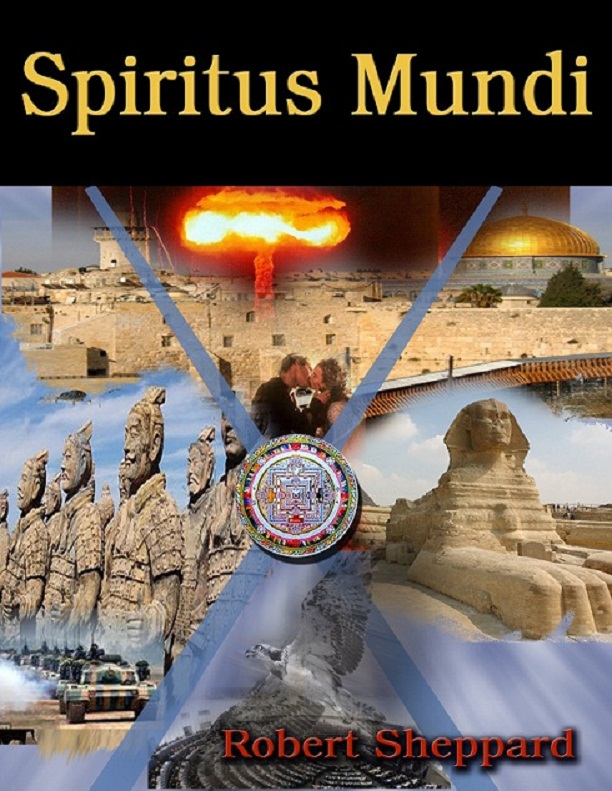
The President’s newly instituted policy of “The Pivot to Asia” revives the classical geopolitical debate of the “Great Game,” or the struggle for dominance or a viable balance of power within the Greater Eurasian Supercontinent of the 19th Century, led at that time on the one hand by the “Heartland School” following the works of Sir Halford Mackinder, the father of Geopolitical Theory, asserting the strategic advantage of the Eurasian continental heartland, expressed in his “The Geographical Pivot of History” and his “Democratic Ideals and Reality,” focusing on the concept of Central Eurasia as the fulcrum and “Pivot” of world history, and the countervailing theories of Admiral Alfred Mahan, leader of the “Rimland, or Sea Power School” as asserted in his classic geopolitical work “The Influence of Sea Power on World History.”
The immense and looming challenge of the “Rise of China” has forced the Intelligence community to revisit and rethink these concepts. For the first time in three centuries the West has been forced to contemplate the potential scenario of a world order of power in which it may very plausibly be dethroned from the assumed dominance of the Eurasian and Global Balance of Power, a new version of a hitherto unthinkable Neo-Splenglerian “Unterganng des Abendlandes/Decline of the West.”
The novel Spiritus Mundi by author Robert Sheppard has explored these concepts in depth in a fictional depiction of a World War III crisis arising from a Pearl Harbor-like sneak attack of a clandestine “New Axis” alliance of the dissatisfied rising powers China, Russia and Iran, bent on rejecting and permanently altering the status quo through a knockout blow severing the West’s Oil Jugular by seizing the immense oil and energy reserves of the Shia Crescent.
Below is an excerpt from the novel in which “C,” the head of British MI6 interacts with Admiral Orwell, the American DNI, or Director of National Intelligence, overseeing the CIA under President Barret Osama, exploring these concepts and the ultimate future role of NATO in Eurasia during a crisis on the Korean Peninsula in which the Russians and Chinese intervene to occupy North Korea as the common action of the Shanghai Cooperation Organization (SCO) in conjunction with the Collective Security Treaty Organization (CSTO) upon the implosion of the North Korean regime to forstall an American and South Korean invasion under their OPLAN 5029 to seize North Korea’s nuclear arsenal:
See Also: To Read Geopolitical and World War Three Excerpts from Spiritus Mundi: https://spiritusmundigeopoliticalworldwar3.wordpress.com/
The New Great Game and the Dance of the Two Pivots: The New Eurasian Ultimate Mission of NATO in the 21st Century
“What is the status of the American and South Korean forces?” asked C.
“The American Forces are at full alert, and we have air and naval reinforcements being tasked into the area. The South Koreans are partially mobilized and we are putting them on notice and on full alert.” replied the DNI.
“We don’t have anything in area militarily but we are ready to back you up diplomatically and logistically. We have our NATO presence to the Russian West of course. Have you determined what line of response you are going to take?” queried C.
“We are still talking it over with the President.” replied Orwell. Orwell, a retired Admiral and former commander of the US fleet and combined forces in the Pacific was, like the majority of the top men at the Office of the Director of National Intelligence, from a military background. This reflected a shift of power from the CIA to the Pentagon under the old administration and during the Iraq intervention. Orwell himself, however had been named as new DNI during the transition by the new administration of President Barret Osama, the nation’s first minority President and considerably more liberal in sympathies than the former administration. Though in office for a considerable period the new team had yet to formulate its posture on many aspects of policy.
Admiral Orwell was deeply worried about the developing crisis on the Korean peninsula. In his studies at Annapolis on the geopolitical dimension of military power he had been influenced by two classical books, the works of Sir Halford Mackinder, the father of Geopolitical Theory, on the strategic advantage of the Eurasian continental heartland, including his “The Geographical Pivot of History” and his “Democratic Ideals and Reality,” focusing on the concept of Central Eurasia as the fulcrum and “Pivot” of world history, and the countervailing theories of Admiral Alfred Mahan in The Influence of Sea Power on World History.
Up to recently he had always viewed Mackinder’s theories as deeply flawed in asserting that whoever dominated the vital mid-region of Central Eurasia would ultimately dominate Eurasia as a whole, and thereby, by virtue of the great preponderance of population and resources of Eurasia as a whole (constituting 75% of the world’s population, 60% of its GDP and 75% of its energy resources), come to dominate the world, just as the opening moves of a chess strategy are inevitably focused on control of the strategic central squares of the board and their domination of the most vital lines of communication.
He had always hitherto considered that Admiral Mahan had adequately refuted that vague hypothesis by the counterthesis that in fact the sea lanes surrounding Eurasia were in fact the vital arteries of commerce and military communications, thus supporting the hypothesis of the continued vitality of the British Empire, which “Ruled the Waves” and the primary thoroughfares of modern capitalism and industrialization. He had always considered Mackinder’s hypothesis as the ravings of an armchair geopolitician fantasizing over a world map and falsely converting it into the gameboard of a chessgame, ignoring the technological, economic and transportational realities.
Now however, with the proliferation of new railways, roads, nation-states and pipelines across Eurasia’s heartland along the old “Silk Road” from China to India, Iran, Turkey and on to Europe the means of communication of the Eurasian heartland were becoming a new reality, and that space on the map less of a communicationsless terra incognita or endless tract of wasteland than in preceding centuries. Now he was beginning to fear that Mackinder’s ravings, linked to the British-Tsarist Russian “Great Game,” were not invalid but merely one or two centuries premature, and that NATO’s mission would need to be extended from focus only on the European-Russian divide to the whole Eurasian SuperTheater from London to Beijing to Tokyo.
And the depletion of the world’s oil reserves made the entire world, not only Eurasia, increasingly dependent on control of this oil-rich heartland. He felt, just as the expansion of the railroads and industrial cities across Europe had set the stage for creating the “cockpit of Europe” which bred World Wars I and II, thus the development of the rail, road, and oil &gas pipelines across the Eurasian heartland was creating a new geopolitical space and power vacuum which would inevitably draw the major players, NATO & the EU, China, Russia, India and Japan into conflict over a new balance of power to maintain its stability and equilibrium, creating a new “Cockpit of Eurasia” as the focus and fulcrum of the global balance of power.
NATO’s primary mission would thereby be shifted inevitably eastward towards the balance of power across the newly consolidated continent of “Greater Eurasia” stretching all the way across to China and Japan, probably taking in new cooperative alliances with Japan and Korea to the East and India to the south, depending of course on the nature of China’s militarization and rise, the direction in which Russia would flip and the use of India as a counterweight to China’s rising power. He feared that, just as the rising power of Nineteenth Century, Germany, had sought a “New Deal” of the cards of the balance of power through creation of a “Central Axis,” so would the rising power China seek to create a new continental “Triple Axis” of China, Russia and Iran with their immense populations and industrial resources, for the domination of the larger and ultimate playing field, Eurasia as a whole from its central lines of communication.
He feared his own President’s recent “Pivot to Asia” policy might be too late in anticipating the “New Axis Pivot” of potential hegemony over all of Eurasia along the lines of Mackinder. Our Pivot may already have been “Outpivoted” by the Axis Pivot, he had written in an article in Foreign Affairs, “The New Great Game and the Dance of the Two Pivots: The New Eurasian Ultimate Mission of NATO in the 21st Century.” He also knew intuitively that in the great chessgame between the great land powers, China, the European Union, Russia, India, and Iran, and the great sea powers, the United States, Britain & NATO and Japan, the conversion of the chessgame into a three-dimensional chessgame by the additional overlay of airpower and other aspects of high technology would be decisive, though not absolutely if the balance of airpower between the blocs could be neutralized short of absolute air supremacy.
He also feared the American people’s latent weakness for isolationism and their infantilke impatience and short time-horizons, which mindset might not be entirely irrational, given McArthur’s warnings against the horrors of any American involvement in a “Landwar in Asia” for which its strengths were not suited, let alone George Washington’s farewell admonition to “avoid foreign entanglements.” He also knew that the continental European Union would not have the luxury of pretending any isolation from the Brave New World of newly integrated Eurasian geopolitics and would be forced to face the new threats squarely and grimly.
Britain, as ever would be caught in the middle, as an island but not a continent, and only a Chunnel’s length from the shores of Eurasia instead of an ocean’s span. It would have to decide whether to throw its weight solidly into the fray through the EU and NATO, or revert back to the game of “Perfidious Albion” acting as the spoiler in pursuit of a balance of power on the continent, now a newly integrated Eurasian continent rather than a European one alone, which would exclude the possibility of any power rising to full dominance and control of that immensity, neither Napoleon nor Hitler nor something new, spelling the ultimate doom of Britannia’s freedom and independence. Perhaps in another century NATO as a whole would have to play the role of Perfidious Albion, fomenting divisions and conflicts, in forestalling the rise of any single dominant newly industrialized power over the Eurasian Supercontinent that might threaten Western Europe and the EU as a whole. He began to fear that these new Chinese-Russian moves on the Korean peninsula were merely the opening moves of the greater chessgame for all Eurasia, a kind of Bishop’s Opening to the diagonal corner of the board aimed far deeper in time and space towards a later strategic showdown at its center.
Admiral Orwell was also influenced by his namesake, George Orwell, all of whose works he had read as a boy curious about his family name, and his prediction in 1984 of the evolution of three spheres of influence, Oceania, Eurasia and East Asia, submerged in a dystopian world of perpetual war and political domination centered on the balance of power across the Eurasian Continent as a whole, with its energies diverted in times of stalemate into peripheral wars in Africa, the Middle-East and the nether regions. Though he had learned that this most famous Orwell was not a true Orwell, but merely the pen name of a Blair, which he had pointed out with a shared laugh once to the British Prime Minister of that name, his vision continued to haunt him and challenge his native American optimism in the times of his maturity.
Indeed, in these times of financial crisis he sensed a new malaise and loss of confidence hinting that America’s youthful strength and pluck were withering and succumbing to a premature senility or foreboding of a looming decline and doom, and that a new edition and Zeitgeist era of the “Decline of the West”—-Spengler’s pessimistic Untergang des Abendlandes, which he had read in the German original at Annapolis, was setting in, with a new “Rising Sun” in the East.
He also recalled the curious “mano-a-mano” academic contest he had had with Minister Luo ChunWang, now the head of Chinese Intelligence, when the latter had been a Professor at the University of International Relations in Beijing, closely tied to the Chinese MSS, and Orwell had been a Professor at the National Defense University at Fort McNair outside of Washington, D.C. Orwell had advocated the position of Admiral Mahan in a reformulated and revitalized way, stressing the importance of Sea Power in the control of the Eurasian Supercontinent, citing such facts as China’s 90% dependence on sea transport for its ever-growing oil imports, which now stood at over 60% of its total oil consumption. He argued that a domineering risen China could still be brought to its knees, just as Japan had been in World War II, by cutting its oil jugular from the sea. Thus he advocated a “Pivot Back to Asia” focused on the “Eurasian Rimlands,” or the coastal areas of Eurasia—Europe, India, Singapore, Vietnam, the Philippines and Indonesia, Taiwan, Japan and South Korea—forming what critics called, he thought slightly inaccurately, “The Fortress Oceania Strategy,” also making reference to his namesake Orwell’s 1984 Superpower, Oceania, of which Britain constituted only “Airstrip One.” This built upon the American and NATO technological superiority which made its dominance of the sea environment more secure than the continental land environment in which sheer masses and numbers might prevail in the absence of clear air supremacy on either side, and followed McArthur’s invocation for the West to avoid “A Land War in Asia.”
Thus in the contest of the academic “schools” of the time, Admiral Orwell had been type-cast as the global intellectual leader of the “Neo-Mahanian School” of the Eurasian Power Balance. Professor Luo ChunWang, from his seat in the Beijing institute, had been cast as his foil in the role of the “Neo-Mackinder School,” more affectionately termed the “Neo-Heartland Theory,” arguing that with the full development of the Eurasian transport, rail, road and energy pipeline system along the former “Silk Road” that the Eurasian Supercontinent was ripe for a centralized integration and that while Mackinder had been premature and inaccurate in his own time, that the time was now ripe for a “Central Axis” to effectively dominate a Eurasia weaned from its dependence and vulnerability upon vulnerable sea lanes. He who controls the Central Eurasia of the Silk Road and its new oil and cross-continental transportation resources controls “The Heartland,” “The World Island of Eurasia,” and eventually, by preponderance of masses of energy, resources and population, controls the world.
Thus in the emotional exchange of newspaper articles over China’s dispute with Japan over the DiaoYu/Senkaku Islands Luo accused America of pursuing a “Fortress Oceania Strategy” which would turn Japan into a mere geopolitical stooge and pawn as a “Neo-Orwellian Airstrip Two,” paralleling the role of Britain as a subservient “Airstrip One” in the opposite half of the Eurasian Supercontinent, mocking the name of his opponent in the press, Admiral Orwell. Such strategy, he argued, was doomed to failure as any attempt at “containment” or “encirclement” of China or Sino-Eurasia would, following the “Law of Unintended Consequences,” give rise to a “New Central Axis” integrated across the “Eurasian Heartland” by land and by seizure of energy dominance via land pipelines, would break the myth of the Mahanian dominance of Sea Power and the Eurasian Rimland. Now Admiral Orwell, facing Luo as the dominant strategist of his rising nation was forced to re-examine his own position with painful self-criticism.
These were the unsettling thoughts which moved in the deeper spaces of Admiral Orwell’s consciousness as he went through the more active crisis-driven and bureaucratic process of shuttling between his President and his NATO allies and counterparts.
For Further Introduction to the novel Spiritus Mundi, by Robert Sheppard see the following:
Introducing Spiritus Mundi, a Novel by Robert Sheppard
Author’s E-mail: rsheppard99_2000@yahoo.com
Related Links and Websites: Spiritus Mundi, Novel by Robert Sheppard
For Introduction and Overview of the Novel: https://spiritusmundinovel.wordpress.com/
To Read Geopolitical and World War Three Excerpts from Spiritus Mundi: https://spiritusmundigeopoliticalworldwar3.wordpress.com/
For Updates on the Upcoming Movie Version of the Novel, Spiritus Mundi & Casting of Actors and Actresses for Leading Roles See: https://robertalexandersheppard.wordpress.com/
For Author’s Blog: https://robertalexandersheppard.wordpress.com//
To Read Abut the Occupy Wall Street Movement in Spiritus Mundi: http://occupywallstreetnovel.wordpress.com/
To Read a Sample Chapter from Spiritus Mundi: https://spiritusmundisamplechapters.wordpress.com/
To Read Fantasy, Myth and Magical Realism Excerpts from Spiritus Mundi: https://spiritusmundifantasymythandmagicalrealism.wordpress.com/
To Read Sexual Excerpts from Spiritus Mundi: The Varieties of Sexul Experience: https://spiritusmundivarietiesofsexualexperience.wordpress.com/
To Read Spy, Espionage and Counter-terrorism Thriller Excerpts from Spiritus Mundi: http://spiritusmundispyespionagecounterterrorism.wordpress.com/
To Read Geopolitical and World War Three Excerpts from Spiritus Mundi: https://spiritusmundigeopoliticalworldwar3.wordpress.com/
To Read Spiritual and Religious Excerpts from Spiritus Mundi: https://spiritusmundionspiritualityandreligion.wordpress.com/
To Read about the Global Campaign for a United Nations Parliamentary Assembly in Spiritus Mundi: https://spiritusmundiunitednationsparliamentaryassembly.wordpress.com/
To Read Poetry from Spiritus Mundi:https://spiritusmundipoetry.wordpress.com/
For Discussions on World Literature and Literary Criticism in Spiritus Mundi: http://worldliteratureandliterarycriticism.wordpress.com/
For Discussions of World History and World Civilization in Spiritus Mundi: https://worldhistoryandcivilizationspiritusmundi.wordpress.com/
To Read the Blog of Eva Strong from Spiritus Mundi: https://evasblogfromspiritusmundi.wordpress.com/
To Read the Blog of Andreas Sarkozy from Spiritus Mundi: http://andreasblogfromspiritusmundi.wordpress.com/
To Read the Blog of Yoriko Oe from Spiritus Mundi: http://yorikosblogfromspiritusmundi.wordpress.com/
To Read the Blog of Robert Sartorius from Spiritus Mundi: http://sartoriusblogfromspiritusmundi.wordpress.com/
ON SPIRITUS MUNDI
“Read Robert Sheppard’s sprawling, supple novel, Spiritus Mundi, an epic story of global intrigue and sexual and spiritual revelation. Compelling characters, wisdom, insight, and beautiful depictions of locations all over the world will power you through the book. You’ll exit wishing the story lines would go on and on.” May 13, 2012
Robert McDowell, Editor, Writer, Marketer, Editorial Cra, The Nature of Words
______________________________________________________
“Robert Sheppard’s novel, “Spiritus Mundi,” has everything. “Spiritus Mundi” is Latin, meaning “spirit” or “soul of the world.” According to the Norton Anthology of English Literature, the phrase refers to “the spirit or soul of the universe” with which all individual souls are connected through the “Great Memory.” This amazing novel is all inclusive and unceasingly riveting. If you are interested in politics, philosophy, human relationships, sex, intrigue, betrayal, poetry and even philosophy — buy and read “Spiritus Mundi”!”November 18, 2012
Raymond P. Keen, School Psychologist, Department of Defense Dependents Schools (DODDS)
—————————————————————-
“Robert Sheppard’s new novel “Spiritus Mundi” is a new twist on a well-loved genre. Robert leaves no stone unturned in this compelling page turner you’ll experience mystery, suspense, thrills, and excitement. Robert touches on sexuality and spirituality in such a way that the reader is compelled to ask themselves “what would you do if faced with these trials?” Robert is a master at taking the reader out of their own lives and into the world he created. If you’re looking for a “can’t put down” read pick up Spiritus Mundi!” May 20, 2012
Nicole Breanne, Content Coordinator, Ranker.com
_____________________________________________________
“Longing for a thrilling experience of the sexual and spiritual world? Expecting a thorough summoning of your inner heart? Aspiring to find an extraordinary voice to enlighten your understanding heart? Then you can’t miss this extraordinary novel, Spiritus Mundi by Robert Sheppard. The author will spirit you into a exciting world filled with fantasy, myth, conflicts and wisdom from a fresh perspective. Don’t hesitate, just turn to the 1st page and start out enjoying this marvellous journey.”November 17, 2012
Alina Mu Liu, Official Interpreter, Editor & Translator, HM Courts & Tribunal Service, London UK & the United Nations
——————————————————————————
“Robert Sheppard’s Spiritus Mundi is a literary novel for those with an extensive vocabulary, and who believe how you tell a story is as important as what occurs in it. It is as current as today’s headlines.
Jaime Martinez-Tolentino, Writer” November 19, 2012
————————————————————————–
“Robert Sheppard’s exciting new novel, Spiritus Mundi, is an unforgettable read and epic journey of high adventure and self-discovery across the scarred landscape of the modern world and into the mysteries beyond. Its compelling saga reveals the sexual and spiritual lives of struggling global protesters and idealists overcoming despair, nuclear terrorism, espionage and a threatened World War III to bring the world together from the brink of destruction with a revolutionary United Nations Parliamentary Assembly and spiritual rebirth. This modern epic is a must read and compelling vision of the future for all Citizens of the Modern World and a beacon of hope pointing us all towards a better world struggling against all odds to be born.” May 19, 2012
Lara Biyuts, Reviewer and Blogger at Goodreads.com and Revue Blanche
________________________________________________________
“Robert Sheppard’s “Spiritus Mundi” is a book of major importance and depth. A must read for any thinking, compassionate human being living in these perilous times. I highly recommend this powerful testament of the current course of our so-called life on his planet. April 25, 2012
Doug Draime Writer, Freelance
___________________________________________________
“This new novel ‘Spiritus Mundi’ brings together history, politics, future society, and blends with a plausible World War Three scenario. I have read it and find it over the top fascinating. I am very glad to see Robert share his creativity with the world through this work of fiction, and know it will be a huge hit.” April 28, 2012
Jim Rogers, Owner and Director, AXL
______________________________________________
“Robert Sheppard is an exceptional thinker! His work should be read and made the subject of critical study.”May 26, 2012
Georgia Banks-Martin, Editor, New Mirage Journal
——————————————————————————
“This novel rocks the reader with its supple strength. You want to say “No, No,” and you end up saying, “Maybe.” Political science fiction at its highest, most memorable level.”November 17, 2012
Carl Macki, Owner, Carl Macki Social Media
——————————————————————————
“Robert Sheppard’s Novel Spiritus Mundi confronts politics and philosophies of the world. He’s examined multiple layers of personality in his characters; male, female, Chinese, Arab, English, and American melding them into a story of possible outcomes. How else can I convey the intelligent presentation of fiction woven with sensitivity to our world’s governments, religious influences and sectarian principles? We must not forget the influence of a largely secular world. Robert tirelessly checked, rechecked and triple checked his resources in order to bring a fiction of occurrence, and psychological impact as set forth in his novel Spiritus Mundi.”November 18, 2012
Glenda Fralin, Author, Organization NWG
__________________________________________________________
“Robert was one of my best guests. His novel is as wide ranging as are his interests and expertise. He can explain his various ideas with great clarity and he does this with compassion. Novel is worthwhile reading.”November 18, 2012
Dr. Robert Rose, Radio Show Host, http://www.blogtalkradio.com/icdrrose
________________________________________________________________
I write to introduce to your attention my double novel Spiritus Mundi, consisting of Spiritus Mundi, the Novel—Book I, and Spiritus Mundi, the Romance—Book II. Book I’s espionage-terror-political-religious thriller-action criss-crosses the globe from Beijing to London to Washington, Mexico City and Jerusalem presenting a vast panorama of the contemporary international world, including compelling action, deep and realistic characters and surreal adventures, while Book II dialates the setting and scope into a fantasy (though still rooted in the real) adventure where the protagonists embark on a quest to the realms of Middle Earth and its Crystal Bead Game and through a wormhole to the Council of the Immortals in the Amphitheater in the center of the Milky Way Galaxy in search of the crucial Silmaril Crystal, and to plead for the continuance of the human race in the face of threatened extinction from a nuclear World War III, all followed by a triple-somersault thriller ending in which a common garden-variety terrorist attack is first uncovered by MI6 and the CIA as the opening gambit a Greatpower Game of States threatening World War III and then, incredibly, as the nexus of a Time Travel conspiracy involving an attempt by fascist forces of the 23rd Century to alter a benign World History by a time-travelling raid on their past and our present to provoke that World War III, foiled by the heroic efforts of the democratic 23rd Century world government, the Senate of the United States of Earth, to hunt down the fascist interlopers before their history is irrevocably altered for evil.
When activist Robert Sartorius, leading a global campaign to create a European Parliament-style world-wide United Nations Parliamentary Assembly presses the proposal in New York on his old friend the UN Secretary-General and is rebuffed due to the hostile pressure of the conservative American administration, his Committee resolves to fight back by launching a celebrity-driven Bono-Geldof-Band Aid/Live 8-style “People Power” media campaign and telethon spearheaded by rock superstars Isis and Osiris and former UN Secretary General Boutros Boutros-Ghali to mobilize global public support and pressure in alliance with the Occupy Wall Street Movements worldwide. The Blogs of Sartorius, activist Eva Strong and Committee Chairman Andreas Sarkozy reveal the campaign’s working struggle, their tangled love affairs, a loss of faith, attempted suicide, reconciliation of father and son after divorce, and recovery of personal love and faith.
Things fall apart as the idealists’ global crusade is infiltrated by a cell of jihadist terrorists using it as a cover, then counter-infiltrated by CIA agent Jack McKinsey and British MI6 agent Etienne Dearlove. A cat-and-mouse game of espionage and intrigue ensues pitting them against the Chinese MSS espionage network allied with the Iranian Quds Force crossing Beijing, London, Moscow, Washington and Jerusalem unleashing an uncontrollable series of events which sees the American Olympic Track and Field Team bombed on an airplane in London, uncovers a secret conspiracy of China, Russia and Iran to jointly seize the oil reserves of the Middle-East, and witnesses Presidents Clinton and Carter taken hostage with Sartorius, McKinsey, Eva and other activists at a Jerusalem telethon rally cut short by the explosion of a concealed atomic device in a loaned Chinese Terracotta Warrior, then flown by capturing terrorists to Qom, Iran as “human shields” to deter a retaliatory nuclear attack.
In Book II, Spiritus Mundi, the Romance they encounter Iran’s Supreme Leader in Qom as the world teeters on the brink of nuclear confrontation and World War III, while mysterious events unfold leading Sartorius and McKinsey from their captivity in the underground nuclear facilities of Qom into a hidden neo-mythic dimension that takes them to a vast ocean and land at the center of the world, Middle Earth, Inner Shambhala, and to involvement in a mysterious Castalian “Crystal Bead Game” linked to the destiny of the human race on earth. They then embark on a quest for the Silmaril, or Missing Seed Crystal to the central island of Omphalos in the Great Central Sea in the middle of the globe, aided by Goethe, the Chinese Monkey King, Captain Nemo, the African God-Hero Ogun, and a Sufi mystic they traverse a ‘wormhole’ at the center of the earth guarded by ‘The Mothers’ and the fallen angel tribe of the Grigori (Genesis 6:1-4) which leads the way to critical meeting of the “Council of the Immortals” at the Black Hole in the center of the Milky Way Galaxy to determine the final fate of the human species. The heroes battle and overcome the treacherous opposition of Mephisto and his satanic subaltern Mundus through their Underworld and Otherworld adventures and successfully plead the cause of the continuation of the human species before the Immortals, returning with the critical Silmaril Crystal, resolving the Crystal Bead Game and thereby inspiring through the Archangel Gabriel a dream in the mind of Iran’s Supreme Leader which brings a new Revelation causing him to release the hostages and an end the crisis. China and Russia stand down from aiding Iran in seizing the Mid-East oil reserves, but in a treacherous blow the Chinese instead utilize their forward-positioned armies to attack their former ally Russia and seize Siberia with its large oil and gas reserves instead. President Barret Osama, America’s newly-elected first black President then invites Russia, Japan and South Korea to join NATO and together they succeed in expelling the Chinese from Siberia and usher in a new Eurasian and global balance of power and a New World Order.
Rock Superstar Osiris meanwhile, after undertaking a narcissistic Messianic mission in the wake of the Jerusalem atomic blast is dramatically assassinated on live world-wide television on Jerusalem’s Via Dolorosa by a disillusioned follower. His wife and rock-star partner Isis then leads a spiritual movement to reconcile and unite the clashing religions and catalyze a common global spiritual Renaissance through a Global Progressive Spiritual Alliance which seeks to construct an Inter-faith Temple on the ruins of the atomic blast in Jerusalem. In counter-reaction to the cataclysmic events the world finally implements Sartorius’ crusade for a United Nations Parliamentary Assembly, but not before Sartorius has himself has died, Moses-like of a heart attack while helping to foil a metaconspiracy mediated by Time Travel in which a fascist agent from the 23rd Century who has time-transited back to our time to alter a benign history by causing WWIII and thus preventing the evolution of a democratic world government, the United States of Earth, which follows him through time and nabs him just in the “nick of time” to prevent Aramgeddon. The book ends with the opening ceremony of the UN Parliamentary Assembly which is attended in Sartorius’ name by his widow Eva Strong, whom Sartorius had fallen in love with and married in the course of the novel, and by their son Euphy, newborn after Sartorius’ death. They are joined in cinematic climax at the ceremony by newly chosen UN Secretary-General Clinton, President Osama and UN Parliamentary Assembly Committee Chairman Andreas Sarkozy who have just received the Nobel Peace Prize for their work in creation of the world’s first world parliamentary assembly within the United Nations, bringing together the representative voices of the peoples of the world in face-to-face assembly and dialogue for the first time in world history.
Highlights:
All the Highlights of the novel cannot be contained in such a short Introduction, but a few of them would include:
1. Spiritus Mundi is the first novel in world history to portray the creation of a United Nations Parliamentary Assemblyon the working model, inter alia, of the European Parliament and the first novel to portray the Occupy Wall Street Movement and related movements worldwide;
2. Spiritus Mundi is a prophetic geo-political WWIII novel of the near future forseeing a conflict and conspiratorial surprise attack by a resurgent “Axis” of China, Russia and Iran seeking by a decisive blow in jointly seizing the Middle-East oil fields to radically alter the global balance of power vis-a-vis the West in the world and Eurasia. Like Clancy’s The Bear and the Dragon, it forsees the inclusion of Russia in NATO, and goes far beyond in forseeing the inclusion of South Korea and Japan, following a joint Chinese-Russian occupation of a collapsing North Korea and the Axis strike at the Middle-Eastern oil fields;
3. Spiritus Mundi is an exciting espionage thriller involving the American CIA. British MI6, the Chinese MSS, or Ministry of State Security and the Russian SVR contending in a deul of intrigue and espionage;
4. Spiritus Mundi is a Spellbinding Terrorism/Counterterrorism novel involving a global plot to conceal an atomic bomb in a Chinese Teracotta Warrior to be detonated in Jerusalem;
5. Features the romantic and sexual searching and encounters of dozens of idealist activists, rock-stars, CIA and MI6 agents, public-relations spinmeisters and billionaires with a detour into the bi-sexual and gay scenes of Beijing, New York, California, London and Tokyo:
6. Establishes and grounds the new genre of the Global Novel written in Global English, the international language of the world,
7. Spiritus Mundi is a novel of Spiritual Searching featuring the religious searching of Sufi mystic Mohammad ala Rushdie, as well as the loss of faith, depression, attempted suicide and recovery of faith in life of protagonist Sartorius. Follows bogus religious cult leaders and the Messiah-Complex megalomanic-narcissistic mission of rock superstar Osiris that leads to his dramatic assassination on worldwide television in Jerusalem, followed by the religious conversion of his wife and rock-star parner Isis;
8. Features the search for love and sexual fulfillment of Eva Strong, a deeply and realistically portrayed divorced single mother involved in the United Nations campaign, who reveals her tortured heart and soul in her Blog throughout several disastrous sexual affairs and ultimately through her final attainment of love and marriage to Sartorius;
9. Features Sartorius’ experience of a bitter divorce, alienation and reconciliation with his son, his loss of faith and attempted suicide, his battle against drugs and alcoholism, his surreal and sexual adventures in Mexico City, and his subsequent redeeming love and marriage to Eva Strong;
10. Contains the in–depth literary conversations of Sartorius and his best friend, Literature Nobel Laureate Günther Gross, as they conduct worldwide interviews and research for at book they are jointly writing on the emergence of the new institution of World Literature, building on Goethe’s original concept of “Weltliteratur” and its foundations and contributions from all the world’s traditions and cultures;
11. Predicts the emergence of the institution and quest of “The Great Global Novel” as a successor to the prior quest after “The Great American Novel” in the newer age of the globalization of literature in Global English and generally;
12. Features the cross-cultural experiences and search for roots, sexual and spiritual fulfillment and authenticity of Asian-American character Jennie Zheng, and Pari Kasiwar of India;
13. For the first time incorporates in the dramatic narrative flow of action the mythic traditions of all the cultures and literatures of the world, including such figures as Goethe, The Chinese Monkey King, the African God-Hero Ogun, surreal adventures in the ‘Theatro Magico’ in Mexico City bringing to life figures from the Mayan-Aztec Popul Vuh, Hanuman from the Indian classic the Ramayana, and many more;
14. Book Two, Spiritus Mundi, the Romance is a fantastic Fantasy, Myth and Magical Realism Rollercoaster Ride: The more mythic Book Two utilizes a Wellsian motif of Time Travel to explore the making of history and its attempted unmaking (a la Terminator) by a hositile raid from the future on the past, our present, and the foiling of the fascist attempt by an alliance of men and women of goodwill and courage from past, present and future generations united in a Commonwealth of Human Destiny; Like Thomas Pynchon’s Against the Day and Welles’ Journey to the Center of the Earth it involves a journey to an interior realm of the “Middle Earth;” it also contains a futuristic travel through a wormhole to the center of our Milky Way Galaxy for a meeting with the “Council of the Immortals” where the fate of the human race will be decided;
15. Is a fantastic read on a roller-coaster ride of high adventure and self-exploration!
C Copyright 2013 Robert Sheppard All Rights Reserved
Robert Sheppard, Author, Poet & Novelist---Aithor of Spiritus Mundi Novel--Professor of World and Comparative Literature--Professor of International Law--Senior Associate of Campaign for a United Nations Parliamentary Assembly--Editor in Chief, World Literature Forum
 42 members


By The World's Most Accurate Economic Forecaster Since 1989.
Just another WordPress.com site
Coach | Workshop Leader | Author | Community Builder
The writerly musings of Connie J. Jasperson, author, blogger and medieval renaissance woman.
NO DROIDS WERE HARMED IN THE MAKING OF THIS BLOG....
Author
Author and Blogger
carefully chosen words bridge communication
the sound princess
abrasive text
Spaces as focal points for interaction...
Wanton Thoughts!
We're subletting our Los Angeles Apartment
poetry
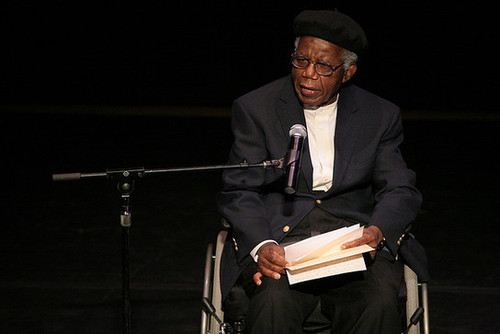


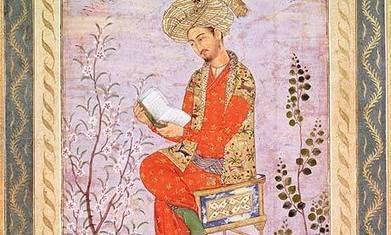


 Robert Sheppard Literary Blog & World Literature Forum